

How does the starting current impact the basic components of a motor?
Nov 14, 2025
Hey there! As a supplier of motor basic components, I've seen firsthand how the starting current can have a huge impact on the basic components of a motor. In this blog, I'm gonna break down exactly how that happens and why it's so important for anyone dealing with motors to understand.
Let's start by getting a clear idea of what starting current is. When a motor first starts up, it draws a much higher current than it does when it's running at a steady state. This high initial current, known as the starting current, can be several times the motor's rated current. It's like when you're trying to get a heavy cart moving; you need to give it a big push at the start, and then you can keep it going with less effort.
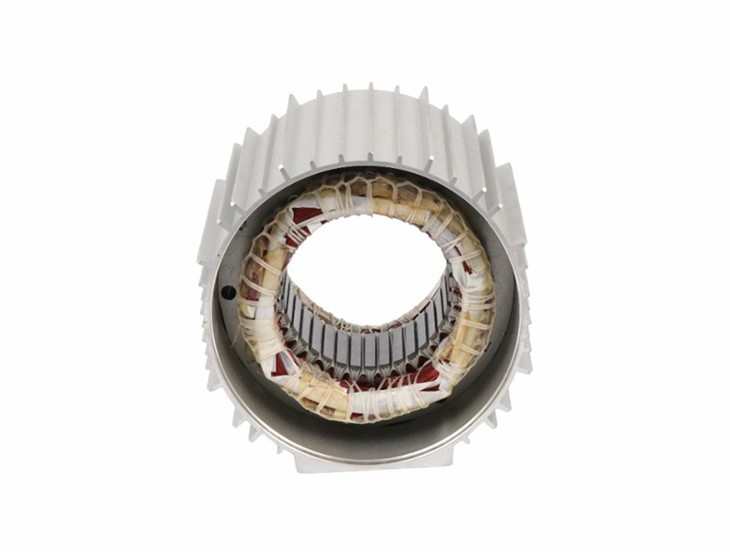
Now, let's talk about how this starting current affects the basic components of a motor. First up, we've got the Motor Frame Components. The motor frame is like the backbone of the motor. It provides structural support and protection for all the other components. When the starting current surges through the motor, it creates a lot of heat. The motor frame has to dissipate this heat to prevent the motor from overheating.
A high starting current means more heat is generated in a short period. If the motor frame isn't designed to handle this extra heat, it can lead to thermal stress. This stress can cause the frame to warp or crack over time. And if that happens, the motor's performance will be affected, and it might even break down completely. That's why it's crucial to choose motor frame components that are built to withstand the heat generated by the starting current.

Next, we have the Motor End Cover. The end cover is responsible for protecting the internal components of the motor from dust, dirt, and moisture. It also helps to keep the motor's bearings in place. When the starting current hits, it can cause vibrations in the motor. These vibrations can be quite intense, especially if the starting current is very high.
If the motor end cover isn't properly secured or if it's made of a weak material, these vibrations can cause it to loosen or even fall off. This exposes the internal components to the elements, which can lead to corrosion and damage. Additionally, the vibrations can put extra stress on the bearings, which are located near the end cover. Over time, this can cause the bearings to wear out faster, reducing the motor's lifespan.
Another important component affected by the starting current is the stator windings. The stator windings are responsible for creating the magnetic field that makes the motor run. When the starting current flows through the stator windings, it creates a strong magnetic force. This force can cause the windings to move slightly within the motor.
If the starting current is too high, the movement of the windings can be excessive. This can lead to insulation damage. The insulation on the stator windings is what prevents the current from short - circuiting. Once the insulation is damaged, the motor can experience electrical problems, such as short circuits or ground faults. These issues can not only damage the motor but also pose a safety hazard.
The rotor is also impacted by the starting current. The rotor is the rotating part of the motor. When the motor starts, the high starting current creates a large torque on the rotor. This torque is what gets the rotor spinning. However, if the starting current is too high, the torque can be so strong that it can cause mechanical stress on the rotor shaft.
The rotor shaft has to transfer the rotational force from the rotor to the load. Excessive torque can cause the shaft to bend or even break. This will obviously stop the motor from working properly. In addition, the high - speed acceleration caused by the large starting current can put stress on the rotor's laminations. If the laminations are damaged, the motor's efficiency will decrease, and it will consume more energy to operate.
Now, you might be wondering, how can we deal with these problems caused by the starting current? Well, one way is to use soft - start devices. Soft - start devices gradually increase the voltage applied to the motor during startup, which reduces the starting current. This helps to minimize the stress on the motor's components.
Another option is to choose high - quality motor basic components. As a supplier of Motor Basic Components, I can tell you that investing in good - quality components is worth it in the long run. High - quality components are designed to handle the stresses caused by the starting current better. They are made of stronger materials and are built to last.
If you're in the market for motor basic components, it's important to work with a reliable supplier. We understand the importance of providing components that can withstand the challenges posed by the starting current. Whether you need motor frame components, end covers, stator windings, or rotors, we've got you covered.
We offer a wide range of motor basic components that are designed to meet the highest standards of quality and performance. Our components are tested rigorously to ensure they can handle the starting current and other operating conditions. By choosing our components, you can extend the lifespan of your motors and reduce the risk of breakdowns.
If you're interested in learning more about our motor basic components or if you have any questions about how the starting current affects your motors, don't hesitate to reach out. We're here to help you make the right choices for your motor applications. Whether you're a small business owner or a large industrial manufacturer, we can provide you with the components you need to keep your motors running smoothly.
So, if you're looking for top - notch motor basic components that can stand up to the challenges of starting current, get in touch with us. Let's start a conversation about how we can help you improve the performance and reliability of your motors.
References
- Fitzgerald, A. E., Kingsley, C., & Umans, S. D. (2003). Electric Machinery. McGraw - Hill.
- Chapman, S. J. (2012). Electric Machinery Fundamentals. McGraw - Hill.