Hardware

Why Choose Us
 

Quality Control
We have a complete set of advanced motor testing equipment and produce in strict accordance with the standards of ISO9001 international quality management system. We are committed to providing customers with high-performance, high-quality products and continuously improving the quality of our products in every detail.


Advanced Production Equipment
We have a full set of advanced production and quality control equipment like motor performance testing system, motor testing software, armature comprehensive test system, winding machine, stator comprehensive test system, automatic stator coil shaping machine, welding equipment ,hydraulic press machine ,lathe ,cutting machine.


Rich Experience
Ningbo Zhenhai Yuanyi M&E Manufacture Co., LTD(YME) was established in 2007 and has over 16 years of experience in the designing, R&D, manufacturing and marketing of motors.


Superb Team
We have a skilled team,advanced production equipment and modern test facilities , which can provide customers with professional technical support and customized services according to customer requirements.


Ningbo Zhenhai Yuanyi M&E Manufacture Co., LTD(YME): Your Leading Hardware Supplie


Ningbo Zhenhai Yuanyi M&E Manufacture Co., LTD(YME) was established in 2007 and has over 16 years of experience in the designing, R&D, manufacturing and marketing of motors. We specialize in the production of various motor products, mainly including Ac motor, Dc motor, brushed motor,brushless motor,low voltage motor,single phase motor,hardware, etc.

First 12 Last 1/2

Types of Hardware


The Hardware Produced By Our Company Mainly Includes the Following Types:

Internal Gear

Precision spur gear

Spur gears are one of the most popular types of precision cylindrical gears. These gears feature a simple design of straight, parallel teeth positioned around the circumference of a cylinder body with a central bore that fits over a shaft.

Internal Gear

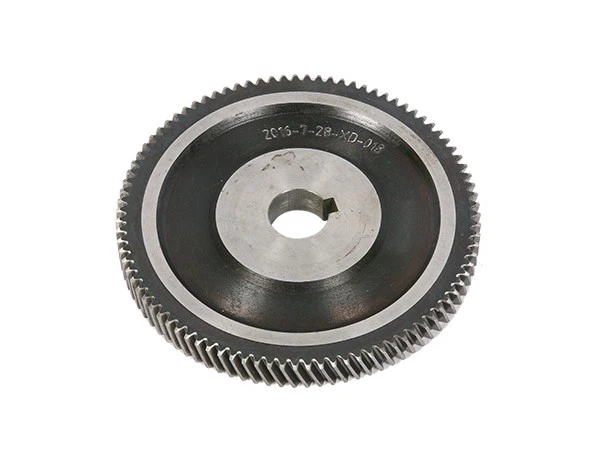
Helical gear

A helical gear is a type of cylindrical gear on which the teeth are helicoid, that has teeth that are cut at an angle to the axis of rotation. They are similar to spur gears but offer advantages both in torque capacity and smoothness of operations.

Internal Gear

Spline shaft

A splined shaft is characterized by the deep grooves, or splines, cut along the entire length of the outer material. The grooves create jutting keys that fit into paired bearings, bores, gears, or bushings specifically designed to mate with the shaft splines.


Benefits of Hardware


Precision spur gear

  • Simple designs: It has a simple, compact design of spur gears, making them easy to create, set up, and configure. Due to their straightforward design, they can fit readily into restricted and tight spaces with a few limitations.
  • More reliable: When you use a spur gear, they will unlikely fail. They are highly durable, and their strength makes it impossible to slip, malfunction, or break readily. You will enjoy the functioning of spur gears for an extended period.
  • They are efficient: Spur gears work efficiently in conjunction with reliability. They can quickly transfer large amounts of power across several gear trains without any or minimal loss of control.
  • Production cost: As you know, spur gears are known for their simplicity, making manufacturing easy as it gently decreases production costs. Manufacturers can create large volumes of spur gears with little waste.


Helical gear

  • Reduced noise and vibration: Helical gears are more advantageous than other forms of gear, such as spur gears, in that they generate less noise and vibration. This is due to the helical gears’ angled teeth, which allow for a more gradual contact between the gears, lowering the force of the impact and producing less noise and vibration.
  • Improved efficiency and load-bearing capacity: Because of their wider contact area than other gear types, helical gears are able to support more weight. Along with increasing the gear system’s efficiency, the inclined teeth produce a smoother transmission of force and motion.
  • Smoother operation and better torque transfer: The progressive contact between the helical gears’ teeth also produces smoother functioning, which lessens gear wear and tears and increases gear lifespan. The teeth’s helix design also enables a more uniform load distribution, which improves torque transfer and raises reliability.
  • Compatibility with high-speed applications: As helical gears can transmit power and motion more effectively than other types of gears, they are ideal for high-speed applications. The helical gears’ angled teeth also lessen the effect of shock loads, which makes them perfect for high-speed, high-torque applications.


Spline shaft

  • Better torque transmission: Spline shafts can handle higher torque loads compared to key shafts, making them optimal for applications requiring high power transmission.
  • Increased surface contact: They offer more surface contact between the shaft and the hub, resulting in less wear and tear.
  • Greater axial movement: Spline shafts allow for axial movement without losing torque transmission.
  • Improved alignment: They offer better alignment capabilities, which helps reduce stress on the bearings.


Hardware Specifications


Precision Spur Gear


Precision

Six-level precision gear

Commonly Processed Materials

40Cr, 42CrMo, 45#, etc.

Surface treatment

Blackening, Chrome Plating, Nickel Plating, Galvanizing, Etc.


Spline shaft


Roundness

0.001mm

Roughness

Ra0.04

Straightness

0.001mm

Hardness

HRC/HV

Accuracy

Grade 6

Tolerance

+/- 0.001mm


Application of Hardware
 

Precision spur gear

  • Machine tool manufacturing: In the manufacturing of CNC machine tools, gear machining machine tools, and other machine tool sectors, precision spur gears serve as the primary transmission devices, enhancing the precision and stability of machine tools.
  • Automotive industry: In transmission systems such as automobile engines and transmissions, precision spur gears play a vital role in speed regulation and power transmission, offering high reliability and long lifespan.
  • Aerospace: Precision spur gear transmissions are commonly employed in aerospace equipment like aircraft engines and aviation motors. They can meet the demands of high-speed, high-temperature, and high-precision operating environments.
  • Robotics industry: Serving as core components in robotic joint transmissions, precision spur gears enable accurate position control and efficient power transmission.
 

Helical gear

  • Fast-paced industries: Helical gears are ideal for high-speed applications due to their reduced wear and friction compared to other gears while still handling substantial force transfers effectively.
  • Industrial chemistry: In industrial chemistry, helical gears are used to slow down centrifugal compressors and turbines, aligning their speeds with those of motors and generators. Proper cooling and lubrication are essential for the efficient operation of these gears.
  • Automotive industry: In the automotive sector, helical gears are preferred over spur gears due to their greater durability. The increased number of teeth that mesh together provides a larger surface area to support heavier loads, making them suitable for demanding automotive applications such as transmissions.
  • Production industry: Helical gears can handle twisting and spinning forces due to their tooth design. They are recommended for machinery requiring high rotational speeds, heavy item loads, or continuous operation.
 

Spline shaft

  • Automotive industry: Splined shafts are commonly employed in automotive powertrain systems to transfer torque from the engine to the wheels. Additionally, they’re employed in steering mechanisms to transmit input from the steering wheel to a control system.
  • Industrial machinery: Splined shafts are commonly employed in various industrial machinery, such as pumps, compressors and conveyors. Additionally, they’re employed in manufacturing equipment like lathes and milling machines.
  • Marine industry: Splined shafts, such as those found in boat engines and propeller systems, are widely employed in maritime applications. Additionally, these splines find application in winches and other equipment on ships and oil rigs.
  • Aerospace industry: Splined shafts are widely used in the aerospace industry to transmit torque in aircraft engines and other critical systems.


Shipping and Payment


Delivery

By sea/By air/By express

Payment

TT/Paypal/West Union/LC


Partners
 
 
productcate-1-1
productcate-1-1
productcate-1-1
productcate-1-1
productcate-1-1


Our Certificate


productcate-1-1
productcate-1-1
productcate-1-1
productcate-1-1


FAQ


Q: What distinguishes helical gears from spur gears?

A: Helical gears have teeth set at an angle to the axis of rotation, unlike the straight teeth of spur gears. This design results in smoother operation, less noise, and better load distribution, reducing wear and increasing efficiency.

Q: How do helical gears reduce noise and vibration?

A: The angled teeth of helical gears engage gradually rather than abruptly, leading to smoother contact between mating gears. This results in less noise and vibration, making them ideal for applications requiring quiet operation.

Q: Can helical gears transmit power in reverse?

A: Yes, helical gears can transmit power in both directions. However, the efficiency and smoothness of operation may vary slightly depending on the direction, influenced by factors like the helix angle and gear design.

Q: How are helical gears manufactured?

A: Helical gears are typically produced by hobbing, shaping, or grinding. Hobbing uses a cutting tool that rotates against the blank, creating the helical tooth form. Shaping is done by a single-point cutter, while grinding refines the gear’s accuracy and finish.

Q: What materials are commonly used for helical gears?

A: Steel, brass, bronze, and plastic are commonly used. Steel offers strength and durability, brass and bronze provide self-lubricating properties, and plastics are lightweight and cost-effective for lower-load applications.

Q: Why is precision important in spur gears?

A: Precision in spur gears is crucial as it directly affects the gear's ability to transmit power efficiently without excessive noise or vibration. Precise gears ensure accurate and reliable operation, crucial for applications in robotics, aerospace, and precision machinery.

Q: How are precision spur gears manufactured?

A: Precision spur gears are typically made through processes such as hobbing, shaping, and grinding. Advanced CNC machines are used for generating profiles with tight tolerances. Post-processing treatments like heat treatment may follow to enhance hardness and durability.

Q: Can precision spur gears work in high-precision robotic applications?

A: Yes, precision spur gears are often used in robotics where precise motion control is critical. Their accuracy in transmitting motion contributes to the overall precision and reliability of robotic mechanisms.

Q: What are the different types of spline shafts?

A: Spline shafts come in several forms, including parallel (straight), involute, and ball-end splines. Parallel splines have straight sides, involute splines have curved sides that resemble gear teeth, and ball-end splines feature rounded ends for specific applications like steering linkages.

Q: Can spline shafts be customized for specific applications?

A: Yes, spline shafts can be custom-designed to meet specific requirements regarding spline size, number, pitch, and other parameters. Customization allows for optimization based on the application's needs, enhancing performance and efficiency.

Ningbo Zhenhai Yuanyi M&E Manufacture Co., Ltd. is one of the most professional hardware manufacturers and suppliers in China, featured by quality products and good service. Please rest assured to buy customized hardware at low price from our factory.

powered access equipment motor, cherry picker lifts motor, mobile elevated work platforms motor

(0/10)

clearall