

How to adjust the tension of a drive belt pulley?
Jul 04, 2025
Hey there! As a drive belt pulley supplier, I often get asked about how to adjust the tension of a drive belt pulley. It's a crucial aspect of maintaining the efficiency and longevity of your belt drive system. In this blog, I'll walk you through the steps to adjust the drive belt pulley tension properly.
First off, let's understand why belt tension matters. If the belt is too loose, it can slip on the pulley, causing a loss of power transmission. This not only reduces the efficiency of your machinery but can also lead to premature wear of the belt and pulleys. On the other hand, if the belt is too tight, it can put excessive stress on the bearings of the pulleys and the motor, leading to overheating and potential damage.
Before you start adjusting the tension, you'll need a few tools. A tension gauge is a must - have. It helps you measure the exact tension of the belt, so you can make precise adjustments. You might also need a wrench to loosen and tighten the mounting bolts of the pulley or the motor.
The first step is to locate the adjustment mechanism. In most systems, there are two main ways to adjust the belt tension. One is by moving the motor. Motors are usually mounted on a slide or a bracket that allows for adjustment. By loosening the mounting bolts and sliding the motor forward or backward, you can increase or decrease the distance between the motor pulley and the driven pulley, thus adjusting the belt tension.
The other way is by using an idler pulley. An idler pulley is an extra pulley that can be adjusted to apply pressure on the belt. To adjust the tension using an idler pulley, you'll need to loosen the bolts holding the idler pulley and then move it to the desired position. Tighten the bolts once you've set the right tension.
Now, let's talk about how to measure the tension. This is where the tension gauge comes in handy. Place the tension gauge on the belt between the two pulleys. Make sure it's centered and in contact with the belt. The gauge will give you a reading of the belt tension. Compare this reading with the manufacturer's specifications for your belt and pulley system.
If the tension is too low, you'll need to increase it. If you're adjusting the motor, loosen the mounting bolts and slide the motor forward slowly. Check the tension again with the gauge after each small adjustment. Keep doing this until you reach the correct tension. If you're using an idler pulley, move it closer to the belt to increase the pressure.
If the tension is too high, you'll need to decrease it. For the motor adjustment, slide the motor backward. For the idler pulley, move it away from the belt. Always make small adjustments and re - check the tension to avoid over - or under - adjusting.

It's also important to consider the type of belt you're using. Different belts, such as V - belts, timing belts, and flat belts, have different tension requirements. For example, V - belts rely on friction to transmit power, so they need to be tightened enough to prevent slipping. Timing belts, on the other hand, have teeth that mesh with the pulley, and the tension is more about keeping the belt in proper alignment.
When adjusting the tension, you should also inspect the pulleys for any signs of wear or damage. Worn - out pulleys can affect the belt tension and performance. Look for signs like grooves, cracks, or uneven surfaces on the pulleys. If you notice any issues, it might be time to replace the pulleys.
Another thing to keep in mind is the environmental conditions. Extreme temperatures, humidity, and dust can all affect the belt tension over time. In hot conditions, the belt might expand, reducing the tension. In cold conditions, it might contract, increasing the tension. Regularly check and adjust the tension to account for these changes.
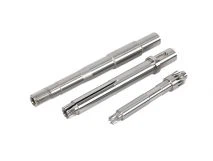
Now, let's talk about some related components that can impact the belt drive system. For example, Cylindrical Shaft Sleeves are important for providing a smooth surface for the pulleys to rotate on. They can help reduce friction and wear on the shafts. Precision Slender Shaft are designed to offer high - precision rotation, which is crucial for accurate power transmission in belt drive systems. And Electric Motor Shaft are the heart of the motor, and their proper functioning is essential for the overall performance of the belt drive.
In conclusion, adjusting the tension of a drive belt pulley is not a difficult task if you follow the right steps. Regular maintenance and proper tension adjustment can significantly extend the life of your belt and pulley system, improve efficiency, and reduce the risk of breakdowns.
If you're in the market for high - quality drive belt pulleys, related shafts, or other components, I'd love to talk to you. Whether you have questions about tension adjustment or need advice on choosing the right products for your system, I'm here to help. Reach out to me, and we can start a discussion about your specific needs.
References:
- Belt Drives Handbook - Industry Standard Publication
- Manufacturer's Manuals for Belt and Pulley Systems