

How to calculate the maximum load of a worm drive shaft?
Dec 29, 2025
Calculating the maximum load of a worm drive shaft is a crucial aspect in various industrial applications. As a trusted worm drive shaft supplier, we understand the significance of accurate load calculations to ensure the optimal performance and longevity of the shafts in different working environments. In this blog, we will delve into the methods and considerations for calculating the maximum load of a worm drive shaft.
Understanding the Basics of Worm Drive Shafts
Before we dive into the load calculation, it's essential to have a basic understanding of worm drive shafts. A worm drive consists of a worm (a screw-like gear) and a worm wheel. The worm is typically the driving element, and the worm wheel is the driven element. Worm drive shafts are commonly used in applications where high torque and low speed are required, such as in conveyor systems, elevators, and industrial machinery.
The unique geometry of the worm and worm wheel results in a high reduction ratio, which means that a small input rotation can generate a large output torque. However, this also means that the worm drive shaft is subjected to significant forces and stresses during operation. Therefore, accurately calculating the maximum load is vital to prevent premature failure and ensure the safety and reliability of the system.
Factors Affecting the Maximum Load of a Worm Drive Shaft
Several factors influence the maximum load that a worm drive shaft can withstand. These factors need to be carefully considered during the load calculation process.
1. Material Properties
The material of the worm drive shaft plays a crucial role in determining its load-carrying capacity. Different materials have different mechanical properties, such as strength, hardness, and toughness. For example, steel is a commonly used material for worm drive shafts due to its high strength and good machinability. However, the specific type of steel and its heat treatment can significantly affect its performance. Other materials, such as stainless steel or alloy steel, may be used in applications where corrosion resistance or higher strength is required.
2. Shaft Geometry
The geometry of the worm drive shaft, including its diameter, length, and the shape of the worm and worm wheel, also affects its load-carrying capacity. A larger diameter shaft generally has a higher load-carrying capacity than a smaller diameter shaft. However, increasing the diameter also increases the weight and cost of the shaft. The length of the shaft can affect its deflection under load, which can in turn affect the performance of the worm drive. The shape of the worm and worm wheel, such as the helix angle and the number of threads, can also influence the load distribution and the efficiency of the drive.
3. Operating Conditions
The operating conditions, such as the speed, torque, and temperature, have a significant impact on the maximum load of a worm drive shaft. Higher speeds and torques increase the forces and stresses on the shaft, which can reduce its load-carrying capacity. Elevated temperatures can also affect the material properties of the shaft, such as reducing its strength and hardness. Additionally, the presence of vibration, shock, and misalignment can further increase the stresses on the shaft and reduce its service life.
4. Lubrication
Proper lubrication is essential for the smooth operation and longevity of a worm drive shaft. Lubrication reduces friction and wear between the worm and the worm wheel, which can increase the efficiency of the drive and reduce the stresses on the shaft. The type of lubricant and the lubrication method can also affect the performance of the worm drive. For example, using a high-quality lubricant with the appropriate viscosity can provide better protection against wear and corrosion.
Methods for Calculating the Maximum Load of a Worm Drive Shaft
There are several methods for calculating the maximum load of a worm drive shaft, depending on the complexity of the application and the available data. Here are some common methods:
1. Analytical Methods
Analytical methods involve using mathematical equations to calculate the forces and stresses on the worm drive shaft based on the operating conditions and the geometry of the shaft. These methods typically require a good understanding of mechanics and materials science. For example, the maximum torque that a worm drive shaft can transmit can be calculated using the following equation:
[T = \frac{P}{\omega}]
where (T) is the torque, (P) is the power transmitted by the shaft, and (\omega) is the angular velocity of the shaft.
Once the torque is known, the stresses on the shaft can be calculated using equations from mechanics of materials. For example, the shear stress (\tau) in a solid circular shaft can be calculated using the following equation:
[\tau=\frac{16T}{\pi d^{3}}]
where (d) is the diameter of the shaft.
The maximum load that the shaft can withstand can then be determined by comparing the calculated stresses with the allowable stresses for the material of the shaft.
2. Finite Element Analysis (FEA)
Finite Element Analysis (FEA) is a numerical method that can be used to analyze the behavior of a worm drive shaft under load. FEA involves dividing the shaft into a large number of small elements and solving the equations of motion and equilibrium for each element. This method can provide a more accurate and detailed analysis of the stresses and deformations in the shaft, especially for complex geometries and loading conditions.
To perform an FEA analysis, a 3D model of the worm drive shaft is first created using a computer-aided design (CAD) software. The model is then imported into an FEA software, where the material properties, boundary conditions, and loading conditions are defined. The software then solves the equations and generates a detailed analysis of the stresses and deformations in the shaft.
3. Experimental Testing
Experimental testing is another method for determining the maximum load of a worm drive shaft. This method involves testing a physical prototype of the shaft under controlled conditions to measure its performance and determine its load-carrying capacity. Experimental testing can provide valuable data for validating the analytical and numerical models and for improving the design of the shaft.
There are several types of experimental tests that can be performed on a worm drive shaft, such as torque testing, fatigue testing, and wear testing. Torque testing involves applying a known torque to the shaft and measuring the resulting deformation and stress. Fatigue testing involves subjecting the shaft to repeated loading cycles to determine its fatigue life. Wear testing involves measuring the wear rate of the shaft under different operating conditions.
Importance of Accurate Load Calculation
Accurately calculating the maximum load of a worm drive shaft is essential for several reasons.
1. Safety
Ensuring that the worm drive shaft can withstand the maximum load is crucial for the safety of the system and the operators. Overloading the shaft can lead to premature failure, which can cause the system to malfunction and potentially result in accidents and injuries.
2. Performance
Proper load calculation ensures that the worm drive shaft operates within its design limits, which can improve the performance and efficiency of the system. An under-designed shaft may experience excessive deflection and wear, which can reduce the efficiency of the drive and increase the energy consumption.
3. Cost-Effectiveness
Accurate load calculation can help to optimize the design of the worm drive shaft, which can reduce the cost of the system. An over-designed shaft may be more expensive and heavier than necessary, while an under-designed shaft may require frequent replacement, which can increase the maintenance cost.
Related Products for Worm Drive Shaft Applications
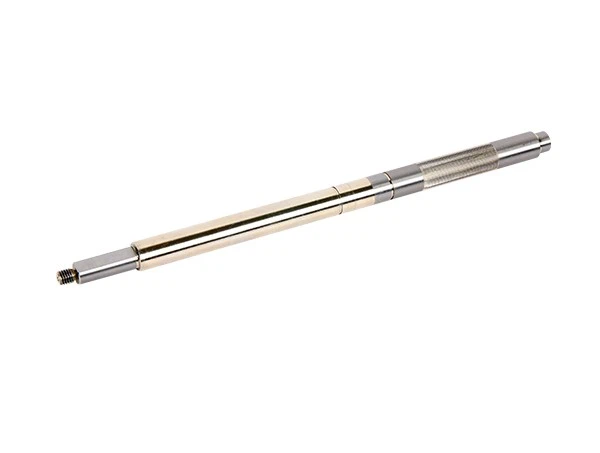
In addition to worm drive shafts, we also offer a range of related products that can enhance the performance and reliability of your worm drive system. These products include Cylindrical Shaft Sleeves, Motor Rotor Shaft, and Precision Gearbox Shafts. These products are designed to meet the high standards of quality and performance required in industrial applications.

Conclusion
Calculating the maximum load of a worm drive shaft is a complex but essential process that requires careful consideration of several factors. By using the appropriate methods and taking into account the material properties, shaft geometry, operating conditions, and lubrication, you can ensure that your worm drive shaft operates safely and efficiently. As a leading worm drive shaft supplier, we have the expertise and experience to help you with your load calculation and product selection needs. If you have any questions or need further information, please feel free to contact us for procurement and negotiation.
References
- Budynas, R. G., & Nisbett, J. K. (2011). Shigley's Mechanical Engineering Design. McGraw-Hill.
- Juvinall, R. C., & Marshek, K. M. (2011). Fundamentals of Machine Component Design. Wiley.
- Spotts, M. F., Shoup, T. E., & Nahavandi, A. (2004). Design of Machine Elements. Prentice Hall.