

How to detect step shaft wear early?
Nov 04, 2025
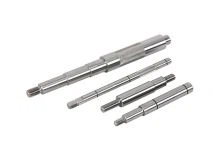
As a step shaft supplier, I've seen firsthand how crucial it is to detect step shaft wear early. In the world of machinery and equipment, step shafts play a vital role. They're used in all sorts of applications, from simple household appliances to complex industrial machinery. But over time, these shafts can wear out, and if you don't catch the wear early, it can lead to some serious problems.
Why Early Detection Matters
First off, let's talk about why it's so important to detect step shaft wear early. When a step shaft starts to wear, it might seem like a small issue at first. Maybe you notice a little bit of extra noise or a slight decrease in performance. But if you ignore these signs, the wear can progress quickly. As the shaft wears, it can cause misalignment, which puts extra stress on other components in the system. This can lead to premature failure of other parts, increased maintenance costs, and even unexpected downtime.
Downtime is a big deal, especially in industrial settings. Every minute that a machine is down means lost production and lost revenue. And if a worn step shaft causes a major breakdown, it can take days or even weeks to get the machine up and running again. So, by detecting wear early, you can avoid these costly problems and keep your operations running smoothly.
Signs of Step Shaft Wear
So, how do you know if a step shaft is starting to wear? There are a few signs to look out for. One of the most obvious signs is noise. If you hear a grinding, rattling, or clicking sound coming from the machine, it could be a sign that the step shaft is wearing. This noise is usually caused by the uneven surface of the worn shaft rubbing against other components.
Another sign is vibration. If you notice that the machine is vibrating more than usual, it could be due to a worn step shaft. The imbalance caused by the wear can cause the machine to vibrate, which can also lead to further damage if not addressed.
You might also notice a decrease in performance. If the machine isn't working as efficiently as it used to, or if it's having trouble completing its tasks, it could be because of a worn step shaft. This could manifest as slower operation, reduced power output, or inconsistent results.

Inspection Methods
Now that you know what to look for, let's talk about how to actually detect step shaft wear. There are several methods you can use, depending on the type of shaft and the application.
Visual Inspection
The simplest and most basic method is visual inspection. This involves taking a close look at the step shaft to see if there are any signs of wear. You can use a magnifying glass or a microscope to get a better view of the surface. Look for things like scratches, grooves, or discoloration. If you see any of these signs, it's a good indication that the shaft is wearing.
Dimensional Measurement
Another method is dimensional measurement. You can use tools like calipers or micrometers to measure the diameter of the step shaft at different points. If the diameter has changed over time, it could be a sign of wear. You can also measure the length of the shaft to see if it has stretched or shrunk.
Non-Destructive Testing
For more in-depth inspection, you can use non-destructive testing methods. One common method is ultrasonic testing. This involves sending high-frequency sound waves through the shaft and analyzing the reflections. If there are any internal defects or wear, the sound waves will be reflected differently, which can be detected by the testing equipment.
Another non-destructive testing method is magnetic particle testing. This is used to detect surface and near-surface defects in ferromagnetic materials. A magnetic field is applied to the shaft, and iron particles are then applied to the surface. If there are any defects, the magnetic field will cause the particles to cluster around the defect, making it visible.
Preventive Maintenance
In addition to detecting wear early, it's also important to implement a preventive maintenance program. This can help reduce the risk of wear and extend the lifespan of the step shaft.
One of the most important aspects of preventive maintenance is lubrication. Proper lubrication helps reduce friction between the shaft and other components, which can prevent wear. Make sure to use the right type of lubricant for the application, and follow the manufacturer's recommendations for lubrication intervals.
Another important aspect is alignment. Misalignment can cause uneven wear on the step shaft, so it's important to make sure that the shaft is properly aligned. This can be done using alignment tools and techniques.
Regular cleaning is also important. Dirt, debris, and other contaminants can cause wear on the step shaft, so it's important to keep the shaft clean. You can use a clean cloth or a brush to remove any dirt or debris from the surface of the shaft.
Our Step Shaft Products
As a step shaft supplier, we offer a wide range of high-quality step shafts for various applications. Our Precision Slender Shaft is designed for applications that require high precision and accuracy. It's made from high-quality materials and is manufactured to strict tolerances to ensure optimal performance.
Our Internal Spline Shaft is another popular product. It's used in applications where torque needs to be transmitted between two components. The internal splines provide a secure connection and allow for smooth operation.
And our Servo Motor Shaft is specifically designed for use in servo motors. It's engineered to provide high torque and precise control, making it ideal for applications that require high-performance motion control.
Contact Us for Procurement
If you're in the market for step shafts, we'd love to hear from you. Whether you need a single shaft for a small project or a large quantity for an industrial application, we can help. Our team of experts can work with you to understand your specific requirements and recommend the best step shaft solution for your needs.
Don't wait until a worn step shaft causes problems for your operations. Detect wear early and take preventive measures to keep your machinery running smoothly. And if you need high-quality step shafts, contact us today to start the procurement process.
References
- Machinery's Handbook, 31st Edition
- ASME Standard B18.2.1 - Square and Hex Bolts and Screws
- ISO 9001:2015 - Quality Management Systems Requirements