

How to improve the fatigue resistance of a spline shaft?
Oct 15, 2025
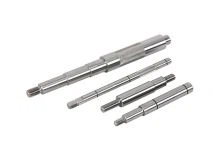
As a spline shaft supplier, I understand the critical importance of fatigue resistance in spline shafts. Fatigue failure is a common and costly problem in many mechanical systems, and improving the fatigue resistance of spline shafts can significantly enhance the reliability and longevity of these systems. In this blog post, I will share some effective strategies and techniques that can be employed to improve the fatigue resistance of spline shafts.
Understanding Fatigue in Spline Shafts
Before delving into the methods of improving fatigue resistance, it is essential to understand the concept of fatigue in spline shafts. Fatigue is the progressive and localized structural damage that occurs when a material is subjected to cyclic loading. In the case of spline shafts, cyclic loading can result from various factors, such as torque fluctuations, vibration, and misalignment. Over time, these cyclic loads can cause microscopic cracks to form in the shaft material, which can eventually grow and lead to catastrophic failure.
The fatigue life of a spline shaft is influenced by several factors, including the material properties, the geometry of the spline, the surface finish, and the operating conditions. By carefully considering these factors and implementing appropriate measures, it is possible to improve the fatigue resistance of spline shafts and extend their service life.
Material Selection
One of the most fundamental steps in improving the fatigue resistance of a spline shaft is selecting the right material. Different materials have different fatigue properties, and choosing a material with high fatigue strength can significantly enhance the shaft's resistance to fatigue failure.
High-Strength Steels
High-strength steels are commonly used for spline shafts due to their excellent combination of strength, toughness, and fatigue resistance. Steels such as 4140, 4340, and 8620 are popular choices for spline shaft applications. These steels can be heat-treated to achieve the desired strength and hardness, which can improve their fatigue performance.
Alloy Steels
Alloy steels, which contain additional elements such as chromium, nickel, and molybdenum, can offer even better fatigue resistance than plain carbon steels. These alloying elements can enhance the hardenability, strength, and toughness of the steel, making it more resistant to fatigue cracking. For example, a spline shaft made from a high-alloy steel like AISI 4340 can have significantly higher fatigue strength compared to a shaft made from a plain carbon steel.

Case-Hardening Steels
Case-hardening steels are another option for improving the fatigue resistance of spline shafts. These steels have a soft core and a hard outer layer, which provides a good combination of toughness and wear resistance. By case-hardening the spline shaft, the surface hardness can be increased, which can improve the shaft's resistance to fatigue cracking and wear. Common case-hardening processes include carburizing, nitriding, and carbonitriding.
Geometric Design
The geometry of the spline can also have a significant impact on its fatigue resistance. By optimizing the spline geometry, it is possible to reduce stress concentrations and improve the distribution of stress along the shaft.
Spline Profile
The profile of the spline plays a crucial role in determining its fatigue performance. A well-designed spline profile can minimize stress concentrations and ensure a more uniform distribution of stress. For example, a involute spline profile is often preferred over a straight-sided spline profile because it provides a more gradual transfer of load and reduces stress concentrations at the root of the spline teeth.
Root Radius
The root radius of the spline teeth is another important geometric parameter that affects fatigue resistance. A larger root radius can reduce stress concentrations at the root of the teeth, which can improve the shaft's resistance to fatigue cracking. Therefore, it is recommended to use a spline design with a generous root radius.
Spline Length
The length of the spline can also influence its fatigue performance. A longer spline can distribute the load over a larger area, which can reduce the stress concentration and improve the fatigue resistance. However, increasing the spline length also increases the weight and cost of the shaft, so a balance needs to be struck between fatigue resistance and other design considerations.
Surface Finish
The surface finish of the spline shaft can have a significant impact on its fatigue resistance. A smooth surface finish can reduce stress concentrations and prevent the initiation of fatigue cracks.
Machining Processes
The machining processes used to manufacture the spline shaft can affect its surface finish. For example, grinding is a common machining process that can produce a smooth surface finish. By using a fine-grit grinding wheel and optimizing the grinding parameters, it is possible to achieve a high-quality surface finish with low surface roughness.
Surface Treatments
Surface treatments can also be used to improve the surface finish and fatigue resistance of the spline shaft. For example, shot peening is a surface treatment process that involves bombarding the surface of the shaft with small spherical particles. This process can induce compressive stresses in the surface layer of the shaft, which can improve its resistance to fatigue cracking. Another surface treatment option is nitriding, which can increase the surface hardness and wear resistance of the shaft.
Operating Conditions
The operating conditions of the spline shaft can also affect its fatigue resistance. By controlling the operating conditions, it is possible to reduce the cyclic loads and stress levels on the shaft, which can improve its fatigue performance.
Lubrication
Proper lubrication is essential for reducing friction and wear in the spline joint, which can also improve the fatigue resistance of the shaft. A good lubricant can reduce the coefficient of friction between the spline teeth, which can reduce the stress levels and prevent the initiation of fatigue cracks. Therefore, it is important to use a high-quality lubricant and ensure that the spline joint is properly lubricated.
Vibration and Misalignment
Vibration and misalignment can cause additional cyclic loads and stress concentrations on the spline shaft, which can reduce its fatigue resistance. Therefore, it is important to minimize vibration and misalignment in the mechanical system. This can be achieved by using proper mounting techniques, balancing rotating components, and aligning the shafts accurately.
Conclusion
Improving the fatigue resistance of a spline shaft is a complex but achievable task. By carefully considering the material selection, geometric design, surface finish, and operating conditions, it is possible to enhance the shaft's resistance to fatigue failure and extend its service life. As a spline shaft supplier, I am committed to providing high-quality spline shafts that meet the specific requirements of my customers. If you are interested in purchasing spline shafts or have any questions about improving their fatigue resistance, please feel free to [contact me for procurement and negotiation].
References
- Shigley, J. E., & Mischke, C. R. (2001). Mechanical Engineering Design. McGraw-Hill.
- Budynas, R. G., & Nisbett, J. K. (2011). Shigley's Mechanical Engineering Design. McGraw-Hill.
- Dowling, N. E. (2012). Mechanical Behavior of Materials: Engineering Methods for Deformation, Fracture, and Fatigue. Pearson.