

How to manufacture an internal gear?
Dec 11, 2025
As a seasoned supplier of internal gears, I've witnessed firsthand the intricate process behind their manufacture. Internal gears play a crucial role in various mechanical systems, offering unique advantages in terms of compact design and efficient power transmission. In this blog post, I'll take you through the step-by-step process of manufacturing an internal gear, sharing insights and best practices along the way.
Understanding the Basics of Internal Gears
Before delving into the manufacturing process, it's essential to understand what internal gears are and how they differ from other types of gears. An internal gear has teeth cut on the inside surface of a ring, as opposed to external gears, which have teeth on the outer surface. This design allows internal gears to mesh with external gears, creating a compact and efficient gear system.
Internal gears are commonly used in applications where space is limited, such as automotive transmissions, industrial machinery, and robotics. They offer several advantages over external gears, including a higher torque capacity, smoother operation, and reduced noise levels.
Design and Engineering
The first step in manufacturing an internal gear is the design and engineering phase. This involves determining the specifications of the gear, such as the number of teeth, pitch diameter, pressure angle, and tooth profile. These specifications are crucial as they determine the gear's performance, efficiency, and compatibility with other components in the system.
To design an internal gear, engineers use specialized software that allows them to create accurate 3D models of the gear. These models can be used to simulate the gear's performance under different operating conditions, ensuring that it meets the required specifications.
Once the design is finalized, the next step is to create a detailed engineering drawing of the gear. This drawing includes all the necessary dimensions, tolerances, and surface finish requirements. It serves as a blueprint for the manufacturing process, ensuring that the gear is produced to the exact specifications.
Material Selection
The choice of material is another critical factor in the manufacturing of internal gears. The material must have the right combination of strength, hardness, and wear resistance to withstand the high loads and stresses encountered in operation.
Common materials used for internal gears include steel, cast iron, and non-ferrous metals such as bronze and aluminum. Steel is the most widely used material due to its high strength, durability, and cost-effectiveness. Different grades of steel can be used depending on the specific requirements of the application.
For example, case-hardened steel is often used for gears that require high surface hardness and wear resistance. This type of steel is heat-treated to create a hard outer layer while maintaining a tough core, providing excellent performance in high-stress applications.
Manufacturing Processes
There are several manufacturing processes that can be used to produce internal gears, each with its own advantages and limitations. The choice of process depends on factors such as the gear's size, complexity, quantity, and the required precision.
Hobbing
Hobbing is one of the most common methods used for manufacturing internal gears. It involves using a specialized cutting tool called a hob to cut the teeth into the gear blank. The hob is a cylindrical tool with helical teeth that mesh with the gear blank as it rotates.
During the hobbing process, the gear blank is mounted on a spindle and rotated at a specific speed. The hob is then fed into the gear blank, cutting the teeth as it moves along the axis of the gear. The hob's shape and the speed of rotation determine the shape and size of the teeth.
Hobbing is a highly efficient process that can produce gears with high precision and accuracy. It is suitable for mass production of gears with a relatively simple tooth profile. However, it may not be suitable for gears with complex shapes or small quantities.
Shaping
Shaping is another method used for manufacturing internal gears. It involves using a shaping machine to cut the teeth into the gear blank. The shaping machine uses a reciprocating cutter that moves up and down while the gear blank rotates.
During the shaping process, the cutter is fed into the gear blank, cutting the teeth one at a time. The cutter's shape and the speed of rotation determine the shape and size of the teeth.
Shaping is a more versatile process than hobbing, as it can be used to produce gears with complex shapes and profiles. It is also suitable for small quantities of gears or gears with a high degree of precision. However, it is a slower process than hobbing and may be more expensive.
Broaching
Broaching is a process that involves using a broach, a specialized cutting tool with multiple teeth, to cut the teeth into the gear blank. The broach is pushed or pulled through the gear blank, removing material in a single pass.
Broaching is a highly efficient process that can produce gears with high precision and accuracy. It is suitable for mass production of gears with a simple tooth profile. However, it requires expensive broaching tools and is not suitable for gears with complex shapes or small quantities.
Grinding
Grinding is a finishing process that is often used to improve the surface finish and accuracy of the gear teeth. It involves using a grinding wheel to remove a small amount of material from the teeth, resulting in a smoother and more precise surface.
Grinding can be used after hobbing, shaping, or broaching to achieve the required surface finish and dimensional accuracy. It is especially important for gears that require high precision and smooth operation, such as those used in automotive transmissions and aerospace applications.
Heat Treatment
After the gears are cut, they often undergo heat treatment to improve their mechanical properties. Heat treatment involves heating the gears to a specific temperature and then cooling them at a controlled rate to achieve the desired hardness, strength, and toughness.
There are several types of heat treatment processes that can be used for internal gears, including annealing, quenching, and tempering. Annealing is a process that involves heating the gears to a high temperature and then cooling them slowly to relieve internal stresses and improve their machinability.
Quenching is a process that involves heating the gears to a high temperature and then cooling them rapidly in a quenching medium, such as oil or water. This process hardens the gears, making them more resistant to wear and deformation.
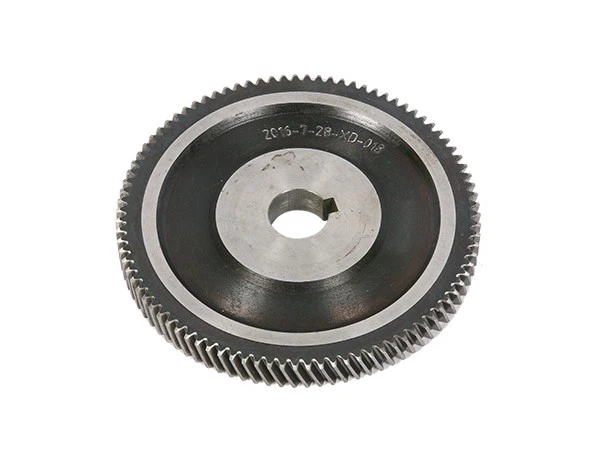

Tempering is a process that involves heating the quenched gears to a lower temperature and then cooling them slowly. This process reduces the brittleness of the gears and improves their toughness and ductility.
Finishing Operations
Once the gears have been heat-treated, they may undergo several finishing operations to improve their surface finish and appearance. These operations include deburring, honing, and lapping.
Deburring is a process that involves removing the sharp edges and burrs from the gear teeth. This is typically done using a deburring tool or by hand. Deburring is important to prevent damage to other components in the system and to improve the gear's performance.
Honing is a process that involves using a honing stone to remove a small amount of material from the gear teeth, improving their surface finish and accuracy. Honing is often used for gears that require a high degree of precision and smooth operation.
Lapping is a process that involves using a lapping compound and a lapping plate to polish the gear teeth, resulting in a mirror-like finish. Lapping is typically used for gears that require a very high surface finish and accuracy, such as those used in precision instruments and aerospace applications.
Quality Control
Quality control is an essential part of the manufacturing process to ensure that the internal gears meet the required specifications and standards. This involves inspecting the gears at various stages of the manufacturing process to check for dimensional accuracy, surface finish, and material properties.
Common quality control methods include measuring the gear's dimensions using precision measuring tools such as calipers, micrometers, and coordinate measuring machines (CMMs). These tools can provide accurate measurements of the gear's size, shape, and position, ensuring that it meets the required tolerances.
In addition to dimensional inspection, the gears may also be tested for hardness, material composition, and surface finish using specialized testing equipment. These tests can provide valuable information about the gear's mechanical properties and performance, ensuring that it is suitable for its intended application.
Assembly and Testing
Once the internal gears have been manufactured and inspected, they are ready for assembly into the final product. This involves mounting the gears onto shafts and other components, ensuring that they are properly aligned and meshed.
After assembly, the gears are typically tested to ensure that they operate smoothly and efficiently. This may involve running the gears under load and monitoring their performance using sensors and other testing equipment. Any issues or defects detected during the testing process can be addressed before the product is released to the market.
Conclusion
Manufacturing an internal gear is a complex and precise process that requires a combination of advanced technology, skilled labor, and strict quality control. By following the steps outlined in this blog post, you can ensure that your internal gears are produced to the highest standards of quality and performance.
As a supplier of internal gears, we are committed to providing our customers with the best possible products and services. We use the latest manufacturing technologies and techniques to ensure that our gears are of the highest quality and meet the most demanding specifications.
If you are interested in purchasing internal gears or have any questions about our products, please feel free to contact us for a consultation. We look forward to working with you and helping you find the perfect solution for your needs.
References
- "Gear Manufacturing Handbook" by Earle Buckingham
- "Mechanical Engineering Design" by Joseph E. Shigley and Charles R. Mischke
- "Fundamentals of Machine Elements" by Robert C. Juvinall and Kurt M. Marshek