

How to optimize the design of a gear shaft?
Apr 10, 2026
As a gear shaft supplier deeply entrenched in the mechanical components industry, I understand the pivotal role that a well - designed gear shaft plays in various machinery systems. The optimization of gear shaft design is not only a technical challenge but also a key factor in enhancing the efficiency, reliability, and performance of the equipment in which it is used.
Understanding the Basics of Gear Shaft Design
A gear shaft is a crucial component that combines the functions of a shaft and gears. It is responsible for transmitting power and torque while coordinating the rotational movement of different parts of a machine. The design process starts with a clear understanding of the application requirements. This includes factors such as the speed of rotation, the amount of torque to be transmitted, the operating environment (such as temperature, humidity, and the presence of corrosive agents), and the expected service life of the gear shaft.
For example, in high - speed applications, minimizing vibration and ensuring smooth operation are of utmost importance. A Gear Shaft used in a precision machine tool may need to be designed with extremely tight tolerances to maintain the accuracy of the machining process. On the other hand, in heavy - duty industrial applications, the gear shaft should be able to withstand high loads without deformation or failure.
Material Selection
One of the primary steps in optimizing gear shaft design is the careful selection of materials. The material should possess the right balance of strength, hardness, toughness, and wear resistance. Common materials for gear shafts include various types of steel, such as carbon steel and alloy steel.
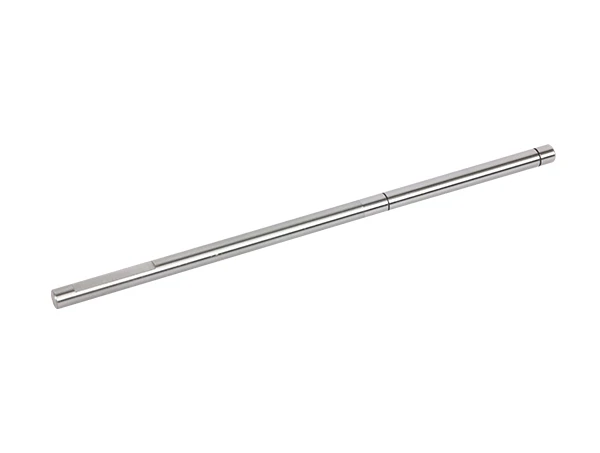

Carbon steel is a popular choice due to its relatively low cost and good machinability. For less demanding applications where the load and speed are not extremely high, a medium - carbon steel can be sufficient. However, for more severe conditions, alloy steels are often preferred. Alloy steels contain elements such as chromium, nickel, and molybdenum, which enhance their mechanical properties. For instance, a gear shaft made of a high - strength alloy steel can better resist fatigue and wear, making it suitable for long - term operation in high - stress environments.
In addition to steel, other materials like stainless steel can be used in applications where corrosion resistance is a major concern, such as in marine or food processing industries. The choice of material also affects the manufacturing process and the final cost of the gear shaft.
Geometric Design Optimization
The geometric design of a gear shaft has a significant impact on its performance. The diameter of the shaft, the pitch and profile of the gears, and the overall length and shape of the shaft all need to be carefully considered.
The diameter of the shaft is determined by the amount of torque it needs to transmit. A larger diameter shaft can generally withstand higher torques, but it also adds weight and cost to the system. Therefore, an optimal diameter should be calculated based on the specific torque requirements and the allowable stress limits of the selected material.
The gear profile is another critical aspect. Different gear profiles, such as involute, cycloidal, etc., have different characteristics in terms of load - carrying capacity, smoothness of operation, and noise generation. The involute gear profile is widely used due to its simplicity, ease of manufacturing, and good meshing properties. However, in some special applications, other profiles may be more suitable.
The overall length and shape of the shaft also need to be designed to fit the specific installation requirements. For example, a stepped shaft may be used to accommodate different components such as bearings and gears at different positions. The transitions between different diameters on the shaft should be smooth to avoid stress concentration, which can lead to premature failure.
Manufacturing Process Considerations
The optimization of gear shaft design is closely related to the manufacturing process. Different manufacturing methods, such as forging, machining, and heat treatment, can significantly affect the final properties and quality of the gear shaft.
Forging is often used to improve the internal structure and strength of the shaft. By subjecting the metal to high pressure and deformation, the grain structure of the material becomes more uniform, resulting in better mechanical properties. After forging, the shaft usually needs to be machined to achieve the required dimensions and surface finish. Machining operations such as turning, milling, and grinding are commonly used.
Heat treatment is an essential step in the manufacturing process. It can be used to adjust the hardness and toughness of the gear shaft. For example, quenching and tempering can increase the strength and hardness of the steel, while annealing can relieve internal stresses and improve the machinability.
The choice of manufacturing process also depends on the quantity of gear shafts to be produced. For small - batch production, machining from bar stock may be a more cost - effective option. For large - scale production, forging combined with automated machining processes can reduce costs and improve efficiency.
Connection and Assembly Design
A well - designed gear shaft also needs to have proper connection and assembly features. The gear shaft may need to be connected to other components such as Motor Output Shaft or Motor Rotor Shaft. The connection method can be through keys, splines, or couplings.
Keys are a simple and common way to connect a gear to the shaft. They prevent relative rotation between the two components. Splines, on the other hand, provide a more precise and stronger connection, especially in applications where high torque and accurate positioning are required. Couplings are used to connect the gear shaft to other shafts, allowing for some misalignment and transmitting torque between different parts of the system.
During the assembly process, it is important to ensure proper alignment and clearance. Misalignment can cause uneven wear, vibration, and noise, reducing the efficiency and service life of the gear shaft. Therefore, the design should include proper alignment features and tolerances to ensure smooth assembly and operation.
Quality Control and Testing
To ensure the optimal performance of the gear shaft, strict quality control and testing procedures are necessary. Quality control starts from the raw material inspection. The material should meet the specified chemical composition and mechanical properties. During the manufacturing process, in - process inspection is carried out at various stages to detect any potential defects, such as cracks, porosity, or dimensional deviations.
After the manufacturing is completed, a series of tests are conducted. These include hardness testing to ensure that the heat treatment has achieved the desired properties, non - destructive testing (such as ultrasonic testing or magnetic particle testing) to detect internal defects, and dynamic balancing to reduce vibration during operation.
The gear shaft is also usually tested under simulated operating conditions to verify its performance. This can include tests for torque transmission efficiency, wear resistance, and vibration characteristics. The test results are used to further optimize the design if necessary.
Conclusion
Optimizing the design of a gear shaft is a complex and multi - faceted process that requires a comprehensive understanding of the application requirements, materials, manufacturing processes, and assembly methods. As a gear shaft supplier, we are committed to providing high - quality gear shafts that meet the diverse needs of our customers. Through continuous research and development, and strict quality control, we can ensure that our gear shafts are not only reliable but also optimized for maximum performance.
If you are in need of high - quality gear shafts for your machinery, we invite you to contact us for procurement and further discussion. Our team of experts is ready to work with you to find the best solutions for your specific requirements.
References
- Shigley's Mechanical Engineering Design, 10th Edition
- Theory of Machines and Mechanisms, 4th Edition
- Fundamentals of Machine Component Design, 6th Edition