

What are the basic components of an induction motor?
May 21, 2025
An induction motor is a cornerstone of modern industrial and commercial applications, renowned for its reliability, efficiency, and simplicity. As a leading supplier of motor basic components, I've had the privilege of witnessing the inner workings of these remarkable machines up close. In this blog, I'll delve into the fundamental components that make an induction motor function, highlighting their roles and importance.
Stator
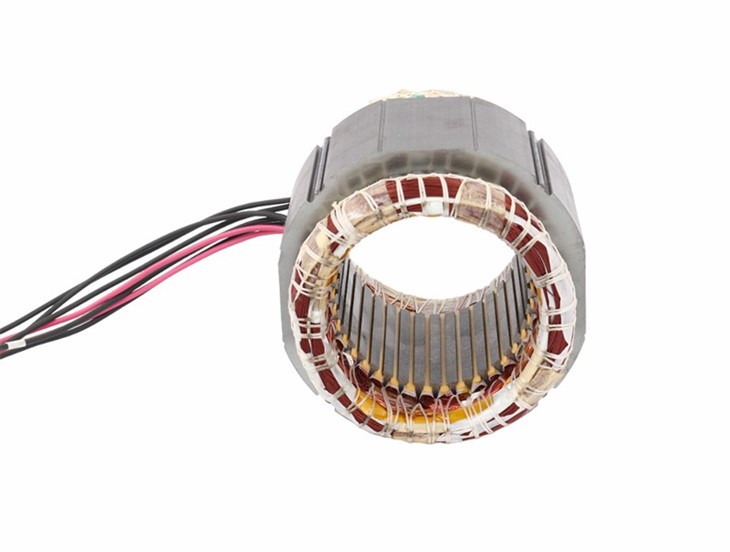
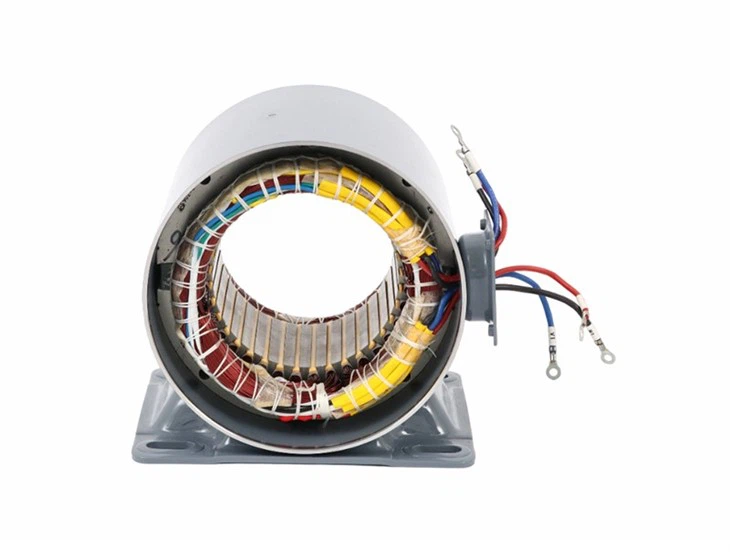
The stator is the stationary part of an induction motor and forms the outer shell of the motor. It consists of a laminated iron core and stator windings. The laminated iron core is made up of thin steel sheets stacked together to reduce eddy current losses. These losses occur when magnetic fields induce circulating currents in the core, which can lead to energy wastage and overheating. By using laminated sheets, the eddy currents are confined to small loops within each sheet, minimizing their impact.
The stator windings are coils of insulated copper or aluminum wire wound around the stator core. These windings are connected in a specific pattern to create a rotating magnetic field when an alternating current (AC) is applied. The number of windings and their arrangement determine the motor's speed and torque characteristics. For example, a motor with more windings will typically have a lower speed but higher torque.
The rotating magnetic field generated by the stator is the key to the operation of an induction motor. It interacts with the rotor to induce a current in the rotor windings, which in turn creates a magnetic field that opposes the stator's magnetic field. This interaction between the two magnetic fields causes the rotor to rotate.
Rotor
The rotor is the rotating part of the induction motor and is located inside the stator. There are two main types of rotors used in induction motors: squirrel cage rotors and wound rotors.
Squirrel Cage Rotor
The squirrel cage rotor is the most common type of rotor used in induction motors. It consists of a laminated iron core with conducting bars placed in slots around the circumference of the core. The bars are short-circuited at both ends by end rings, forming a closed circuit. When the rotating magnetic field of the stator cuts across the conducting bars, it induces a current in the bars. This current creates a magnetic field that interacts with the stator's magnetic field, causing the rotor to rotate.
The simplicity and robustness of the squirrel cage rotor make it ideal for a wide range of applications. It is also relatively inexpensive to manufacture, which makes it a popular choice for small and medium-sized motors.
Wound Rotor
The wound rotor, also known as a slip ring rotor, consists of a laminated iron core with three-phase windings wound around it. The windings are connected to slip rings, which are mounted on the rotor shaft. Brushes make contact with the slip rings, allowing external resistors to be connected to the rotor windings.
The main advantage of the wound rotor is that it allows for greater control over the motor's speed and torque. By adjusting the resistance in the rotor circuit, the motor's speed can be varied over a wide range. This makes the wound rotor suitable for applications that require precise speed control, such as cranes and hoists.
Bearings
Bearings are essential components of an induction motor, as they support the rotor and allow it to rotate smoothly. There are two main types of bearings used in induction motors: ball bearings and roller bearings.
Ball Bearings
Ball bearings are the most common type of bearings used in small and medium-sized induction motors. They consist of a series of balls held in place by a cage, which separates the balls and prevents them from rubbing against each other. Ball bearings are designed to handle both radial and axial loads, making them suitable for a wide range of applications.
Roller Bearings
Roller bearings are used in larger induction motors and applications that require higher load capacities. They consist of cylindrical or tapered rollers held in place by a cage. Roller bearings are capable of handling greater radial loads than ball bearings, but they are less suitable for axial loads.
End Covers
The end covers are located at both ends of the motor and provide a protective enclosure for the stator and rotor. They also support the bearings and help to keep the motor's internal components in place. The end covers are typically made of cast iron or aluminum and are designed to be easy to remove for maintenance and inspection.
The end covers play an important role in the motor's performance and reliability. They help to prevent dust, dirt, and moisture from entering the motor, which can cause damage to the internal components. They also help to reduce noise and vibration, which can improve the motor's efficiency and lifespan. Motor End Cover
Cooling System
Induction motors generate heat during operation, which can cause damage to the motor's components if not properly dissipated. To prevent overheating, most induction motors are equipped with a cooling system.
The most common type of cooling system used in induction motors is the fan-cooled system. This system consists of a fan mounted on the motor shaft, which draws air through the motor and expels it through vents in the end covers. The air flow helps to carry away the heat generated by the motor, keeping it at a safe operating temperature.
In some applications, such as high-power motors or motors operating in harsh environments, additional cooling methods may be required. These methods include liquid cooling, where a coolant is circulated through the motor to absorb and dissipate the heat, and forced-air cooling, where a separate blower is used to provide a higher volume of air flow.
Capacitors
Capacitors are used in some single-phase induction motors to provide the necessary phase shift to start the motor. In a single-phase motor, the stator winding produces a pulsating magnetic field, which is not sufficient to start the motor. By adding a capacitor to the motor circuit, a phase shift is created between the main winding and the auxiliary winding, which produces a rotating magnetic field and allows the motor to start.
Capacitors are also used in some three-phase induction motors to improve the motor's power factor. The power factor is a measure of how effectively the motor uses electrical energy. A low power factor can result in higher energy costs and reduced efficiency. By adding a capacitor to the motor circuit, the power factor can be improved, reducing energy consumption and improving the motor's performance. Three-Phase Motor Components
Motor Coil Winding Components
The motor coil winding components are crucial for the proper functioning of an induction motor. These components include the wire used for the windings, the insulation materials, and the winding formers.
The wire used for the windings is typically made of copper or aluminum, as these materials have high electrical conductivity and are relatively inexpensive. The insulation materials are used to prevent the wire from short-circuiting and to protect it from damage. Common insulation materials include enamel, varnish, and paper.
The winding formers are used to hold the wire in place during the winding process. They are typically made of plastic or metal and are designed to match the shape and size of the stator or rotor core. Motor Coil Winding Components
Conclusion
In conclusion, an induction motor is a complex machine that consists of several basic components, each playing a crucial role in its operation. The stator, rotor, bearings, end covers, cooling system, capacitors, and motor coil winding components all work together to convert electrical energy into mechanical energy.
As a supplier of motor basic components, I understand the importance of providing high-quality components that meet the needs of our customers. Whether you're looking for a standard component or a custom solution, we have the expertise and resources to help you find the right product for your application.
If you're interested in learning more about our motor basic components or have any questions about induction motors, please don't hesitate to contact us. We'd be happy to discuss your requirements and provide you with a quote. Our team of experts is always available to assist you with your procurement needs and ensure that you get the best possible product at the best possible price.
References
- Chapman, S. J. (2012). Electric Machinery Fundamentals. McGraw-Hill Education.
- Fitzgerald, A. E., Kingsley, C., & Umans, S. D. (2003). Electric Machinery. McGraw-Hill Education.
- Krause, P. C., Wasynczuk, O., & Sudhoff, S. D. (2002). Analysis of Electric Machinery and Drive Systems. Wiley-IEEE Press.