

What are the challenges in designing high - speed gears?
May 26, 2025
As a gear supplier deeply entrenched in the industry, I've witnessed firsthand the intricate challenges that come with designing high - speed gears. High - speed gears play a crucial role in a wide range of applications, from automotive transmissions to aerospace propulsion systems. The demand for faster, more efficient, and reliable machinery has put increasing pressure on gear designers to push the boundaries of what is possible. In this blog, I'll delve into the key challenges that we face when designing high - speed gears and how we strive to overcome them.
1. Material Selection
One of the fundamental challenges in high - speed gear design is choosing the right materials. High - speed operation subjects gears to extreme stress, heat, and wear. The material must have high strength to withstand the forces generated during operation, good fatigue resistance to prevent crack initiation and propagation, and excellent wear resistance to maintain the gear's integrity over time.
For high - speed applications, alloy steels are often the material of choice. These steels can be heat - treated to achieve the desired combination of hardness and toughness. However, selecting the appropriate alloy and heat - treatment process is a complex task. Different applications may require different levels of surface hardness and core toughness. For example, gears in a high - performance racing car engine need to be able to handle high - frequency, high - load impacts, while gears in a precision industrial machine may require more consistent wear resistance.
In addition to traditional alloy steels, advanced materials such as ceramics and composites are also being explored for high - speed gear applications. Ceramics offer high hardness, low density, and excellent heat resistance, which can potentially improve gear performance. However, they are also brittle and difficult to manufacture, which poses challenges in terms of cost and reliability. Composites, on the other hand, can be tailored to have specific properties, but their long - term durability under high - speed and high - load conditions is still being investigated.
2. Tooth Profile Design
The tooth profile of a gear has a significant impact on its performance at high speeds. A well - designed tooth profile can reduce noise, vibration, and wear, while also improving power transmission efficiency. The most common tooth profiles for gears are the involute profile, which is widely used due to its simplicity and good meshing characteristics.
However, at high speeds, the involute profile may not be sufficient to meet the performance requirements. For example, high - speed gears may experience dynamic effects such as tooth deflections, which can lead to uneven load distribution and increased wear. To address these issues, designers may use modified tooth profiles, such as the double - crowned or tip - relief profiles. These modified profiles can help to compensate for tooth deflections and improve the load distribution along the tooth surface.
Another aspect of tooth profile design is the contact ratio. The contact ratio is the average number of teeth in contact during the meshing process. A higher contact ratio can reduce the load on each tooth and improve the gear's load - carrying capacity. However, increasing the contact ratio also increases the sliding between the teeth, which can lead to higher friction and wear. Therefore, finding the optimal contact ratio for high - speed gears is a delicate balance.
3. Lubrication and Cooling
Lubrication is essential for high - speed gears to reduce friction, wear, and heat generation. At high speeds, the lubricant must be able to form a stable film between the gear teeth to prevent metal - to - metal contact. The choice of lubricant depends on several factors, including the operating temperature, load, and speed of the gears.
Mineral oils and synthetic oils are commonly used as gear lubricants. Synthetic oils offer better performance at high temperatures and can provide longer service life. However, they are also more expensive than mineral oils. In addition to the type of lubricant, the lubrication method is also crucial. Splash lubrication is a simple and cost - effective method, but it may not be sufficient for high - speed gears. Pressure - fed lubrication systems can ensure a continuous supply of lubricant to the gear teeth, which is necessary for high - speed applications.
Cooling is also an important consideration for high - speed gears. The heat generated during operation can cause thermal expansion of the gears, which can lead to changes in the tooth profile and increased wear. Effective cooling methods, such as oil cooling or air cooling, can help to maintain the temperature of the gears within an acceptable range. However, implementing cooling systems adds complexity and cost to the gear design.
4. Dynamic Analysis
High - speed gears are subject to dynamic forces that can cause vibration, noise, and fatigue failure. Dynamic analysis is essential to understand the behavior of gears under operating conditions and to identify potential problems. Finite element analysis (FEA) and multi - body dynamics (MBD) are commonly used tools for dynamic analysis.
FEA can be used to analyze the stress and deformation of the gear teeth under static and dynamic loads. It can help to identify areas of high stress and potential failure points. MBD, on the other hand, can simulate the motion of the gears and the interaction between different components in the gear system. This can help to predict the vibration and noise levels of the gears and to optimize the design to reduce these issues.
However, dynamic analysis is a complex and time - consuming process. It requires accurate models of the gears and the surrounding components, as well as a good understanding of the operating conditions. In addition, the results of dynamic analysis are often sensitive to the input parameters, which can make it challenging to obtain reliable predictions.
5. Manufacturing Precision
The manufacturing precision of high - speed gears is critical to their performance. Even small deviations in the tooth profile, pitch, or surface finish can have a significant impact on the gear's noise, vibration, and wear characteristics. Therefore, high - speed gears require high - precision manufacturing processes.
CNC machining is commonly used to manufacture high - speed gears. It allows for precise control of the cutting parameters and can produce gears with high accuracy. However, CNC machining is also a relatively slow and expensive process. Grinding is another important process for high - speed gears, which can improve the surface finish and accuracy of the gear teeth.
In addition to the machining processes, the quality control of the manufacturing process is also crucial. Non - destructive testing methods, such as ultrasonic testing and magnetic particle testing, can be used to detect internal defects in the gears. Dimensional inspection using coordinate measuring machines (CMMs) can ensure that the gears meet the design specifications.

6. Cost - effectiveness
Designing high - speed gears is not only about achieving high performance but also about being cost - effective. The use of advanced materials, precision manufacturing processes, and sophisticated design techniques can significantly increase the cost of the gears. Therefore, finding the right balance between performance and cost is a major challenge.
One way to reduce the cost is to optimize the design to minimize the use of expensive materials and manufacturing processes. For example, by using a more efficient tooth profile or a smaller gear size, the amount of material required can be reduced. Another approach is to use standard components and manufacturing processes whenever possible, which can reduce the tooling and setup costs.
Conclusion
Designing high - speed gears is a complex and challenging task that requires a deep understanding of materials science, mechanical engineering, and manufacturing processes. From material selection to cost - effectiveness, each aspect of the design process presents its own set of challenges. As a gear supplier, we are constantly striving to overcome these challenges by investing in research and development, adopting advanced design and manufacturing technologies, and working closely with our customers to understand their specific requirements.
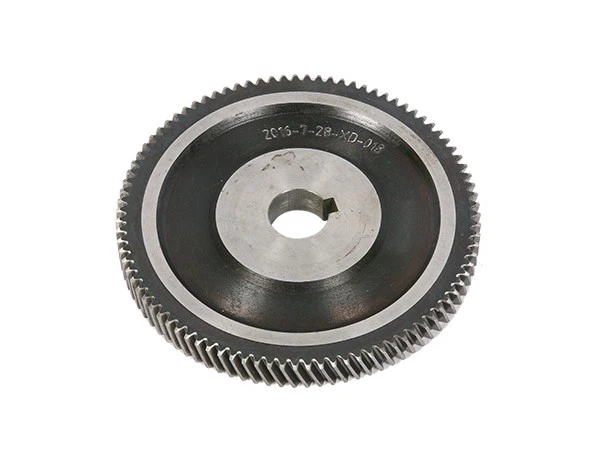
If you are in the market for high - speed gears, we are here to help. Our team of experts can work with you to design and manufacture gears that meet your performance, reliability, and cost requirements. Whether you need Precision Spur Gear for a precision industrial application or Helical Gear for a high - performance automotive transmission, we have the expertise and capabilities to deliver. Contact us today to start the procurement and negotiation process.
References
- Buckingham, E. (1949). Analytical Mechanics of Gears. McGraw - Hill.
- Townsend, D. P. (1992). Dudley's Gear Handbook. Marcel Dekker.
- Litvin, F. L., & Fuentes, A. (2004). Gear Geometry and Applied Theory. Cambridge University Press.