

What are the design considerations for step shafts in different industries?
Jun 13, 2025
Hey there! As a step shaft supplier, I've seen firsthand how crucial it is to get the design of step shafts right for different industries. In this blog, I'm gonna dive into the key design considerations for step shafts across various sectors.
Automotive Industry
In the automotive world, step shafts play a vital role in many components. For starters, they're used in transmissions. The design here has to be spot - on because the shaft needs to handle high torque and rotational speeds.
One major consideration is the material. We usually go for high - strength steels like alloy steel. These steels can withstand the stress and wear that come with the constant shifting and power transfer in a transmission. For example, a gearbox step shaft needs to be tough enough to transfer power from the engine to the wheels without breaking or deforming.
The diameter of the different steps on the shaft is also super important. Each step is designed to fit specific gears or bearings. A well - designed step shaft will have diameters that ensure a proper interference fit with the gears, which is essential for efficient power transmission. If the fit is too loose, there'll be a loss of power and excessive noise. On the other hand, if it's too tight, it can lead to premature wear of the components.
Another thing is the surface finish. In automotive applications, a smooth surface finish is required to reduce friction and wear. This not only improves the efficiency of the transmission but also extends the lifespan of the shaft and other related parts. You can check out our Gear Shaft for more details on shafts used in automotive transmissions.
Aerospace Industry
The aerospace industry has some of the most stringent requirements when it comes to step shaft design. Safety is the number one priority, and the shafts need to be lightweight yet incredibly strong.
Titanium alloys are often the go - to materials for aerospace step shafts. They offer a high strength - to - weight ratio, which is crucial for aircraft where every ounce matters. These shafts are used in various parts of an aircraft, such as the landing gear and the engine.
Precision is also of utmost importance. The tolerances for aerospace step shafts are extremely tight. Even the slightest deviation from the design specifications can lead to catastrophic failures. For example, in the engine, the step shaft needs to rotate at high speeds with minimal vibration. Any imbalance or misalignment can cause excessive wear on the bearings and other components, and in the worst - case scenario, engine failure.
Corrosion resistance is another key consideration. Aircraft are exposed to a variety of harsh environments, including high - altitude moisture and saltwater. The step shafts need to be protected against corrosion to ensure their long - term reliability. Surface treatments like anodizing are commonly used to enhance the corrosion resistance of aerospace step shafts. You can find more information about specialized shafts in the aerospace industry on our Motor Rotor Shaft page.
Manufacturing Industry
In the manufacturing industry, step shafts are used in a wide range of machinery, from lathes to milling machines. The design of these shafts depends on the specific application and the type of load they'll be subjected to.
For machines that perform heavy - duty operations, such as large - scale metal cutting, the step shafts need to be designed to handle high radial and axial loads. This often means using larger diameters and thicker walls for the shafts. Additionally, the material selection is crucial. High - carbon steels are commonly used because they offer good strength and wear resistance.
On the other hand, for precision machining operations, the focus is on accuracy and repeatability. The step shafts need to be designed with very precise diameters and lengths to ensure that the machine can produce parts with tight tolerances. A small error in the shaft design can lead to significant deviations in the final product.
Lubrication is also an important factor in manufacturing machinery. The step shafts need to be designed in a way that allows for proper lubrication to reduce friction and wear. This may involve the incorporation of oil channels or the use of self - lubricating materials. You can explore our Internal Spline Shaft for shafts used in various manufacturing applications.
Marine Industry
In the marine industry, step shafts are used in propulsion systems, steering mechanisms, and other critical components. The design considerations here are heavily influenced by the harsh marine environment.
Corrosion is a major concern. The shafts are constantly exposed to saltwater, which can cause rapid corrosion if not properly protected. Stainless steels are commonly used for marine step shafts because of their excellent corrosion resistance. However, even stainless steel may require additional surface treatments like painting or coating to enhance its durability.
The design also needs to account for the dynamic loads and vibrations that occur in a marine environment. The step shafts need to be designed to withstand the forces generated by the waves, the movement of the vessel, and the operation of the machinery. This may involve the use of shock - absorbing materials or the design of the shaft to have a certain degree of flexibility.
Sealing is another important aspect. The shafts need to be properly sealed to prevent water from entering the machinery and causing damage. This is especially important in propulsion systems, where any water ingress can lead to reduced efficiency and potential breakdowns.
General Design Considerations Across Industries
Regardless of the industry, there are some general design considerations for step shafts.
First, the overall length and diameter of the shaft need to be carefully determined based on the application. A shaft that is too long or too short can cause problems with installation and operation. Similarly, an incorrect diameter can lead to issues with fit and performance.
The number and size of the steps on the shaft also need to be optimized. Each step should be designed to serve a specific purpose, such as supporting a gear, bearing, or other component. The transition between the steps should be smooth to avoid stress concentrations, which can lead to cracking and failure.
Another important consideration is the balance of the shaft. An unbalanced shaft can cause excessive vibration, which can damage the shaft itself and other components in the system. This is particularly important in high - speed applications, where even a small imbalance can have significant consequences.
Conclusion
As you can see, the design of step shafts is a complex process that requires careful consideration of many factors, depending on the industry and the specific application. At our company, we have the expertise and experience to design and manufacture step shafts that meet the highest standards of quality and performance.
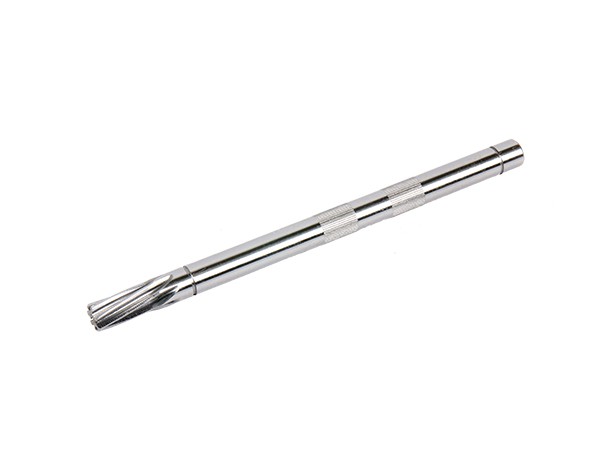

If you're in need of step shafts for your industry, whether it's automotive, aerospace, manufacturing, or marine, we'd love to have a chat with you. We can work with you to understand your specific requirements and come up with the best design solutions. Don't hesitate to reach out to us for a consultation and let's start the procurement process together!
References
- "Mechanical Engineering Design" by Joseph E. Shigley, Charles R. Mischke, and Richard G. Budynas.
- "Aerospace Materials and Structures" by Colin A. Smith.
- "Marine Engineering Handbook" by Carl C. Ross.