

What are the effects of surface roughness on step shaft performance?
Nov 10, 2025
Hey there! I'm a supplier of step shafts, and today I want to dive into a topic that's super important in our industry: the effects of surface roughness on step shaft performance.
First off, let's talk about what surface roughness is. Simply put, it's the texture of the shaft's surface. It's made up of tiny peaks and valleys that you might not be able to see with the naked eye but can have a huge impact on how the step shaft works.
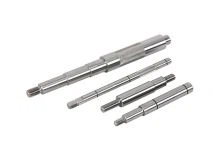

1. Friction and Wear
One of the most obvious effects of surface roughness is on friction and wear. When the surface of a step shaft is rough, there are more contact points between the shaft and other components it interacts with, like Drive Belt Pulley. This increased contact means more friction.
Think about it like this: if you're trying to slide a piece of sandpaper against a smooth surface, it's going to be a lot harder than sliding a piece of glass. The same principle applies to step shafts. Higher friction can lead to more wear and tear on both the shaft and the components it's in contact with.
Over time, this wear can cause parts to fail prematurely. For example, if the surface of a step shaft in a Servo Motor Shaft is too rough, it can wear down the bearings that support it. This not only shortens the lifespan of the shaft but can also lead to costly repairs and downtime for the equipment.
2. Fatigue Resistance
Surface roughness also plays a big role in the fatigue resistance of step shafts. Fatigue is the weakening of a material caused by repeated loading and unloading. When a step shaft has a rough surface, the peaks and valleys act as stress concentration points.
Under repeated stress, these points are more likely to develop cracks. Once a crack starts, it can grow over time, eventually leading to the failure of the shaft. A smoother surface distributes stress more evenly, reducing the likelihood of crack initiation and improving the overall fatigue resistance of the shaft.
For industries that rely on step shafts for high - cycle applications, like automotive or aerospace, fatigue resistance is crucial. A shaft that fails due to fatigue can have serious consequences, including safety hazards and significant financial losses.
3. Corrosion Resistance
Another aspect affected by surface roughness is corrosion resistance. A rough surface has more surface area exposed to the environment compared to a smooth one. This means that there are more areas for corrosive agents, such as moisture and chemicals, to attack.
Corrosion can weaken the structure of the step shaft, reducing its strength and durability. In some cases, it can even cause the shaft to seize up or break. For example, in marine applications where step shafts are exposed to saltwater, corrosion can be a major problem.
By reducing surface roughness, we can minimize the area available for corrosion to occur. This can be achieved through processes like polishing or coating the shaft. A smooth, protected surface is much more resistant to corrosion and can extend the life of the step shaft in harsh environments.
4. Seal Performance
Step shafts often work in conjunction with seals to prevent the leakage of fluids or contaminants. The surface roughness of the shaft can have a significant impact on the performance of these seals.
If the surface is too rough, it can damage the sealing material over time. The peaks on the shaft surface can cut into the seal, creating gaps through which fluids or contaminants can leak. On the other hand, a smooth surface allows the seal to form a better, more consistent contact with the shaft, improving its sealing effectiveness.
In applications where fluid leakage can cause problems, such as in hydraulic systems or food processing equipment, proper seal performance is essential. Ensuring the right surface roughness on step shafts is a key factor in maintaining reliable seal operation.
5. Dynamic Balance
Surface roughness can also affect the dynamic balance of a step shaft. When a shaft rotates, any unevenness in its surface can cause vibrations. These vibrations can lead to noise, reduced efficiency, and even damage to other components in the system.
A rough surface can create imbalances in the mass distribution of the shaft. As the shaft spins, these imbalances cause it to wobble, putting extra stress on bearings and other supporting structures. By achieving a smooth surface finish, we can minimize these imbalances and improve the overall dynamic balance of the shaft.
This is especially important in high - speed applications, like in electric motors or turbochargers, where even small vibrations can have a big impact on performance and reliability.
Controlling Surface Roughness
As a step shaft supplier, I understand the importance of controlling surface roughness. We use a variety of manufacturing processes to achieve the desired surface finish.
One common method is machining. By carefully selecting the cutting tools and machining parameters, we can control the amount of material removed and the resulting surface texture. Grinding is another popular process for achieving a smooth surface. It can remove small amounts of material and create a very fine finish.
In addition to these mechanical processes, we also offer coating options. Coatings can not only improve the surface finish but also provide additional benefits such as corrosion resistance and reduced friction.
Conclusion
In conclusion, surface roughness has a wide range of effects on step shaft performance. From friction and wear to fatigue resistance, corrosion resistance, seal performance, and dynamic balance, every aspect of the shaft's operation can be influenced by its surface texture.
As a supplier, I'm committed to providing high - quality step shafts with the right surface finish for each application. Whether you're in the automotive, aerospace, or any other industry that uses Step Shaft, choosing the right shaft with the appropriate surface roughness is crucial for the long - term performance and reliability of your equipment.
If you're in the market for step shafts and want to discuss your specific requirements, I'd love to have a chat. Let's work together to find the best solution for your needs. Contact me to start the procurement process and get the step shafts that will keep your operations running smoothly.
References
- "Mechanical Engineering Design" by Joseph E. Shigley and Charles R. Mischke
- "Manufacturing Engineering and Technology" by Serope Kalpakjian and Steven R. Schmid