

What are the factors that affect the wear rate of a spline shaft?
Jun 10, 2025
As a spline shaft supplier, I've been in the business long enough to know that the wear rate of a spline shaft is a critical concern for our customers. It can affect the performance and lifespan of the machinery in which the spline shaft is used. So, I thought I'd share some insights into the factors that affect the wear rate of a spline shaft.
Material Quality
The quality of the material used to make the spline shaft is one of the most important factors. High - quality materials can withstand more stress and wear over time. For example, alloy steels are often preferred because they have better hardness, toughness, and corrosion resistance compared to regular carbon steels.
When we manufacture spline shafts, we carefully select the materials. We source from reliable suppliers who can provide us with materials that meet strict quality standards. If you use a low - quality material, the spline shaft will wear out much faster. The teeth of the spline may start to deform or break, which can lead to a loss of power transmission and even damage to the entire system.
Heat Treatment
Heat treatment is another crucial factor. It can significantly improve the hardness and strength of the spline shaft. Processes like quenching and tempering are commonly used. Quenching rapidly cools the shaft, which increases its hardness, while tempering relieves the internal stresses created during quenching.

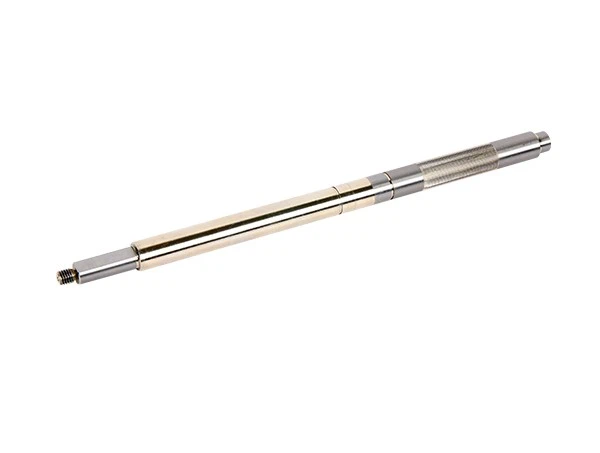
If the heat treatment is not done correctly, the spline shaft may not have the desired properties. For instance, if the quenching temperature is too high or too low, the hardness distribution will be uneven. This can cause some parts of the spline to wear out faster than others. As a supplier, we ensure that our heat treatment processes are well - controlled to guarantee consistent quality.
Lubrication
Proper lubrication is essential for reducing the wear rate of a spline shaft. Lubricants create a thin film between the contacting surfaces of the spline teeth, which reduces friction and prevents direct metal - to - metal contact. There are different types of lubricants available, such as oils and greases.
The choice of lubricant depends on the operating conditions of the spline shaft. For high - speed applications, a low - viscosity oil may be more suitable, while for heavy - load applications, a high - viscosity grease might be the better option. Also, the frequency of lubrication is important. If the lubricant is not replenished regularly, it will lose its effectiveness, and the wear rate will increase.
Operating Conditions
The operating conditions of the spline shaft have a major impact on its wear rate. Factors like load, speed, and temperature play a significant role.
Load
The amount of load the spline shaft has to bear affects its wear. Higher loads put more stress on the spline teeth, which can cause more rapid wear. If the load exceeds the design capacity of the spline shaft, it may lead to premature failure. As a supplier, we work closely with our customers to understand their load requirements and recommend the appropriate spline shaft design.
Speed
The rotational speed of the spline shaft also matters. At high speeds, the friction and heat generated between the spline teeth are greater. This can cause the lubricant to break down more quickly and increase the wear rate. Special design considerations, such as optimized tooth profiles, may be needed for high - speed applications.
Temperature
Extreme temperatures can also affect the wear rate. High temperatures can cause the lubricant to degrade and the material of the spline shaft to soften. On the other hand, low temperatures can make the lubricant more viscous, reducing its ability to flow and lubricate effectively.
Misalignment
Misalignment between the spline shaft and the mating component is a common problem that can increase the wear rate. If the shaft is not properly aligned, the load will be unevenly distributed across the spline teeth. Some teeth will bear more load than others, leading to accelerated wear on those teeth.
As a supplier, we emphasize the importance of proper installation to our customers. We provide detailed installation instructions and, in some cases, offer on - site installation support to ensure that the spline shaft is installed correctly and aligned properly.
Surface Finish
The surface finish of the spline shaft can influence its wear rate. A smoother surface finish reduces friction and the likelihood of debris getting trapped between the spline teeth. During the manufacturing process, we use precision machining techniques to achieve a good surface finish.
For example, grinding and honing can be used to create a smooth surface. A rough surface finish can cause micro - abrasions and increase the wear rate over time.
Contamination
Contamination in the form of dirt, dust, or metal particles can also cause increased wear. These contaminants can act as abrasives between the spline teeth, scratching the surfaces and accelerating wear.
To prevent contamination, proper sealing is necessary. We recommend using appropriate seals in the machinery where the spline shaft is installed. Also, regular maintenance and cleaning can help keep the spline shaft free from contaminants.
If you're in the market for high - quality spline shafts, considering all these factors is crucial. At our company, we take pride in producing spline shafts that are designed to withstand various operating conditions and have a low wear rate. We also offer a range of related products such as Precision Shaft Sleeve, Motor Rotor Shaft, and Step Shaft.
If you have any questions or are interested in purchasing our spline shafts or related products, feel free to reach out to us for a detailed discussion and procurement negotiation. We're here to help you find the best solutions for your needs.
References
- "Mechanical Design Handbook" by Robert C. Juvinall and Kurt M. Marshek
- "Machine Elements in Mechanical Design" by Robert L. Norton
- Various industry - specific technical papers on spline shaft design and wear analysis.