

What is the function of a key in a keyed shaft?
Apr 17, 2026
Hey there! As a shaft supplier, I've been getting a lot of questions about the function of a key in a keyed shaft. So, I thought I'd take a moment to break it down for you.
First off, let's talk about what a keyed shaft is. A keyed shaft is a type of mechanical component that has a keyway - a slot cut into the shaft - and a key, which is a small piece of metal that fits into the keyway. The key is used to connect the shaft to another component, like a gear or a pulley, and prevent it from slipping or rotating independently.
So, what's the function of the key in all this? Well, the main function of the key is to transmit torque - that's the rotational force - from the shaft to the connected component. When the shaft rotates, the key fits snugly into the keyway and transfers the torque to the gear or pulley, making it rotate as well. This is crucial in many mechanical systems, as it allows power to be transferred efficiently from one part to another.
For example, let's say you're looking at a Precision Gearbox Shafts. These shafts are used in gearboxes, which are devices that use gears to change the speed, torque, or direction of a rotating shaft. The key in a precision gearbox shaft ensures that the gears rotate in sync with the shaft, allowing the gearbox to function properly. Without the key, the gears could slip or rotate independently, leading to inefficiencies, wear and tear, and even mechanical failure.
Another important function of the key is to maintain alignment between the shaft and the connected component. The keyway and the key are designed to fit together precisely, which helps to keep the gear or pulley centered on the shaft. This alignment is essential for smooth operation and to prevent excessive vibration and noise. In a Brushless Motor Shaft, for instance, proper alignment is crucial for the motor to run efficiently and quietly. The key ensures that the rotor (the rotating part of the motor) is perfectly aligned with the stator (the stationary part), allowing for optimal performance.
Keys also play a role in preventing axial movement - that's movement along the length of the shaft. In some applications, it's important to keep the connected component in a fixed position along the shaft. The key can act as a stop, preventing the gear or pulley from sliding along the shaft. This is particularly important in Gear Shaft applications, where the gears need to be precisely positioned to mesh correctly.
Now, there are different types of keys that can be used in a keyed shaft, depending on the specific application. Some common types include square keys, flat keys, and Woodruff keys. Square keys are the most basic type and are often used in general-purpose applications. They have a square cross-section and fit into a square keyway. Flat keys, on the other hand, have a rectangular cross-section and are used when space is limited. Woodruff keys are semi-circular in shape and are used in applications where the shaft needs to be able to rotate slightly without the key coming loose.
When it comes to choosing the right key for your application, there are a few factors to consider. First, you need to think about the amount of torque that needs to be transmitted. If you're dealing with high torque, you'll need a key that can handle the load without shearing or breaking. You also need to consider the size and shape of the keyway, as well as the material of the key and the shaft. Different materials have different strength and durability characteristics, so it's important to choose a combination that will work well together.
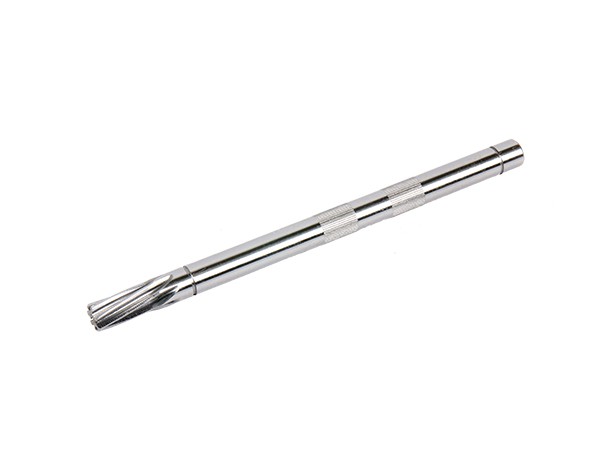

As a shaft supplier, I can help you select the right keyed shaft and key for your specific needs. We offer a wide range of shafts, including Precision Gearbox Shafts, Brushless Motor Shaft, and Gear Shaft, and we can provide expert advice on the best keying solutions. Whether you're working on a small DIY project or a large industrial application, we've got you covered.
If you're interested in learning more about our products or have any questions about keyed shafts, don't hesitate to reach out. We're here to help you find the right solutions for your mechanical needs. Just drop us a line, and we'll be happy to discuss your requirements and provide you with a quote.
In conclusion, the key in a keyed shaft is a small but crucial component that plays a vital role in transmitting torque, maintaining alignment, and preventing axial movement. By understanding its functions and choosing the right key for your application, you can ensure the smooth and efficient operation of your mechanical systems. So, if you're in the market for high-quality shafts and keying solutions, give us a shout, and let's get your project moving forward.
References
- "Mechanical Engineering Design" by Joseph E. Shigley and Charles R. Mischke
- "Machine Design: An Integrated Approach" by Robert L. Norton