

What is the length of an internal spline shaft?
Jul 25, 2025
When it comes to mechanical components, internal spline shafts play a crucial role in various applications. As a supplier of internal spline shafts, I often get asked about the length of these shafts. In this blog post, I will delve into the factors that determine the length of an internal spline shaft and its significance in different industries.
Understanding Internal Spline Shafts
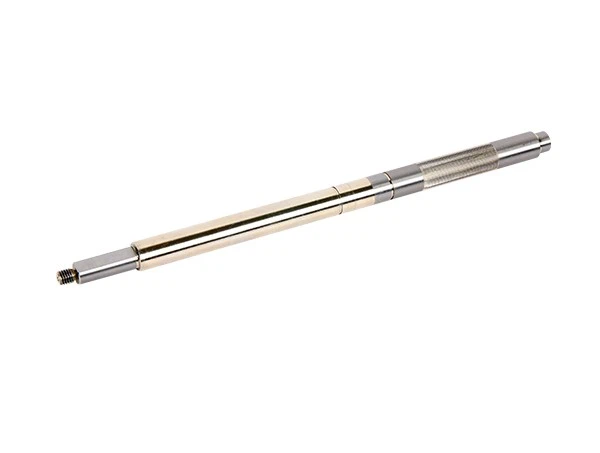
Before we discuss the length, let's briefly understand what an internal spline shaft is. An internal spline shaft is a mechanical component with a series of grooves or teeth cut into the inner surface of a shaft. These splines mesh with corresponding external splines on another component, such as a gear or a coupling, to transmit torque and motion. Internal spline shafts are commonly used in automotive, aerospace, industrial machinery, and other applications where precise power transmission is required.
Factors Affecting the Length of an Internal Spline Shaft
The length of an internal spline shaft is not a one - size - fits - all specification. Several factors influence the optimal length of these shafts:
Application Requirements
The specific application of the internal spline shaft is the primary determinant of its length. For example, in automotive transmissions, the length of the internal spline shaft needs to be carefully calculated to ensure proper engagement with the gears and smooth power transfer. If the shaft is too short, it may not provide sufficient contact area with the mating component, leading to premature wear and reduced efficiency. On the other hand, if it is too long, it can add unnecessary weight and complexity to the system.
In aerospace applications, where weight and space are critical factors, the length of the internal spline shaft is designed to be as compact as possible without sacrificing performance. The shafts need to fit within the limited space of the aircraft's engine or control systems while still being able to handle the high - torque loads.
Load Capacity
The load capacity of the internal spline shaft also affects its length. Higher load requirements typically demand a longer shaft to distribute the stress evenly across the splines. A longer shaft provides a larger contact area between the splines, which helps to reduce the stress concentration and prevent failure. For heavy - duty industrial machinery, such as mining equipment or large - scale manufacturing plants, the internal spline shafts are often longer to accommodate the high - torque and high - load conditions.
Manufacturing Constraints
Manufacturing processes also play a role in determining the length of an internal spline shaft. The machining of internal splines can be a complex and time - consuming process, especially for longer shafts. The equipment used for machining has limitations in terms of the maximum length it can handle. Additionally, longer shafts may require more precise alignment during the manufacturing process to ensure the accuracy of the splines. As a result, there may be practical limits to how long an internal spline shaft can be manufactured economically.
Significance of the Right Length
Choosing the correct length for an internal spline shaft is of utmost importance for the overall performance and reliability of the mechanical system. Here are some key reasons:
Efficient Power Transmission
A properly sized internal spline shaft ensures efficient power transmission between the components. When the length is optimized, the splines can engage fully with the mating part, allowing for smooth transfer of torque without slippage. This leads to improved performance and reduced energy losses in the system.
Durability and Longevity
An appropriate length helps to distribute the load evenly across the splines, reducing the risk of wear and fatigue. This increases the durability of the internal spline shaft and extends its service life. By preventing premature failure, the mechanical system can operate reliably for a longer period, reducing maintenance costs and downtime.
Compatibility with Other Components
The length of the internal spline shaft must be compatible with the other components in the system. It needs to fit precisely within the available space and align correctly with the mating parts. If the length is not right, it can cause misalignment issues, which can lead to excessive vibration, noise, and even damage to the components.
Our Product Range
As a supplier of internal spline shafts, we offer a wide range of products with different lengths to meet the diverse needs of our customers. Our shafts are manufactured using high - quality materials and advanced manufacturing techniques to ensure the highest level of precision and performance.
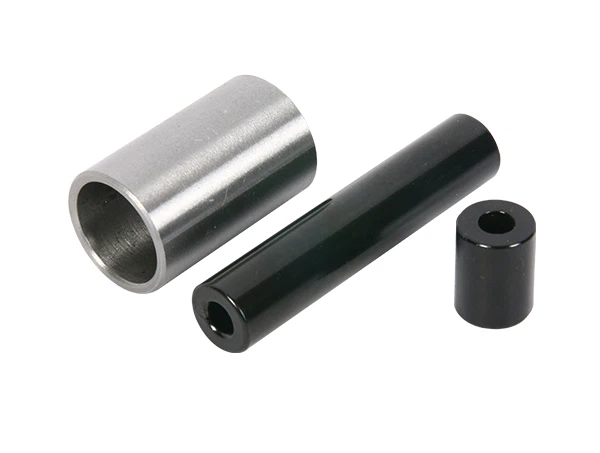
We also provide related products such as Precision Shaft Sleeve, Motor Rotor Shaft, and Servo Motor Shaft. These products are designed to work seamlessly with our internal spline shafts, providing a complete solution for your mechanical system requirements.
Contact Us for Your Procurement Needs
If you are in the market for internal spline shafts or any of our related products, we invite you to contact us for a detailed discussion. Our team of experts is ready to assist you in choosing the right length and specifications for your specific application. Whether you are working on a small - scale project or a large - scale industrial application, we have the expertise and resources to meet your needs.
We understand that every customer has unique requirements, and we are committed to providing customized solutions. By working closely with you, we can ensure that the internal spline shafts we supply are perfectly tailored to your system, delivering optimal performance and reliability.
References
- "Mechanical Design Handbook" by Robert C. Juvinall and Kurt M. Marshek
- "Design of Machine Elements" by V. B. Bhandari
- "Fundamentals of Machine Component Design" by J. E. Shigley, C. R. Mischke, and R. G. Budynas