

What is the maximum load capacity of an AC single phase motor?
Jun 18, 2025
Hey there! I'm an AC single phase motor supplier, and I often get asked about the maximum load capacity of these motors. So, I thought I'd write a blog post to shed some light on this topic.
First off, let's understand what an AC single phase motor is. There are different types like the Ac Single Phase Induction Motor and the Ac Single Phase Asynchronous Motor. These motors are widely used in various applications, from small household appliances to some light industrial machinery. And if you're looking for a common option, the 220v AC Single Phase Motor is a popular choice.
The maximum load capacity of an AC single phase motor depends on several factors. One of the most important ones is the motor's power rating. Usually, the power rating is given in horsepower (hp) or watts (W). A higher power - rated motor can generally handle a larger load. For example, a 1 - hp motor can handle more load compared to a 1/4 - hp motor.
The motor's design and construction also play a huge role. Motors with better insulation, higher - quality windings, and efficient cooling systems can often handle more load. A well - designed motor can dissipate heat more effectively, which is crucial because as the motor works under load, it generates heat. If the heat can't be removed properly, the motor's performance will degrade, and it might even get damaged.
The type of load is another key factor. There are different types of loads, such as constant - torque loads and variable - torque loads. Constant - torque loads, like conveyor belts, require the same amount of torque throughout the operation. On the other hand, variable - torque loads, such as fans and pumps, require less torque at lower speeds and more torque as the speed increases. An AC single phase motor needs to be sized correctly according to the type of load it will be driving.
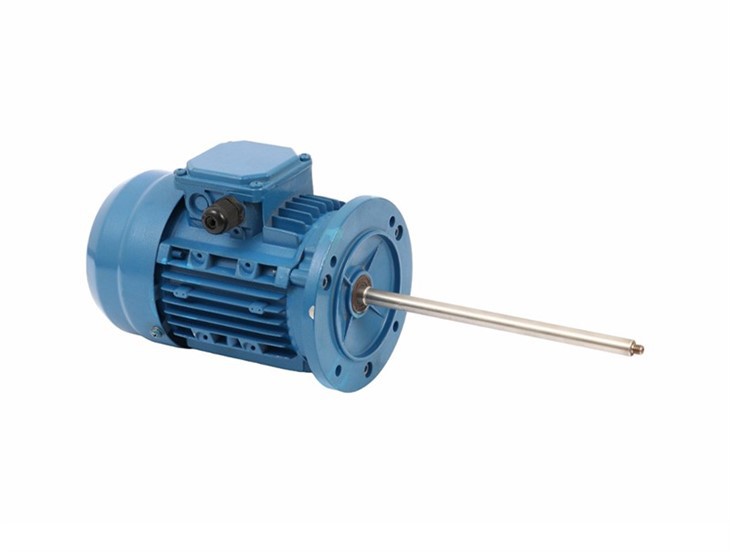
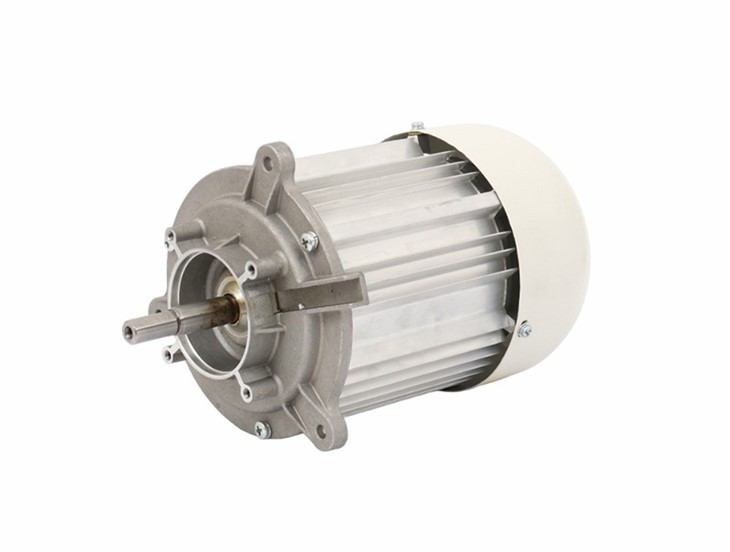
Let's talk about how to calculate the maximum load capacity in a practical sense. If you know the power rating of the motor in watts, you can use the formula (P = \sqrt{3} \times V\times I\times \cos\varphi) (for three - phase motors, for single - phase it's (P = V\times I\times \cos\varphi), where (V) is the voltage, (I) is the current, and (\cos\varphi) is the power factor). By measuring the current drawn by the motor under different loads, you can get an idea of how close it is to its maximum capacity.
However, it's not just about the raw numbers. You also need to consider the motor's service factor. The service factor is a multiplier that indicates how much extra load the motor can handle for short periods. For example, a motor with a service factor of 1.15 can handle 15% more load than its rated capacity for a limited time. But using the motor at or near its maximum capacity for extended periods is not a good idea as it can lead to premature wear and tear.
In real - world applications, it's always a good idea to leave some margin. Don't push the motor right up to its maximum load capacity all the time. If you do, you'll likely face issues like overheating, reduced efficiency, and a shorter lifespan of the motor.
Let's take a look at some common applications and the typical load requirements. In a small household application, like a window fan, a low - power AC single phase motor can easily handle the load. The fan doesn't require a lot of torque, and a motor with a power rating of around 10 - 50 watts is usually sufficient.
For a small water pump in a home garden, the load requirements are a bit higher. A 1/4 - hp to 1/2 - hp motor might be needed, depending on the height to which the water needs to be pumped and the flow rate.
In an industrial setting, say a small workshop using a drill press, a 1 - hp or 2 - hp AC single phase motor could be used. These motors need to provide enough torque to drive the drill bit through different materials.
When choosing an AC single phase motor for your application, you should also consider the motor's speed. The speed of the motor is usually given in revolutions per minute (RPM). Different loads require different speeds. For example, a high - speed motor might be suitable for a grinder, while a low - speed motor could be better for a mixer.
Another thing to keep in mind is the starting torque. Some loads require a high starting torque to get going. For instance, a compressor might need a motor with a high starting torque to overcome the initial resistance. AC single phase motors have different starting methods, such as capacitor - start, split - phase, etc., which affect the starting torque.
As an AC single phase motor supplier, I've seen many customers make mistakes when it comes to choosing the right motor for their load. Some try to save money by getting an under - sized motor, which leads to frequent breakdowns. Others over - size the motor, which is wasteful in terms of cost and energy consumption.
So, if you're in the market for an AC single phase motor, it's important to do your research. Consider the load requirements, the type of load, the power rating, the starting torque, and the speed. And if you're not sure, don't hesitate to reach out for advice.
If you're interested in purchasing an AC single phase motor for your specific application, I'd love to help you find the right one. Whether it's a small - scale household need or a more industrial - grade requirement, I can offer you a range of high - quality motors. Just get in touch, and we can start a discussion about your needs and the best motor options for you.
References
- Electric Motors and Drives: Fundamentals, Types, and Applications by Austin Hughes
- Electrical Engineering Handbook by Richard C. Dorf