

What is the maximum speed a motor rotor shaft can handle?
Jun 02, 2026
Hey there! As a supplier of motor rotor shafts, I often get asked about the maximum speed a motor rotor shaft can handle. It's a super important question, especially for those in the industry who rely on these shafts for their motors. So, let's dive right in and explore this topic.
First off, what exactly is a motor rotor shaft? Well, it's a crucial component in a motor. The Motor Rotor Shaft is the part that rotates and transfers the mechanical power generated by the motor to other parts of the machinery. It's like the heart of the motor, making everything else work.
Now, when it comes to the maximum speed a motor rotor shaft can handle, there are several factors at play. One of the most significant factors is the material of the shaft. Different materials have different properties, and these properties can greatly affect the shaft's ability to handle high speeds.
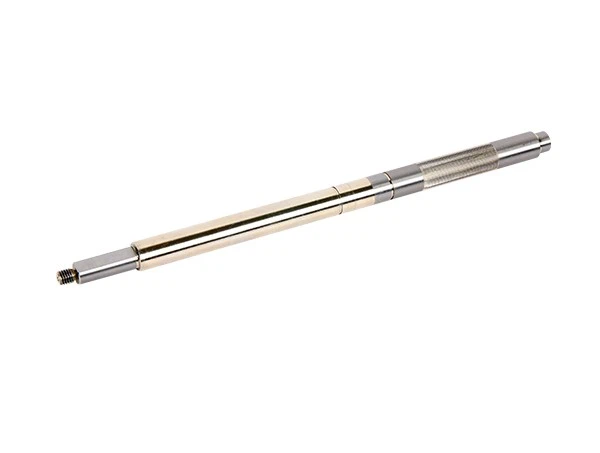

For example, steel is a commonly used material for motor rotor shafts. It's strong, durable, and can withstand a fair amount of stress. However, even steel has its limits. At extremely high speeds, the centrifugal forces acting on the shaft can cause it to deform or even break. The quality of the steel also matters. High - grade steel with proper heat treatment can handle higher speeds compared to lower - grade steel.
Another material option is titanium. Titanium is known for its high strength - to - weight ratio. It's lighter than steel but can still offer excellent strength. This makes it a great choice for applications where high - speed operation is required. However, titanium is more expensive than steel, which might be a limiting factor for some applications.
The design of the shaft also plays a vital role. A well - designed shaft can distribute the stress more evenly, allowing it to handle higher speeds. For instance, a shaft with a proper diameter and wall thickness can better resist the forces generated at high speeds. The shape of the shaft, such as whether it's straight or tapered, can also impact its performance.
Let's talk about the internal splines. An Internal Spline Shaft is a type of shaft that has internal grooves or teeth. These splines are used to connect the shaft to other components, like gears or couplings. The design and quality of the internal splines can affect the maximum speed the shaft can handle. If the splines are not properly machined or if they have too much play, it can cause vibrations at high speeds, which can reduce the overall performance and lifespan of the shaft.
Vibrations are a big deal when it comes to high - speed operation. Even a small amount of vibration can cause excessive wear on the shaft and other components. At high speeds, these vibrations can amplify, leading to premature failure. That's why balancing the shaft is so important. A balanced shaft rotates more smoothly, reducing the vibrations and allowing it to operate at higher speeds.
The type of motor also influences the maximum speed of the shaft. For example, a Brushless Motor Shaft is often used in high - speed applications. Brushless motors are more efficient and can achieve higher speeds compared to brushed motors. The design of the motor's magnetic field and the control system can also impact how fast the shaft can rotate.
In some applications, like in aerospace or high - end automotive engines, the motor rotor shafts need to handle extremely high speeds. In these cases, advanced engineering techniques are used to optimize the shaft's performance. This might include using computational fluid dynamics (CFD) to analyze the airflow around the shaft and finite element analysis (FEA) to predict the stress distribution.
But how do we determine the maximum speed for a specific shaft? Well, there are several methods. One common approach is to conduct physical tests. We can use a test rig to gradually increase the speed of the shaft while monitoring its performance. Sensors can be used to measure parameters like vibration, temperature, and stress. By analyzing these data, we can determine the point at which the shaft starts to show signs of distress.
Another method is to use mathematical models. Engineers can develop models based on the material properties, design parameters, and operating conditions of the shaft. These models can predict the maximum speed with a certain degree of accuracy. However, these models need to be validated through physical testing to ensure their reliability.
It's also important to note that the operating environment can affect the maximum speed. Factors such as temperature, humidity, and the presence of contaminants can all impact the shaft's performance. For example, high temperatures can reduce the strength of the material, making the shaft more susceptible to failure at lower speeds.
As a supplier of motor rotor shafts, we understand the importance of providing high - quality products that can meet the specific requirements of our customers. Whether you need a shaft for a low - speed industrial application or a high - speed aerospace engine, we have the expertise and resources to deliver the right solution.
We use state - of - the - art manufacturing processes to ensure the precision and quality of our shafts. Our team of experienced engineers can work with you to design a shaft that is optimized for your specific application. We also offer a range of materials and finishes to meet different needs.
If you're in the market for a motor rotor shaft and are concerned about the maximum speed it can handle, don't hesitate to reach out. We can have a detailed discussion about your requirements, and our experts can provide you with the best advice. Whether it's about the material selection, design optimization, or testing procedures, we're here to help.
In conclusion, the maximum speed a motor rotor shaft can handle depends on a variety of factors, including the material, design, type of motor, and operating environment. By carefully considering these factors and using advanced engineering techniques, we can design and manufacture shafts that can operate at high speeds safely and efficiently. If you're looking for a reliable motor rotor shaft supplier, we're the ones to talk to. Let's start a conversation about your project and find the perfect solution together.
References
- "Mechanical Engineering Design" by Joseph E. Shigley, Charles R. Mischke, and Richard G. Budynas
- "Materials Science and Engineering: An Introduction" by William D. Callister Jr. and David G. Rethwisch