

What is the role of an internal spline shaft in power transmission systems?
Jun 09, 2025
Hey there! As a supplier of internal spline shafts, I'm super stoked to dive into the role these nifty components play in power transmission systems. So, what exactly is an internal spline shaft, and why is it so crucial? Let's break it down.

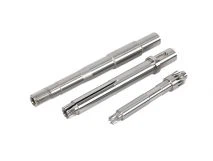
First off, an internal spline shaft is a mechanical part with internal teeth or grooves. These teeth mesh with the external teeth of a corresponding shaft or hub, creating a secure connection that can transmit torque and rotational motion. It's like a puzzle piece that fits perfectly, ensuring smooth and efficient power transfer.
One of the key advantages of internal spline shafts is their ability to handle high torque loads. In power transmission systems, torque is the force that causes an object to rotate. When you're dealing with heavy machinery or high-powered equipment, you need a reliable way to transfer that torque without losing power or causing excessive wear and tear. Internal spline shafts are designed to do just that. Their splined connection distributes the torque evenly across the teeth, reducing stress and preventing damage.
Another important role of internal spline shafts is to provide precise alignment between components. In a power transmission system, it's essential that the shafts and hubs are perfectly aligned to ensure smooth operation. Misalignment can lead to vibrations, noise, and premature wear. Internal spline shafts help to maintain accurate alignment by guiding the mating components into place. This not only improves the efficiency of the system but also extends the lifespan of the components.
Internal spline shafts are also highly versatile. They can be used in a wide range of applications, from automotive and aerospace to industrial machinery and robotics. Depending on the specific requirements of the application, internal spline shafts can be customized in terms of size, shape, and material. For example, in automotive transmissions, internal spline shafts are used to connect the gearbox to the driveshaft, allowing for smooth gear changes and efficient power transfer. In aerospace applications, they are used in the engines and control systems to ensure reliable operation under extreme conditions.
Now, let's talk about some of the other components that work hand in hand with internal spline shafts in power transmission systems. One such component is the Precision Slender Shaft. These shafts are designed to provide high precision and stability, making them ideal for applications where accuracy is crucial. They are often used in conjunction with internal spline shafts to ensure smooth and efficient power transfer.
Another important component is the Electric Motor Shaft. Electric motors are a common source of power in many industrial and commercial applications. The electric motor shaft is responsible for transmitting the rotational motion from the motor to the driven equipment. Internal spline shafts can be used to connect the electric motor shaft to the driven shaft, providing a secure and reliable connection.
Finally, we have the Precision Shaft Sleeve. Shaft sleeves are used to protect the shafts from wear and corrosion, as well as to provide additional support and alignment. They are often used in conjunction with internal spline shafts to ensure the longevity and performance of the power transmission system.
In conclusion, internal spline shafts play a vital role in power transmission systems. They provide a secure and efficient way to transfer torque and rotational motion, while also ensuring precise alignment and reducing wear and tear. Whether you're in the automotive, aerospace, or industrial sector, internal spline shafts are an essential component for any power transmission system.
If you're in the market for high-quality internal spline shafts or any of the other components mentioned above, I'd love to hear from you. We specialize in providing customized solutions to meet the specific needs of our customers. Whether you need a small batch for a prototype or a large quantity for a production run, we have the expertise and resources to deliver. So, don't hesitate to reach out and start a conversation. Let's work together to find the perfect solution for your power transmission needs.
References
- Budynas, R. G., & Nisbett, J. K. (2011). Shigley's Mechanical Engineering Design. McGraw-Hill.
- Norton, R. L. (2004). Design of Machinery: An Introduction to the Synthesis and Analysis of Mechanisms and Machines. McGraw-Hill.
- Spotts, M. F., Shoup, T. E., & Wohlers, T. J. (2004). Design of Machine Elements. Prentice Hall.