

What is the role of bearings in a motor rotor shaft?
Jan 09, 2026
As a motor rotor shaft provider, I often come across inquiries about the vital components that contribute to the smooth operation of motors. Among these components, bearings play a pivotal role in ensuring the efficiency and longevity of motor rotor shafts. In this blog post, I will delve into the significance of bearings in motor rotor shafts, their functions, types, and the impact they have on the overall performance of motors.
Understanding the Basics of Motor Rotor Shafts
Before we explore the role of bearings, let's briefly understand what motor rotor shafts are. A motor rotor shaft is a crucial part of an electric motor. It is the rotating component that transfers mechanical power from the motor to the load. The shaft is designed to withstand high rotational speeds, torque, and various mechanical stresses. It needs to be precisely engineered to ensure the motor operates smoothly and efficiently.
The Crucial Role of Bearings in Motor Rotor Shafts
Bearings are mechanical components that support the rotating parts of a machine, such as the motor rotor shaft. They reduce friction between moving parts, which is essential for several reasons:
1. Reducing Friction and Wear
Friction is the enemy of any moving mechanical component. When two surfaces rub against each other, it generates heat, which can lead to wear and tear. In a motor rotor shaft, bearings act as a buffer between the rotating shaft and the stationary parts of the motor. They use rolling elements (such as balls or rollers) to reduce the contact area between the shaft and the housing, thereby minimizing friction. This reduction in friction not only extends the lifespan of the shaft and the bearings themselves but also improves the overall efficiency of the motor.
2. Supporting Radial and Axial Loads
Motor rotor shafts are subjected to both radial and axial loads. Radial loads act perpendicular to the axis of the shaft, while axial loads act parallel to the shaft's axis. Bearings are designed to handle these different types of loads effectively. For example, deep groove ball bearings are commonly used to support radial loads, while angular contact ball bearings can handle both radial and axial loads. By supporting these loads, bearings ensure that the shaft remains stable during operation, preventing excessive vibration and misalignment.
3. Ensuring Smooth Rotation
Smooth rotation is essential for the proper functioning of a motor. Bearings help to maintain the concentricity of the shaft, ensuring that it rotates evenly without any wobbling. This is particularly important in high-speed motors, where even a slight misalignment can cause significant vibration and noise, leading to premature wear and potential motor failure. With high-quality bearings, the motor rotor shaft can rotate smoothly, resulting in a quieter and more reliable operation.
4. Absorbing Shock and Vibration
Motors can experience shock and vibration during operation, especially in industrial applications. Bearings act as shock absorbers, reducing the impact of these forces on the motor rotor shaft. They help to dampen vibrations, which not only protects the shaft but also improves the overall performance of the motor. By minimizing shock and vibration, bearings contribute to a more stable and efficient motor operation.
Types of Bearings Used in Motor Rotor Shafts
There are several types of bearings commonly used in motor rotor shafts, each with its own unique characteristics and applications:

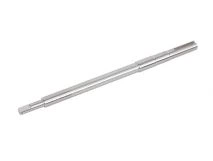
1. Ball Bearings
Ball bearings are the most widely used type of bearing in motor rotor shafts. They consist of rolling balls that are held between an inner and outer race. Ball bearings are known for their low friction, high speed capabilities, and ability to handle both radial and axial loads. They are suitable for a wide range of motor applications, from small household appliances to large industrial motors.
2. Roller Bearings
Roller bearings use cylindrical or tapered rollers instead of balls. They are capable of handling higher radial loads compared to ball bearings. Roller bearings are commonly used in heavy-duty applications where the motor is subjected to high loads and torque. There are different types of roller bearings, including cylindrical roller bearings, tapered roller bearings, and spherical roller bearings, each designed for specific load and application requirements.
3. Thrust Bearings
Thrust bearings are designed to handle axial loads only. They are used in applications where the motor rotor shaft is subjected to significant axial forces, such as in pumps and compressors. Thrust bearings can be ball thrust bearings or roller thrust bearings, depending on the load capacity and speed requirements of the application.
Impact of Bearing Quality on Motor Performance
The quality of bearings used in motor rotor shafts has a significant impact on the overall performance and reliability of the motor. High-quality bearings are made from superior materials, have precise manufacturing tolerances, and undergo rigorous quality control processes. They offer several advantages over low-quality bearings:
1. Longer Lifespan
High-quality bearings are more durable and can withstand higher loads and speeds without premature wear. They have a longer service life, which reduces the frequency of bearing replacements and maintenance costs.
2. Improved Efficiency
Bearings with low friction coefficients reduce the energy consumption of the motor. This not only saves electricity but also improves the overall efficiency of the motor, making it more environmentally friendly.
3. Reduced Noise and Vibration
Quality bearings are designed to operate quietly and smoothly. They reduce noise and vibration levels, which is important for applications where noise is a concern, such as in residential and office environments.
4. Higher Reliability
High-quality bearings are less likely to fail, which improves the reliability of the motor. This is crucial in industrial applications where motor downtime can result in significant production losses.
Our Offerings as a Motor Rotor Shaft Supplier
As a motor rotor shaft supplier, we understand the importance of using high-quality bearings in our products. We offer a wide range of motor rotor shafts that are designed to meet the specific requirements of our customers. Our shafts are precision-engineered and manufactured using the latest technology and high-quality materials.
In addition to motor rotor shafts, we also supply Precision Gearbox Shafts, Internal Spline Shaft, and Precision Step Shafts. These shafts are also designed to work seamlessly with high-quality bearings to ensure optimal performance.
Contact Us for Your Motor Rotor Shaft Needs
If you are in the market for high-quality motor rotor shafts or other types of shafts, we would love to hear from you. Our team of experts is ready to assist you in selecting the right products for your specific applications. Whether you need standard shafts or custom-designed solutions, we have the expertise and resources to meet your requirements. Contact us today to start a discussion about your procurement needs and let us help you find the best solutions for your motor applications.
References
- Harris, T. A., & Kotzalas, M. N. (2007). Rolling Bearing Analysis. Wiley.
- Shigley, J. E., Mischke, C. R., & Budynas, R. G. (2004). Mechanical Engineering Design. McGraw-Hill.
- Townsend, D. P. (1992). Design of Machine Elements. Prentice Hall.