

What materials are commonly used for motor rotor shafts?
Aug 29, 2025
Hey there! I'm a supplier of motor rotor shafts, and today I wanna chat about the materials commonly used for these crucial components. Motor rotor shafts play a vital role in the operation of motors, transferring power and torque while withstanding various forces and stresses. Choosing the right material is essential to ensure the performance, durability, and reliability of the motor.
Steel
Steel is hands down one of the most widely used materials for motor rotor shafts. It's got a bunch of great properties that make it a top choice. First off, steel is known for its high strength. This means it can handle heavy loads and high - speed rotations without deforming easily. Whether it's in a small household motor or a large industrial one, steel can take the pressure.
There are different types of steel used. Carbon steel, for example, is relatively inexpensive and offers good strength and machinability. It's often used in less demanding applications where cost is a major factor. Alloy steel, on the other hand, is made by adding elements like chromium, nickel, and molybdenum to carbon steel. This gives it enhanced properties such as better corrosion resistance, higher hardness, and improved toughness. Alloy steel is great for motors that operate in harsh environments or need to perform at high levels.
Another advantage of steel is its good heat - transfer properties. Motors generate a lot of heat during operation, and a shaft that can dissipate this heat effectively helps prevent overheating. Steel allows the heat to spread out, keeping the motor running smoothly. And let's not forget about its availability. Steel is readily available in various shapes and sizes, making it easy for manufacturers to source and work with.
Stainless Steel
Stainless steel is also a popular option, especially when corrosion resistance is a must. In environments where the motor is exposed to moisture, chemicals, or saltwater, stainless steel can keep the shaft from rusting and deteriorating. It contains chromium, which forms a thin, protective oxide layer on the surface of the steel. This layer acts as a barrier, preventing oxygen and water from reaching the metal and causing corrosion.
Stainless steel comes in different grades, with 304 and 316 being the most common. Grade 304 is a general - purpose stainless steel that offers good corrosion resistance and is relatively affordable. Grade 316, on the other hand, contains molybdenum, which gives it even better resistance to corrosion, especially in marine and chemical environments.
However, stainless steel does have a couple of drawbacks. It's generally more expensive than regular steel, and it's also a bit harder to machine. But for applications where corrosion is a significant concern, the benefits of stainless steel far outweigh these drawbacks.
Aluminum
Aluminum is a lightweight material that has its own niche in the motor rotor shaft market. Its low density makes it ideal for applications where weight is a critical factor, such as in aerospace and automotive motors. Using an aluminum shaft can reduce the overall weight of the motor, which in turn can improve fuel efficiency and performance.
Aluminum also has good thermal conductivity, similar to steel. This helps in dissipating heat quickly, which is important for motor longevity. Additionally, aluminum is highly resistant to corrosion, especially when it's anodized. Anodizing is a process that creates a hard, protective layer on the surface of the aluminum, increasing its resistance to wear and corrosion.
But aluminum isn't as strong as steel. It has a lower tensile strength, which means it may not be suitable for high - load applications. Also, it's more prone to deformation under stress compared to steel. So, while it's great for some applications, it's not a one - size - fits - all solution.
Titanium
Titanium is a high - performance material that offers a unique combination of properties. It has an incredibly high strength - to - weight ratio, which means it's very strong but also lightweight. This makes it perfect for applications where both strength and low weight are required, like in high - end aerospace and military motors.
Titanium is also highly corrosion - resistant, even in extremely harsh environments. It can withstand exposure to acids, alkalis, and saltwater without corroding. This makes it a great choice for motors that operate in marine or chemical processing plants.
However, titanium comes with a hefty price tag. It's one of the most expensive materials used for motor rotor shafts, and it's also difficult to machine. These factors limit its use to applications where the performance benefits justify the high cost.
Composite Materials
Composite materials are becoming more and more popular in the motor industry. These materials are made by combining two or more different materials to create a new material with enhanced properties. For example, carbon fiber composites are known for their high strength, low weight, and excellent fatigue resistance.
Carbon fiber composites can be designed to have specific properties by adjusting the orientation and amount of the carbon fibers. They're also very stiff, which means they can maintain their shape under high loads. This is important for motor rotor shafts, as any deformation can affect the motor's performance.
But composite materials also have some challenges. They're relatively expensive to produce, and they require specialized manufacturing processes. Also, they may not be as good at conducting heat as metals, which could be a problem in high - power motors.
Other Materials
There are also some other materials that are used in specific applications. For example, brass is sometimes used for its good electrical conductivity and corrosion resistance. It's often used in small motors where electrical performance is important.
Cast iron is another option. It's relatively inexpensive and has good damping properties, which means it can absorb vibrations. This can be useful in motors where reducing noise and vibration is a priority.
How to Choose the Right Material
As a motor rotor shaft supplier, I know that choosing the right material depends on several factors. The first thing to consider is the application. If it's a high - load industrial motor, steel or titanium might be the best choice. For a lightweight automotive motor, aluminum or composite materials could be more suitable.
The environment in which the motor will operate is also crucial. If it's a corrosive environment, stainless steel or titanium would be better options. And of course, cost is always a factor. You need to balance the performance requirements with the budget.
If you're interested in different types of shafts, you can check out these links: Gear Shaft, Cylindrical Shaft Sleeves, and Worm Drive Shaft.

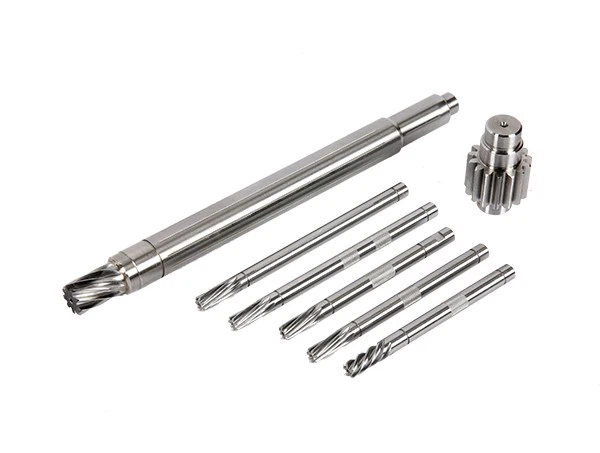
If you're in the market for motor rotor shafts, I'd love to have a chat with you. Whether you're a small - scale manufacturer or a large industrial company, I can help you find the right material and the right shaft for your needs. Feel free to reach out and start a conversation about your procurement requirements.
References
- ASM Handbook Committee. (2004). ASM Handbook Volume 1: Properties and Selection: Irons, Steels, and High - Performance Alloys. ASM International.
- Callister, W. D., & Rethwisch, D. G. (2014). Materials Science and Engineering: An Introduction. Wiley.
- Davis, J. R. (Ed.). (1994). Aluminum and Aluminum Alloys. ASM International.