

Can a brushless DC motor be used in a corrosive environment?
Jan 12, 2026
Hey there! As a supplier of brushless DC motors, I often get asked a ton of questions from customers. One question that pops up quite a bit is, "Can a brushless DC motor be used in a corrosive environment?" Well, let's dig into this topic and find out!
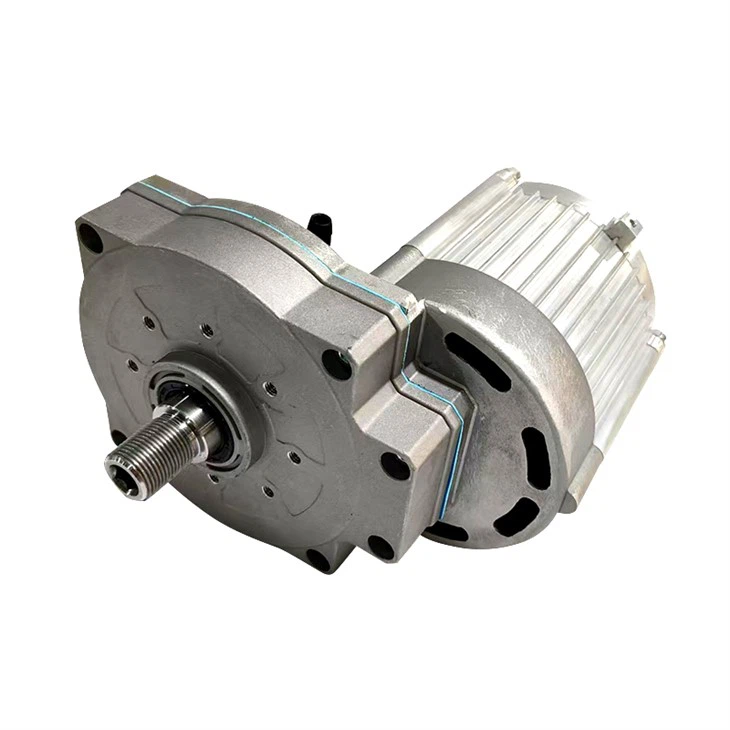
First off, let's understand what a brushless DC motor is. It's a type of electric motor that uses electronic commutation instead of brushes. This design gives it several advantages, like higher efficiency, longer lifespan, and less maintenance compared to brushed motors. You can check out our 24V Brushless Dc Motor and Small Brushless Dc Motor on our website to see the variety we offer.
Now, let's talk about corrosive environments. These are places where there are chemicals, moisture, or other substances that can eat away at materials over time. Think of factories where they deal with acids, coastal areas with salty air, or even some food processing plants where there are cleaning agents. In these environments, corrosion can cause a lot of problems for equipment.
So, can a brushless DC motor handle it? The short answer is, it depends. There are a few factors that come into play when considering using a brushless DC motor in a corrosive environment.
Motor Construction
The materials used to build the motor are super important. Most brushless DC motors have a metal housing, usually made of aluminum or steel. Aluminum is lightweight and has some natural corrosion resistance due to the thin oxide layer that forms on its surface. However, in a really harsh corrosive environment, this oxide layer might not be enough. Steel, on the other hand, can rust if it's not properly protected.
Some of our Industrial Brushless Dc Motor models are designed with special coatings on the housing. These coatings act as a barrier between the metal and the corrosive substances. For example, a powder coating can provide an extra layer of protection and prevent the metal from coming into direct contact with the corrosive agents.
Sealing
Another crucial factor is the sealing of the motor. A well - sealed motor can prevent corrosive substances from getting inside. Motors with good IP (Ingress Protection) ratings are better at keeping out dust and moisture. For instance, an IP65 rated motor is dust - tight and protected against low - pressure water jets. This means it can withstand some exposure to water and dirt, which is often associated with corrosive environments.
We make sure that our motors are designed with proper seals. The bearings are also sealed to prevent contaminants from getting in and causing damage. This helps to maintain the performance of the motor even in less - than - ideal conditions.
Electrical Components
The electrical components inside the motor, like the windings and the circuit board, are also vulnerable to corrosion. Moisture can cause short - circuits and damage the insulation of the windings. To combat this, we use high - quality insulation materials and sometimes even potting compounds. Potting compounds are used to encapsulate the electrical components, protecting them from moisture and other contaminants.
Case Studies
Let's look at some real - world examples. We had a customer in a chemical manufacturing plant. They needed a motor for a conveyor system that was constantly exposed to acidic fumes. At first, they used a standard motor, and it started to show signs of corrosion within a few months. The housing was pitted, and the performance of the motor started to decline.
We recommended one of our industrial brushless DC motors with a special corrosion - resistant coating and a high IP rating. After installing it, the motor has been running smoothly for over a year now, with no signs of corrosion or performance issues.
Another customer was in a coastal area. The salty air was causing problems for their equipment. They switched to our small brushless DC motor, which was sealed well and had a protective coating. This motor has been able to handle the harsh coastal environment without any major problems.
Limitations
Even with all these protective measures, there are still limitations. In extremely corrosive environments, like those with high concentrations of strong acids or alkalis, even the best - protected motors might eventually succumb to corrosion. The rate of corrosion can also be affected by factors like temperature, humidity, and the duration of exposure.

If the motor is exposed to a corrosive substance for a long time, the protective coatings might start to break down, and the seals might lose their effectiveness. In such cases, regular maintenance and inspection are essential.
Maintenance
Regular maintenance can significantly extend the lifespan of a brushless DC motor in a corrosive environment. This includes cleaning the motor to remove any corrosive substances that might have accumulated on the surface. Inspecting the seals and coatings for any signs of damage and replacing them if necessary is also important.
We provide maintenance guides for our customers, so they know how to take care of their motors. This helps to ensure that the motors continue to perform well over time.
Conclusion
So, in conclusion, a brushless DC motor can be used in a corrosive environment, but it requires careful consideration of the motor's construction, sealing, and electrical components. With the right design, protective measures, and maintenance, these motors can perform reliably in many corrosive settings.
If you're in a situation where you need a motor for a corrosive environment, don't hesitate to reach out to us. We have a team of experts who can help you choose the right motor for your specific needs. Whether it's a small motor for a precision application or an industrial - grade motor for heavy - duty use, we've got you covered. Let's start a conversation and find the perfect solution for your project!
References
- "Motor Handbook" by Heinz H. Trutt.
- "Electrical Engineering: Principles and Applications" by Allan R. Hambley.