

Can internal gears be used in precision machinery?
Aug 31, 2026
Can internal gears be used in precision machinery? That's a question I get asked a lot as a supplier of internal gears. And let me tell you, the answer is a resounding yes! In this blog, I'm going to dive into the world of internal gears and explore why they're a great fit for precision machinery.
First off, let's talk about what internal gears are. An internal gear is a gear with teeth on the inside of a ring, as opposed to the outside like a regular gear. This unique design allows for some pretty cool applications. When you pair an internal gear with a pinion (a smaller gear), you can achieve a compact and efficient power transmission system.
One of the main advantages of using internal gears in precision machinery is their ability to provide high torque transmission. Because the teeth of an internal gear are in contact with the pinion over a larger area compared to external gears, they can handle more load. This makes them ideal for applications where high torque is required, such as in robotics, aerospace, and automotive industries.
Another benefit is their smooth operation. The meshing of internal gears and pinions results in less vibration and noise compared to other types of gears. This is crucial in precision machinery, where even the slightest vibration can affect the accuracy of the machine's operation. For example, in a high - precision milling machine, the smooth operation of internal gears ensures that the cutting tool moves precisely, resulting in high - quality finished products.
Precision is the name of the game in precision machinery, and internal gears can deliver just that. They can be manufactured with extremely high accuracy, with tight tolerances on tooth profiles, pitch, and concentricity. This allows for precise control of motion and power transmission, which is essential in applications like medical devices, where even a small deviation can have serious consequences.

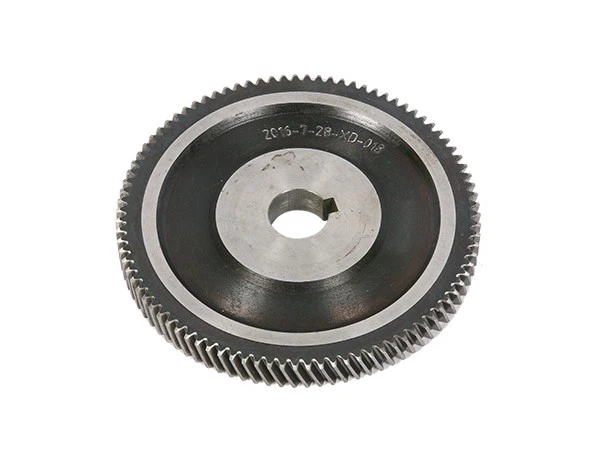
Now, let's compare internal gears with some other common types of gears, like Helical Gear. Helical gears are known for their smooth and quiet operation, but they may not be as suitable for applications where space is limited. Internal gears, on the other hand, can be designed to fit into very compact spaces while still providing excellent performance. If you're looking for a Helical Gear factory, there are many options out there, but internal gears offer a different set of advantages that might be more suitable for your precision machinery needs.
When it comes to manufacturing, internal gears can be made using a variety of methods, including hobbing, shaping, and broaching. Each method has its own advantages, depending on the specific requirements of the application. For example, hobbing is a fast and efficient method for producing large quantities of internal gears, while broaching can achieve very high precision for small - batch production.
As a supplier of Internal Gear, I've seen firsthand the many benefits that internal gears bring to precision machinery. We work closely with our customers to understand their specific needs and design internal gears that meet or exceed their expectations. Whether it's a custom - designed gear for a one - of - a - kind machine or a standard gear for a mass - produced product, we have the expertise and capabilities to deliver.
However, it's not all sunshine and rainbows. There are some challenges associated with using internal gears in precision machinery. One of the main challenges is the difficulty of manufacturing. The internal design of the gear makes it more complex to produce compared to external gears. This can result in higher manufacturing costs, especially for small - batch production. But if you consider the long - term benefits, such as improved performance and reliability, the investment in internal gears can be well worth it.
Another challenge is the lubrication. Because the teeth of internal gears are on the inside, it can be more difficult to ensure proper lubrication. Inadequate lubrication can lead to increased wear and tear, reduced efficiency, and even failure of the gear system. That's why it's important to work with a supplier who can provide guidance on the right lubrication methods and products for your specific application.
In conclusion, internal gears can definitely be used in precision machinery, and they offer many advantages over other types of gears. Their high torque transmission, smooth operation, and precision make them a great choice for a wide range of applications. If you're in the market for precision machinery and are considering your gear options, I encourage you to take a closer look at internal gears.
As a supplier, I'm here to help you every step of the way. Whether you have questions about the design, manufacturing, or application of internal gears, feel free to reach out. We can discuss your specific needs, provide samples if necessary, and work together to find the best solution for your precision machinery. If you're interested in purchasing internal gears, don't hesitate to contact me for a quote and to start the procurement process. Let's work together to make your precision machinery even more efficient and reliable!
References
- Gear Handbook: Theory and Practice. Second Edition. Edited by Darle W. Dudley.
- Mechanical Engineering Design. Eighth Edition. By Joseph E. Shigley, Charles R. Mischke, and Richard G. Budynas.