

How does heat treatment affect the performance of step shafts?
Sep 28, 2026
Hey there! As a step shaft supplier, I've seen firsthand how heat treatment can have a huge impact on the performance of step shafts. In this blog post, I'm gonna break down the ins and outs of heat treatment and how it affects step shafts. So, let's dive right in!
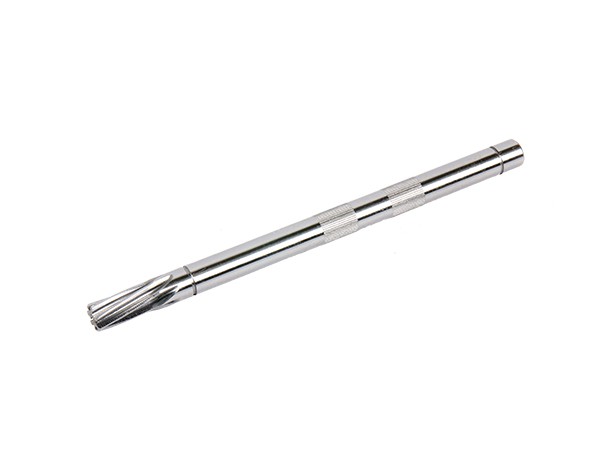

What is Heat Treatment?
Heat treatment is a process that involves heating and cooling a material to alter its physical and mechanical properties. It's like giving the step shaft a little makeover to make it stronger, more durable, and better suited for its intended application. There are several different types of heat treatment, including annealing, quenching, tempering, and normalizing. Each type of heat treatment has its own unique effects on the material, so it's important to choose the right one for your step shaft.
How Heat Treatment Affects the Performance of Step Shafts
Hardness and Strength
One of the most significant effects of heat treatment on step shafts is an increase in hardness and strength. When a step shaft is heated and then rapidly cooled (quenched), the atoms in the material rearrange themselves to form a harder, more rigid structure. This makes the step shaft more resistant to wear and deformation, which is especially important in applications where the shaft is subjected to high loads or stresses.
For example, in a Gear Shaft, heat treatment can significantly improve the shaft's ability to withstand the forces generated by the gears. This can lead to longer service life and reduced maintenance costs.
Ductility and Toughness
While heat treatment can increase the hardness and strength of a step shaft, it can also reduce its ductility and toughness. Ductility refers to the ability of a material to deform without breaking, while toughness refers to its ability to absorb energy without fracturing. In some applications, it's important to have a balance between hardness and ductility/toughness.
For instance, in a Brushless Motor Shaft, the shaft needs to be strong enough to transmit the torque from the motor but also flexible enough to withstand any vibrations or shocks. Heat treatment can be carefully controlled to achieve the right balance of properties for this type of application.
Wear Resistance
Heat treatment can also improve the wear resistance of step shafts. By increasing the hardness of the surface of the shaft, it becomes more resistant to abrasion and friction. This is particularly important in applications where the shaft is in contact with other components, such as bearings or gears.
For example, in a Step Shaft used in a manufacturing process, heat treatment can help reduce wear and extend the lifespan of the shaft, reducing the need for frequent replacements.
Corrosion Resistance
In some cases, heat treatment can also enhance the corrosion resistance of step shafts. Certain heat treatment processes can create a protective layer on the surface of the shaft, preventing it from rusting or corroding. This is especially important in applications where the shaft is exposed to harsh environments or chemicals.
Different Heat Treatment Processes and Their Effects
Annealing
Annealing is a heat treatment process that involves heating the step shaft to a specific temperature and then slowly cooling it. This process helps to relieve internal stresses in the material, making it more ductile and reducing the risk of cracking or distortion. Annealed step shafts are often used in applications where high ductility is required, such as in the manufacturing of precision components.
Quenching
Quenching is a rapid cooling process that involves heating the step shaft to a high temperature and then quickly cooling it in a quenching medium, such as water, oil, or air. This process hardens the material by forming a martensitic structure, which is very hard and strong. However, quenching can also cause the shaft to become brittle, so it's often followed by tempering.
Tempering
Tempering is a heat treatment process that involves heating the quenched step shaft to a lower temperature and then holding it at that temperature for a specific period of time. This process helps to reduce the brittleness of the quenched shaft and improve its toughness and ductility. Tempered step shafts are commonly used in applications where a balance of hardness and toughness is required.
Normalizing
Normalizing is a heat treatment process that involves heating the step shaft to a temperature above its critical point and then cooling it in air. This process helps to refine the grain structure of the material, improving its strength and toughness. Normalized step shafts are often used in applications where high strength and good machinability are required.
Choosing the Right Heat Treatment for Your Step Shaft
Choosing the right heat treatment for your step shaft depends on several factors, including the material of the shaft, the intended application, and the desired properties. It's important to work with a knowledgeable heat treatment provider who can help you select the most appropriate heat treatment process for your specific needs.
For example, if you need a step shaft with high hardness and wear resistance, quenching and tempering may be the best option. On the other hand, if you need a shaft with good ductility and toughness, annealing or normalizing may be more suitable.
Conclusion
In conclusion, heat treatment plays a crucial role in determining the performance of step shafts. By carefully selecting the right heat treatment process, you can enhance the hardness, strength, wear resistance, and corrosion resistance of your step shafts, making them more reliable and durable.
If you're in the market for high-quality step shafts, we're here to help. We offer a wide range of step shafts that are heat-treated to meet your specific requirements. Whether you need a Brushless Motor Shaft, a Gear Shaft, or a Step Shaft, we've got you covered. Contact us today to discuss your needs and get a quote. We look forward to working with you!
References
- Metals Handbook: Heat Treating, Volume 4, ASM International
- Heat Treatment Principles and Techniques, by David A. Woodford
- The Science and Engineering of Materials, by Donald R. Askeland and Pradeep P. Fulay