

How does the roundness of a precision shaft sleeve affect its performance?
Apr 30, 2026
Hey there! As a supplier of precision shaft sleeves, I've seen firsthand how the roundness of these little components can have a huge impact on their performance. In this blog post, I'm gonna dive into why roundness matters, how it affects different aspects of a precision shaft sleeve's performance, and why you should care about it when you're shopping around for these parts.
Why Roundness is a Big Deal
Let's start with the basics. When we talk about the roundness of a precision shaft sleeve, we're referring to how closely its cross - section matches a perfect circle. In an ideal world, every shaft sleeve would be a perfect circle, but in reality, there's always some deviation.
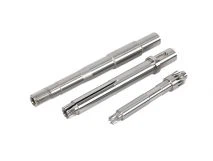
Why does this matter? Well, precision shaft sleeves are used in a whole bunch of different applications, from Electric Motor Shafts to Spline Shafts and Servo Motor Shafts. These applications often require high levels of accuracy and smooth operation. An irregularly shaped shaft sleeve can throw off the whole system.
Impact on Friction and Wear
One of the biggest ways roundness affects performance is through friction and wear. When a shaft sleeve isn't perfectly round, it won't make even contact with other components it's paired with. This uneven contact means that some parts of the sleeve will bear more pressure than others.
For example, let's say you have a non - round shaft sleeve in an electric motor. As the motor runs, the areas of the sleeve that are making more contact will experience increased friction. This extra friction can cause the sleeve to heat up more quickly, and over time, it will lead to accelerated wear. The more wear the sleeve experiences, the shorter its lifespan will be, and you'll end up having to replace it more often. That's not just an inconvenience; it also costs you money in terms of parts and the labor to install them.

Effect on Rotational Stability
Rotational stability is another key aspect of a precision shaft sleeve's performance that's affected by roundness. In applications like servo motors, where precise rotation is crucial, a non - round shaft sleeve can cause all sorts of problems.
If the sleeve isn't round, it will create an imbalance as it rotates. This imbalance can lead to vibrations, which can then spread throughout the whole system. These vibrations not only reduce the efficiency of the motor but can also cause damage to other components over time. You might notice a decrease in the accuracy of the motor's movement, which is a big deal if you're using it for something like a robotic arm or a precision manufacturing process. A perfectly round shaft sleeve, on the other hand, ensures smooth and stable rotation, which is essential for getting consistent and accurate results.
Influence on Power Transmission
Power transmission is also closely tied to the roundness of a precision shaft sleeve. In many applications, the shaft sleeve is responsible for transferring power from one part of the system to another. When the sleeve is round, power can be transmitted evenly and efficiently.
However, if the sleeve has an irregular shape, the power transfer will be disrupted. Some parts of the sleeve will receive more power than others, which can lead to inefficiencies in the system. This means that the motor or other power source has to work harder to achieve the same level of performance. In the long run, this increased energy consumption can add up, costing you more money on your electricity bills. And let's not forget that the extra stress on the system can also lead to more frequent breakdowns and repairs.
Measuring and Ensuring Roundness
So, how do we measure the roundness of a precision shaft sleeve? There are a few different methods, but one common way is to use a roundness measuring instrument. These instruments can detect even the slightest deviations from a perfect circle, allowing us to ensure that our shaft sleeves meet the required standards.
As a supplier, we take roundness very seriously. We have strict quality control processes in place to make sure that every shaft sleeve we produce is as close to perfectly round as possible. We use high - precision manufacturing techniques and state - of - the - art equipment to achieve this level of accuracy. And we don't just rely on machines; our experienced technicians also perform visual and manual inspections to catch any potential issues.
Why Choose Our Precision Shaft Sleeves
Now that you understand how important roundness is for the performance of a precision shaft sleeve, you might be wondering why you should choose our products. Well, for starters, we've been in the business for a long time, and we've built a reputation for providing high - quality shaft sleeves.
Our commitment to roundness means that you can expect our products to offer better performance, longer lifespan, and more efficient operation. Whether you're using our shaft sleeves in an electric motor, a spline shaft, or a servo motor, you can trust that they'll deliver the results you need.
We also offer a wide range of customization options. We understand that different applications have different requirements, so we can work with you to create a precision shaft sleeve that's tailored to your specific needs. And our customer service team is always on hand to answer any questions you might have and to provide support throughout the purchasing process.
Get in Touch
If you're in the market for precision shaft sleeves and want to learn more about how our products can benefit your business, don't hesitate to get in touch. We're always happy to have a chat, answer your questions, and discuss how we can meet your requirements. Whether you're looking for a small batch of custom - made shaft sleeves or you need a large order for a production line, we can help. Contact us today to start the conversation and let's find the perfect precision shaft sleeves for your needs!
References
- "Mechanical Design Handbook" - A comprehensive guide on mechanical components and their performance factors.
- "Manufacturing Engineering and Technology" - Covers manufacturing processes and quality control techniques related to precision parts.