

How to choose a brake for a DC motor?
Jun 27, 2025
When it comes to DC motors, one crucial component that often gets overlooked is the brake. A well - chosen brake can significantly enhance the performance, safety, and reliability of your DC motor system. As a DC motor supplier, I've encountered numerous customers who are unsure about how to select the right brake for their DC motors. In this blog, I'll share some essential factors and considerations to help you make an informed decision.
Understanding the Types of Brakes for DC Motors
There are several types of brakes commonly used with DC motors, each with its own set of advantages and disadvantages.
Electromagnetic Brakes
Electromagnetic brakes are perhaps the most popular choice for DC motors. They work on the principle of electromagnetic force. When the power is applied to the motor, the brake is released, allowing the motor to run freely. When the power is cut off, the brake engages, stopping the motor quickly. These brakes offer fast response times and can be easily controlled electronically. They are suitable for applications where rapid stopping is required, such as in conveyor systems or robotics.
Mechanical Brakes
Mechanical brakes rely on physical contact between brake pads or shoes and a rotating surface. They can be further classified into drum brakes and disc brakes. Drum brakes use brake shoes that press against the inside of a drum attached to the motor shaft. Disc brakes, on the other hand, use brake pads that clamp onto a disc. Mechanical brakes are known for their durability and high - torque capabilities. They are often used in heavy - duty applications, like in large industrial machinery.
Dynamic Brakes
Dynamic brakes work by converting the kinetic energy of the rotating motor into electrical energy, which is then dissipated as heat through a resistor. This type of brake is useful for controlling the speed of the motor during deceleration. It is commonly used in applications where the motor needs to slow down gradually, such as in elevator systems.
Factors to Consider When Choosing a Brake
Torque Requirements
One of the most important factors to consider is the torque requirements of your application. The brake must be able to generate enough torque to stop the motor and hold the load in place. To calculate the required torque, you need to consider the inertia of the rotating parts, the load being driven, and the desired stopping time. For example, in a high - inertia application like a large flywheel, a brake with a high - torque capacity will be necessary.
Stopping Time
The stopping time is another critical factor. In some applications, such as in a printing press, a very short stopping time is required to ensure accurate positioning. In other cases, a longer stopping time may be acceptable. The type of brake and its size will need to be selected based on the desired stopping time. Electromagnetic brakes generally offer faster stopping times compared to mechanical brakes.
Duty Cycle
The duty cycle refers to the frequency and duration of brake operation. In applications where the brake is engaged and disengaged frequently, such as in a pick - and - place robot, a brake with a high - duty cycle rating is required. Continuous operation can cause the brake to overheat, so it's important to choose a brake that can handle the expected duty cycle without premature wear or failure.
Environmental Conditions
The environmental conditions in which the motor and brake will operate also play a significant role in the selection process. If the application is in a dirty or dusty environment, a brake with a sealed design may be necessary to prevent contamination. In wet or corrosive environments, a brake made of corrosion - resistant materials should be chosen. For example, in a food processing plant, a stainless - steel brake may be required to meet hygiene standards.
Cost
Cost is always a consideration. You need to balance the performance requirements of your application with the cost of the brake. While high - performance brakes may offer better features, they also tend to be more expensive. It's important to evaluate the cost - effectiveness of different brake options based on your specific needs.
Compatibility with DC Motors
When choosing a brake, it's essential to ensure compatibility with the DC motor. The brake must be able to mount directly to the motor shaft or be adaptable to the motor's mounting configuration. The electrical characteristics of the brake, such as the voltage and current requirements, should also match the motor's power supply.
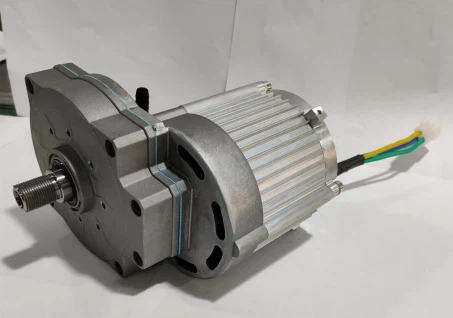
For example, if you are using a brushless dc motor 450W, you need to select a brake that can handle the motor's torque and speed characteristics. Similarly, for a Low Voltage AC Motor Vfd, the brake should be compatible with the variable - frequency drive system.

Application - Specific Considerations
Conveyor Systems
In conveyor systems, the brake is used to stop the conveyor belt quickly in case of an emergency or to position the belt accurately. A fast - acting electromagnetic brake is often the best choice. The brake should be able to handle the inertia of the conveyor belt and the load it is carrying.
Robotics
In robotics, precise control of movement is essential. A brake with a short response time and high - torque capacity is required to ensure accurate positioning of the robot arm. Electromagnetic brakes are commonly used in robotics due to their fast - acting nature.
Elevator Systems
Elevator systems require a brake that can hold the elevator car in place safely and stop it smoothly. A combination of dynamic and electromagnetic brakes is often used. The dynamic brake helps to control the speed during deceleration, while the electromagnetic brake holds the car in place when it reaches the desired floor.
Case Studies
Let's take a look at a couple of real - world examples to illustrate the importance of choosing the right brake.
Case 1: A Packaging Machine
A packaging machine was experiencing issues with inaccurate positioning of the packaging materials. The original brake on the motor was not able to stop the motor quickly enough, resulting in misaligned packages. After analyzing the application, an electromagnetic brake with a higher - torque capacity and a faster response time was installed. This improved the stopping time of the motor, and the packaging accuracy was significantly enhanced.
Case 2: A Mining Conveyor
In a mining conveyor system, the existing mechanical brake was wearing out quickly due to the high - dust environment. The dust was getting into the brake mechanism, causing premature failure. A sealed electromagnetic brake was installed, which was able to withstand the dusty conditions. This reduced maintenance costs and increased the reliability of the conveyor system.
Conclusion
Choosing the right brake for a DC motor is a complex decision that requires careful consideration of multiple factors. As a DC motor supplier, I understand the importance of providing our customers with the right solutions. By considering the torque requirements, stopping time, duty cycle, environmental conditions, and cost, you can select a brake that will enhance the performance and reliability of your DC motor system.
If you are in the process of selecting a brake for your DC motor or have any questions about our 24V Brushless DC Gear Motor or other DC motor products, please feel free to reach out to us. We have a team of experts who can assist you in making the best choice for your specific application. Contact us today to start a discussion about your procurement needs.
References
- "Motor Handbook" by Arnold Tustin
- "Electrical Machines and Drives" by Stephen J. Chapman
- Industry whitepapers on DC motor brakes from leading manufacturers