

How to correct shaft misalignment?
Oct 08, 2025
Shaft misalignment is a common issue in mechanical systems that can lead to a host of problems, from premature wear and tear to complete system failure. As a shaft supplier, I've seen firsthand how misalignment can impact the performance and longevity of machinery. In this blog, I'll share some practical tips on how to correct shaft misalignment and keep your equipment running smoothly.
Understanding Shaft Misalignment
Before we dive into the correction methods, it's important to understand what shaft misalignment is and what causes it. Shaft misalignment occurs when the axes of two or more shafts are not perfectly aligned. This can happen in two main ways: parallel misalignment, where the shafts are parallel but offset from each other, and angular misalignment, where the shafts are at an angle to each other.
There are several factors that can cause shaft misalignment, including improper installation, thermal expansion, wear and tear, and external forces. For example, if a shaft is not installed correctly, it may be slightly off-center, leading to misalignment over time. Thermal expansion can also cause misalignment, as different parts of the machinery may expand at different rates when heated.
Detecting Shaft Misalignment
The first step in correcting shaft misalignment is to detect it. There are several methods you can use to detect misalignment, including visual inspection, dial indicators, and laser alignment systems.
Visual inspection is the simplest method, but it's also the least accurate. You can look for signs of misalignment, such as uneven wear on the shaft or coupling, or excessive vibration. However, these signs may not be visible until the misalignment has become severe.

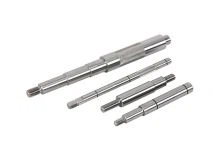
Dial indicators are more accurate than visual inspection, but they require more skill and time to use. You can use a dial indicator to measure the amount of misalignment between two shafts. This method involves attaching the dial indicator to one shaft and measuring the movement of the other shaft as it rotates.
Laser alignment systems are the most accurate and efficient method of detecting shaft misalignment. These systems use lasers to measure the alignment of the shafts and provide real-time feedback. Laser alignment systems are easy to use and can detect even small amounts of misalignment.
Correcting Shaft Misalignment
Once you've detected shaft misalignment, the next step is to correct it. There are several methods you can use to correct misalignment, depending on the type and severity of the misalignment.
Shimming
Shimming is a common method of correcting parallel misalignment. This method involves placing thin metal shims between the base of the machine and the foundation to adjust the height of the machine. By adding or removing shims, you can adjust the position of the machine and align the shafts.
Realigning the Machine
If the misalignment is severe, you may need to realign the entire machine. This method involves loosening the bolts that hold the machine in place and moving it into the correct position. Once the machine is in the correct position, you can tighten the bolts and recheck the alignment.
Replacing the Coupling
If the misalignment is caused by a worn or damaged coupling, you may need to replace the coupling. Couplings are used to connect two shafts and transmit power between them. Over time, couplings can wear out or become damaged, leading to misalignment. By replacing the coupling, you can restore the alignment of the shafts.
Preventing Shaft Misalignment
Preventing shaft misalignment is the best way to avoid costly repairs and downtime. Here are some tips to help you prevent shaft misalignment:
- Proper Installation: Make sure the shafts are installed correctly and that the couplings are properly aligned. Follow the manufacturer's instructions for installation and use the correct tools and techniques.
- Regular Maintenance: Perform regular maintenance on your machinery, including lubrication, inspection, and alignment checks. This will help you detect and correct any misalignment before it becomes severe.
- Monitor Vibration: Use vibration monitoring equipment to detect any changes in the vibration levels of your machinery. Excessive vibration can be a sign of misalignment or other problems.
- Use High-Quality Components: Use high-quality shafts, couplings, and other components in your machinery. This will help ensure that your equipment operates smoothly and efficiently.
Conclusion
Shaft misalignment is a common issue in mechanical systems, but it can be corrected and prevented. By understanding the causes and effects of shaft misalignment, detecting it early, and using the correct correction methods, you can keep your equipment running smoothly and avoid costly repairs and downtime.
If you're in the market for high-quality shafts, I invite you to check out our selection of Spline Shaft, Worm Drive Shaft, and Servo Motor Shaft. We offer a wide range of shafts to meet your specific needs and requirements. Contact us today to learn more about our products and services and to discuss your shaft needs.
References
- "Shaft Alignment Handbook" by John Piotrowski
- "Mechanical Power Transmission" by Joseph E. Shigley and Charles R. Mischke
- "Vibration Analysis for Machinery" by Robert B. Randall