

How to design a step shaft?
Nov 18, 2025
Designing a step shaft is a meticulous process that requires a blend of engineering knowledge, practical experience, and an understanding of the specific requirements of the application. As a step shaft supplier, I've been involved in numerous projects, and I'm excited to share my insights on how to design a step shaft effectively.
Understanding the Basics of a Step Shaft
A step shaft, also known as a stepped shaft, is a shaft with different diameters along its length. These variations in diameter serve multiple purposes, such as accommodating different components like bearings, gears, and pulleys, providing support and alignment, and managing stress distribution. The design of a step shaft must consider factors like the type of load it will bear (torsional, bending, or axial), the rotational speed, the material properties, and the environmental conditions.
Step 1: Define the Application Requirements
The first step in designing a step shaft is to clearly define the application requirements. This involves understanding the purpose of the shaft, the type of machine it will be used in, and the specific functions it needs to perform. For example, if the shaft is for a power transmission system, you need to know the power rating, the speed of rotation, and the torque requirements. If it's for a precision instrument, factors like accuracy, smoothness of operation, and vibration control become crucial.
Consider the type of loads the shaft will experience. Torsional loads occur when the shaft is subjected to twisting forces, such as in a motor or a gearbox. Bending loads are caused by forces acting perpendicular to the shaft axis, like in a pulley system. Axial loads act parallel to the shaft axis, as in a thrust bearing application. Understanding these loads will help you determine the appropriate diameter and material for each section of the shaft.
Step 2: Select the Material
The choice of material is critical in step shaft design. The material should have the necessary strength, stiffness, and durability to withstand the expected loads and environmental conditions. Common materials used for step shafts include carbon steel, alloy steel, stainless steel, and aluminum.
Carbon steel is a popular choice due to its good strength, affordability, and ease of machining. Alloy steels offer higher strength and better heat treatment properties, making them suitable for high-stress applications. Stainless steel is resistant to corrosion, making it ideal for use in harsh environments. Aluminum is lightweight and has good thermal conductivity, which can be advantageous in certain applications.
When selecting the material, consider factors like the cost, availability, and the manufacturing process. For example, if the shaft requires complex machining operations, a material with good machinability should be chosen.
Step 3: Determine the Shaft Dimensions
Once you have defined the application requirements and selected the material, the next step is to determine the shaft dimensions. This involves calculating the appropriate diameters and lengths for each section of the shaft.
The diameter of the shaft is determined by the torque and bending loads it will experience. You can use engineering formulas and standards to calculate the minimum diameter required to withstand these loads. For example, the torsion formula can be used to calculate the diameter based on the torque and the allowable shear stress of the material.
The length of each section of the shaft depends on the components it will support and the overall layout of the machine. Consider factors like the space available, the alignment requirements, and the need for easy assembly and disassembly.
Step 4: Design the Keyways and Splines
Keyways and splines are used to connect the shaft to other components, such as gears, pulleys, and couplings. They provide a positive connection that allows for the transmission of torque.
When designing keyways and splines, consider factors like the type of connection required (e.g., sliding or fixed), the torque capacity, and the ease of installation. The dimensions of the keyways and splines should be in accordance with industry standards to ensure proper fit and function.
Step 5: Consider the Tolerances and Surface Finish
Tolerances and surface finish are important aspects of step shaft design. Tolerances define the allowable variation in the dimensions of the shaft, while the surface finish affects the performance and durability of the shaft.
Tight tolerances are required for precision applications to ensure proper fit and alignment of the components. The surface finish of the shaft should be smooth to reduce friction, wear, and noise. For example, a high-quality surface finish can improve the performance of bearings and reduce the risk of premature failure.
Step 6: Perform Stress Analysis
Before finalizing the design, it's essential to perform a stress analysis to ensure that the shaft can withstand the expected loads without failure. Stress analysis involves using engineering software or analytical methods to calculate the stress distribution in the shaft under different loading conditions.
The results of the stress analysis can help you identify areas of high stress and make necessary design modifications. For example, if the stress in a particular section of the shaft exceeds the allowable limit, you may need to increase the diameter or change the material.
Step 7: Consider the Manufacturing Process
The manufacturing process plays a significant role in the final design of the step shaft. Different manufacturing processes, such as turning, milling, grinding, and heat treatment, can affect the dimensions, surface finish, and mechanical properties of the shaft.

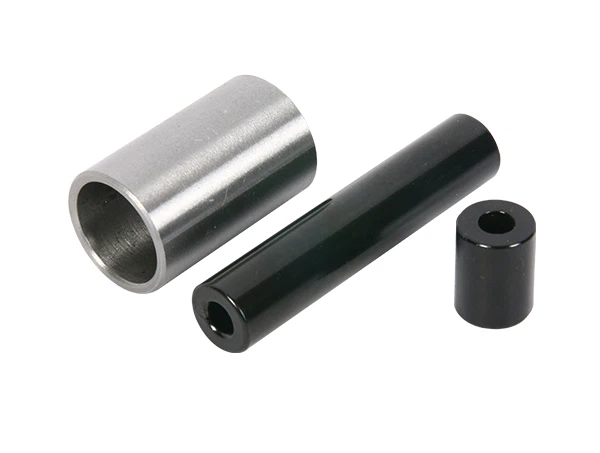
When designing the shaft, consider the capabilities and limitations of the manufacturing process. For example, if the shaft has complex geometries, a machining process that can achieve high precision may be required. Heat treatment can be used to improve the strength and hardness of the shaft, but it may also cause dimensional changes that need to be accounted for in the design.
Step 8: Review and Optimize the Design
Once you have completed the initial design, it's important to review and optimize it. This involves checking the design against the application requirements, the manufacturing process, and the cost constraints.
Look for opportunities to simplify the design, reduce the number of components, or improve the performance. For example, you may be able to combine multiple functions into a single section of the shaft, or use a more cost-effective material without sacrificing performance.
Step 9: Collaborate with Suppliers and Manufacturers
As a step shaft supplier, I understand the importance of collaboration. Working closely with suppliers and manufacturers can help you ensure that the design is feasible and can be produced efficiently.
Suppliers can provide valuable insights into the availability of materials, the latest manufacturing technologies, and the cost implications. Manufacturers can offer suggestions on the best manufacturing processes and help you optimize the design for production.
Step 10: Test and Validate the Design
Before mass-producing the step shaft, it's crucial to test and validate the design. This involves creating a prototype and subjecting it to real-world conditions to ensure that it meets the performance requirements.
Testing can include measuring the torque capacity, the bending strength, the vibration levels, and the durability of the shaft. Any issues identified during testing should be addressed by making appropriate design modifications.
Conclusion
Designing a step shaft is a complex process that requires careful consideration of multiple factors. By following the steps outlined above, you can design a step shaft that meets the specific requirements of your application, is cost-effective, and can be manufactured efficiently.
As a step shaft supplier, I'm committed to providing high-quality products and excellent customer service. If you're in need of a step shaft for your project, or if you have any questions about step shaft design, please don't hesitate to [initiate a contact for procurement discussions]. We have the expertise and resources to help you find the best solution for your needs.
References
- Shigley, J. E., & Mischke, C. R. (2001). Mechanical Engineering Design. McGraw-Hill.
- Budynas, R. G., & Nisbett, J. K. (2011). Shigley's Mechanical Engineering Design. McGraw-Hill.
- Machinery's Handbook (30th Edition). Industrial Press.
Additional Resources
If you're interested in learning more about related products, you can explore the following links: