

How to improve the speed stability of a brushless DC motor?
Jun 04, 2025
In the realm of modern industrial applications, brushless DC motors have emerged as a cornerstone technology, offering unparalleled efficiency, reliability, and precision. As a leading supplier of brushless DC motors, I understand the critical importance of speed stability in these motors. Whether it's in robotics, automation, or electric vehicles, consistent speed performance is essential for optimal operation. In this blog post, I will share some insights and strategies on how to improve the speed stability of a brushless DC motor.
Understanding the Basics of Brushless DC Motors
Before delving into the methods of enhancing speed stability, it's crucial to have a solid understanding of how brushless DC motors work. Unlike traditional brushed DC motors, brushless DC motors do not use physical brushes to transfer electrical current to the rotor. Instead, they rely on electronic commutation to control the flow of current through the stator windings. This design offers several advantages, including higher efficiency, longer lifespan, and reduced maintenance requirements.
The speed of a brushless DC motor is primarily determined by the frequency of the electrical pulses applied to the stator windings. By adjusting the pulse width modulation (PWM) signal, the average voltage applied to the motor can be controlled, thereby regulating the motor's speed. However, various factors can affect the speed stability of a brushless DC motor, such as load variations, voltage fluctuations, and motor heating.
Factors Affecting Speed Stability
Load Variations
One of the most common causes of speed instability in brushless DC motors is load variations. When the load on the motor changes, the motor's speed can fluctuate accordingly. For example, if the motor is driving a conveyor belt and the load on the belt suddenly increases, the motor may slow down. To compensate for load variations, a feedback control system can be implemented. This system continuously monitors the motor's speed and adjusts the PWM signal to maintain a constant speed.
Voltage Fluctuations
Another factor that can affect speed stability is voltage fluctuations. Brushless DC motors are sensitive to changes in the input voltage, and even small variations can cause significant speed changes. To mitigate the impact of voltage fluctuations, a voltage regulator can be used to ensure a stable power supply to the motor. Additionally, using a high-quality power source with low ripple and noise can help improve speed stability.

Motor Heating
Motor heating is another critical factor that can affect speed stability. As the motor operates, it generates heat, which can cause the motor's resistance to increase. This increase in resistance can lead to a decrease in the motor's speed. To prevent overheating, proper cooling measures should be implemented, such as using a heat sink or a fan. Additionally, monitoring the motor's temperature and adjusting the operating conditions accordingly can help maintain speed stability.
Strategies to Improve Speed Stability
Feedback Control Systems
As mentioned earlier, feedback control systems are essential for maintaining speed stability in brushless DC motors. There are several types of feedback control systems available, including proportional-integral-derivative (PID) controllers, fuzzy logic controllers, and neural network controllers. These controllers use sensors to measure the motor's speed and compare it to a desired setpoint. Based on the error between the measured speed and the setpoint, the controller adjusts the PWM signal to maintain a constant speed.
PID controllers are the most commonly used feedback control systems in brushless DC motors. They work by calculating the error between the measured speed and the setpoint and using this error to adjust the PWM signal. The proportional term of the PID controller adjusts the output based on the current error, the integral term adjusts the output based on the accumulated error over time, and the derivative term adjusts the output based on the rate of change of the error.
Advanced Commutation Techniques
In addition to feedback control systems, advanced commutation techniques can also be used to improve speed stability. Commutation is the process of switching the current flow in the stator windings to create a rotating magnetic field. Traditional commutation techniques, such as trapezoidal commutation, can cause torque ripple and speed fluctuations. However, advanced commutation techniques, such as sinusoidal commutation and field-oriented control (FOC), can provide smoother torque and better speed stability.
Sinusoidal commutation uses a sinusoidal waveform to control the current flow in the stator windings, which results in a more uniform magnetic field and reduced torque ripple. FOC, on the other hand, is a more advanced control technique that allows for independent control of the motor's torque and flux. By controlling the motor's torque and flux separately, FOC can provide better speed stability and dynamic performance.
Motor Design Optimization
Motor design optimization is another effective strategy for improving speed stability. By carefully selecting the motor's parameters, such as the number of poles, the winding configuration, and the magnetic material, the motor's performance can be optimized for a specific application. For example, using a motor with a higher number of poles can provide smoother torque and better speed stability at low speeds. Additionally, using a high-quality magnetic material can reduce the motor's losses and improve its efficiency.
Our Product Offerings
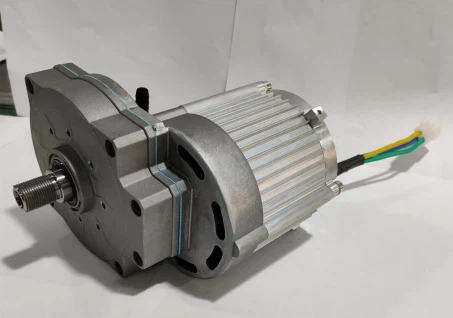
As a leading supplier of brushless DC motors, we offer a wide range of high-quality motors that are designed to provide excellent speed stability. Our brushless dc motor 450W is a powerful and efficient motor that is suitable for a variety of applications, including robotics, automation, and electric vehicles. It features advanced commutation techniques and a feedback control system to ensure smooth and stable operation.
We also offer a 24V Brushless DC Gear Motor that is specifically designed for applications that require high torque and low speed. This motor is equipped with a high-quality gearbox that provides excellent torque transmission and speed reduction. Additionally, our Brushless DC Electric Motor is a versatile motor that can be used in a wide range of applications, from small appliances to industrial machinery.
Conclusion
In conclusion, improving the speed stability of a brushless DC motor is essential for ensuring optimal performance in a variety of applications. By understanding the factors that affect speed stability and implementing the strategies outlined in this blog post, you can significantly enhance the performance of your brushless DC motor. As a trusted supplier of brushless DC motors, we are committed to providing our customers with high-quality products and expert technical support. If you have any questions or need assistance with improving the speed stability of your brushless DC motor, please do not hesitate to contact us. We look forward to working with you to meet your specific requirements.
References
- Chapman, S. J. (2012). Electric Machinery Fundamentals. McGraw-Hill Education.
- Dorf, R. C., & Bishop, R. H. (2017). Modern Control Systems. Pearson.
- Krishnan, R. (2010). Electric Motor Drives: Modeling, Analysis, and Control. Prentice Hall.