

How does the number of teeth in double - helical gears affect their performance?
Jun 05, 2025
Hey there, gear enthusiasts! As a helical gear supplier, I've seen firsthand how the number of teeth in double - helical gears can have a huge impact on their performance. In this blog, I'm gonna break down the relationship between tooth count and gear performance, so you can make the best choices for your projects.
Let's start with the basics. Double - helical gears, also known as herringbone gears, are pretty cool. They're designed to cancel out the axial thrust that's common in single - helical gears. This makes them super stable and efficient, which is why they're used in all sorts of heavy - duty applications, like in industrial machinery and automotive transmissions.
Now, the number of teeth on a double - helical gear isn't just a random number. It affects several key aspects of the gear's performance, including load - carrying capacity, noise level, and efficiency.
Load - Carrying Capacity
One of the most important things to consider when it comes to gear performance is how much load the gear can handle. The number of teeth plays a big role here. Generally speaking, gears with more teeth have a larger contact area between the meshing teeth. This means that the load is distributed over a larger surface, reducing the stress on each individual tooth.
For example, if you have a double - helical gear with a small number of teeth, say 10 or 15, the load will be concentrated on a few teeth. This can lead to premature wear and even tooth breakage, especially under high - load conditions. On the other hand, a gear with a larger number of teeth, like 50 or 60, can handle much higher loads because the load is spread out more evenly.
As a helical gear supplier, I often recommend gears with a higher tooth count for applications that require heavy - duty performance. If you're looking for a gear that can handle a lot of stress, you might want to check out our Helical Gear options. We've got a wide range of gears with different tooth counts to suit your specific needs.
Noise Level
Another factor that's affected by the number of teeth is the noise level during operation. Gears with fewer teeth tend to produce more noise. This is because the meshing action between the teeth is more abrupt. When a gear with a small number of teeth rotates, the teeth engage and disengage more quickly, creating a series of impacts that result in noise.
In contrast, gears with more teeth have a smoother meshing action. The teeth engage and disengage gradually, reducing the impact and noise. This is especially important in applications where noise reduction is a priority, such as in automotive transmissions or precision machinery.
If you're working on a project where quiet operation is essential, you might want to consider a double - helical gear with a higher tooth count. Our Helical Gear products are designed to minimize noise and provide smooth operation. We use advanced manufacturing techniques to ensure that the teeth are precisely shaped and the gear meshes smoothly, reducing noise levels significantly.
Efficiency
Efficiency is also closely related to the number of teeth in a double - helical gear. Gears with more teeth generally have higher efficiency. This is because the larger contact area between the teeth reduces friction and power loss during the meshing process.
When a gear has a small number of teeth, the contact area is limited, and the friction between the teeth is higher. This means that more energy is lost as heat, reducing the overall efficiency of the gear system. On the other hand, gears with more teeth have a better meshing efficiency, which translates to less energy loss and better overall performance.
If you're looking to improve the efficiency of your gear system, choosing a double - helical gear with a higher tooth count is a smart move. Our company offers high - quality Precision Spur Gear and helical gears that are designed for maximum efficiency. We use high - grade materials and precision manufacturing processes to ensure that our gears perform at their best.
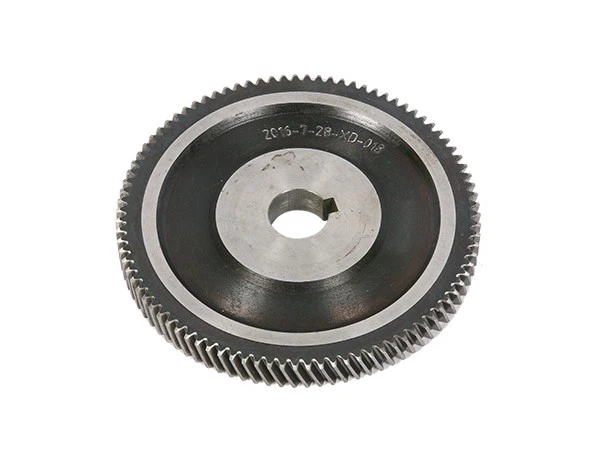

Design Considerations
Of course, there are also some design considerations when it comes to choosing the right number of teeth for your double - helical gear. You need to take into account the overall size of the gear, the speed of rotation, and the ratio of the gear system.
For example, if you have limited space in your application, you might not be able to use a gear with a very high tooth count because it would be too large. In this case, you'll need to find a balance between the number of teeth, the load - carrying capacity, and the available space.
As a helical gear supplier, I can help you make these decisions. We have a team of experts who can analyze your specific requirements and recommend the best gear solution for your project. Whether you need a gear for a small - scale application or a large - scale industrial project, we've got you covered.
Cost
Cost is also an important factor to consider. Generally, gears with more teeth are more expensive to manufacture. This is because they require more material and more precise machining. The manufacturing process for gears with a high tooth count is more complex, which adds to the cost.
However, it's important to look at the long - term cost - effectiveness. While a gear with a higher tooth count might be more expensive upfront, it can save you money in the long run. It will have a longer lifespan, require less maintenance, and provide better performance. So, when you're making your decision, don't just focus on the initial cost. Consider the overall value that the gear will provide.
Conclusion
In conclusion, the number of teeth in double - helical gears has a significant impact on their performance. More teeth generally mean better load - carrying capacity, lower noise levels, and higher efficiency. However, you also need to consider factors like cost, available space, and specific application requirements.
As a helical gear supplier, I'm here to help you make the best choice for your project. If you have any questions or need more information about our Helical Gear products, feel free to get in touch. We're always happy to assist you with your gear needs. Whether you're a small business or a large corporation, we can provide you with high - quality gears that meet your exact specifications.
If you're interested in discussing your gear requirements further, we'd love to have a chat with you. Just reach out to us, and we can start the process of finding the perfect gear for your application. Let's work together to ensure that your project runs smoothly and efficiently.
References
- Dudley, D. W. (1962). Gear Handbook. McGraw - Hill.
- Townsend, D. P. (1992). Dudley's Gear Handbook, 2nd Edition. McGraw - Hill.
- Buckingham, E. (1949). Analytical Mechanics of Gears. McGraw - Hill.