

What are the disadvantages of a hollow motor rotor shaft?
Jun 04, 2026
Hey there! As a motor rotor shaft supplier, I've had my fair share of experiences with different types of motor rotor shafts, including the hollow ones. While hollow motor rotor shafts do have their perks, they also come with a few disadvantages that you should be aware of. So, let's dive right in and take a closer look at what these drawbacks are.
1. Reduced Torsional Strength
One of the most significant disadvantages of a hollow motor rotor shaft is its reduced torsional strength. You see, a solid shaft has a continuous cross - section, which means it can distribute torque more evenly throughout its structure. On the other hand, a hollow shaft has a hole in the middle, which weakens its overall structure.
When a motor is operating, it generates torque to turn the shaft. With a hollow shaft, this torque can cause the shaft to twist more easily compared to a solid shaft. In high - torque applications, such as heavy - duty industrial motors, this can be a real problem. The shaft might not be able to handle the load, leading to premature failure. For instance, in a large manufacturing plant where motors are used to drive heavy machinery, a hollow shaft could break down under the stress, causing costly downtime. You can learn more about different types of shafts on our Electric Motor Shaft page.
2. Limited Power Transmission
Hollow motor rotor shafts also have limitations when it comes to power transmission. Since they have a lower torsional strength, they can't transmit as much power as solid shafts. Power transmission in a motor is directly related to the torque and the rotational speed of the shaft. With a hollow shaft's reduced ability to handle torque, the overall power that can be transmitted through the shaft is restricted.
This can be a major drawback in applications where high power is required. For example, in electric vehicles, motors need to deliver a significant amount of power to drive the wheels. A hollow shaft might not be able to handle the power demands, resulting in poor performance and reduced efficiency. If you're interested in shafts for high - power applications, check out our Step Shaft options.
3. Manufacturing Complexity
Manufacturing a hollow motor rotor shaft is more complex than making a solid one. Creating the hollow structure requires additional steps and specialized equipment. First, the raw material needs to be carefully selected to ensure it can withstand the manufacturing process. Then, a hole needs to be drilled or formed in the center of the shaft, which requires high - precision machining.
Any errors in the manufacturing process can lead to defects in the shaft, such as uneven wall thickness or rough inner surfaces. These defects can further weaken the shaft and affect its performance. Moreover, the quality control process for hollow shafts is more rigorous, adding to the overall manufacturing cost. This complexity and cost can make hollow shafts less attractive for some customers, especially those on a tight budget. Our Servo Motor Shaft section provides more information on the manufacturing aspects of different shafts.
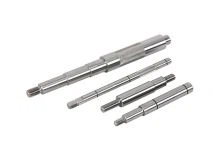

4. Susceptibility to Fatigue
Hollow motor rotor shafts are more susceptible to fatigue compared to solid shafts. Fatigue occurs when a material is subjected to repeated loading and unloading cycles. The hollow structure of the shaft makes it more vulnerable to stress concentration at the inner surface of the hole.
Over time, these stress concentrations can lead to the formation of cracks, which can propagate and eventually cause the shaft to fail. In applications where the motor operates continuously or experiences frequent start - stop cycles, such as in conveyor systems, the risk of fatigue failure is even higher. This means that hollow shafts might need to be replaced more frequently, increasing the maintenance costs for the end - user.
5. Difficulty in Balancing
Balancing a motor rotor shaft is crucial for smooth and efficient operation. However, it's more difficult to balance a hollow shaft compared to a solid one. The hollow interior can cause uneven distribution of mass, making it challenging to achieve the desired balance.
Imbalanced shafts can lead to vibrations, which can damage other components of the motor and reduce its lifespan. These vibrations can also cause noise, which is not only annoying but can also be a sign of a potential problem. To balance a hollow shaft, additional weights might need to be added, which can further complicate the process and increase the cost.
6. Higher Cost
All of the factors mentioned above contribute to the higher cost of hollow motor rotor shafts. The reduced torsional strength means that they might need to be made from more expensive materials to compensate. The manufacturing complexity requires specialized equipment and skilled labor, which adds to the production cost. The higher risk of fatigue and the difficulty in balancing also increase the overall cost of ownership due to more frequent replacements and maintenance.
For customers who are looking for cost - effective solutions, the higher price of hollow shafts can be a deal - breaker. In a competitive market, where cost is often a major consideration, the higher cost of hollow shafts can put them at a disadvantage compared to solid shafts.
Conclusion
While hollow motor rotor shafts do have some advantages, such as being lighter in weight, the disadvantages are significant. The reduced torsional strength, limited power transmission, manufacturing complexity, susceptibility to fatigue, difficulty in balancing, and higher cost make them less suitable for many applications.
However, every situation is different, and there are still cases where a hollow shaft might be the right choice. If you're in the market for a motor rotor shaft and need help deciding whether a hollow or solid shaft is best for your application, don't hesitate to reach out. We're here to assist you in making the right decision and providing you with high - quality shafts that meet your specific needs. Contact us today to start the procurement discussion and find the perfect shaft for your motor.
References
- "Mechanical Engineering Design" by Joseph E. Shigley, Charles R. Mischke, and Richard G. Budynas
- "Motor Handbook" by Arnold Tustin