

What is a spiral bevel gear?
Nov 03, 2025
A spiral bevel gear is a type of gear that plays a crucial role in various mechanical systems. As a gear supplier, I have witnessed firsthand the importance and versatility of spiral bevel gears in different industries. In this blog, I will delve into what a spiral bevel gear is, its characteristics, applications, and why it is a preferred choice in many engineering scenarios.
What is a Spiral Bevel Gear?
Spiral bevel gears are a form of bevel gears. Bevel gears, in general, are used to transmit motion between intersecting shafts, typically at a 90 - degree angle, although they can also be designed for other angles. What sets spiral bevel gears apart from other types of bevel gears, such as straight bevel gears, is the shape of their teeth.
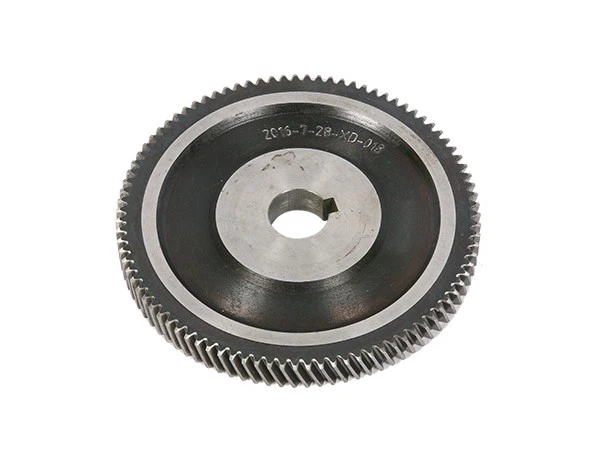
The teeth of a spiral bevel gear are curved and oblique to the gear axis. This spiral shape allows for a gradual engagement and disengagement of the teeth during the meshing process. Unlike straight bevel gears, where the teeth engage all at once, the spiral teeth of spiral bevel gears engage progressively. This results in a smoother and quieter operation, as well as a higher load - carrying capacity.
Characteristics of Spiral Bevel Gears
1. Smooth and Quiet Operation
The progressive engagement of the spiral teeth reduces impact and vibration during meshing. This is especially important in applications where noise reduction is a priority, such as in automotive transmissions and high - speed machinery. The smooth operation also leads to less wear and tear on the gears, extending their service life.
2. High Load - Carrying Capacity
The spiral tooth form distributes the load over a larger contact area compared to straight bevel gears. This allows spiral bevel gears to handle higher torques and loads without excessive stress on individual teeth. As a result, they are suitable for heavy - duty applications in industries like mining, construction, and power generation.
3. Efficiency
Spiral bevel gears offer high transmission efficiency. The smooth meshing process minimizes power losses due to friction and impact, ensuring that a large proportion of the input power is effectively transmitted to the output shaft. This makes them an energy - efficient choice for mechanical systems.

4. Directional Flexibility
Spiral bevel gears can be designed to transmit power in either direction. This flexibility makes them suitable for applications where the direction of rotation may need to be reversed, such as in some industrial machinery and automotive differentials.
Manufacturing of Spiral Bevel Gears
The manufacturing of spiral bevel gears is a complex process that requires precision and advanced machining techniques. The process typically involves the following steps:
1. Material Selection
The choice of material depends on the application requirements, such as load capacity, wear resistance, and corrosion resistance. Common materials used for spiral bevel gears include steel, alloy steel, and sometimes non - ferrous metals like bronze.
2. Gear Blank Preparation
The raw material is cut into the appropriate shape and size to form the gear blank. This may involve processes such as forging, casting, or machining from a solid block of material.
3. Tooth Cutting
Specialized gear - cutting machines are used to cut the spiral teeth on the gear blank. The most common methods for cutting spiral bevel gears are the Gleason method and the Oerlikon method. These methods use different cutting tools and techniques to create the precise spiral tooth profile.
4. Heat Treatment
After tooth cutting, the gears are often heat - treated to improve their hardness, strength, and wear resistance. Heat treatment processes may include quenching, tempering, and carburizing.
5. Finishing Operations
The gears undergo finishing operations such as grinding, honing, and lapping to achieve the required surface finish and dimensional accuracy. These operations ensure smooth meshing and optimal performance of the gears.
Applications of Spiral Bevel Gears
1. Automotive Industry
Spiral bevel gears are widely used in automotive transmissions and differentials. In transmissions, they help to transfer power from the engine to the wheels while allowing for speed changes. In differentials, they enable the wheels to rotate at different speeds when the vehicle is turning, ensuring smooth and stable driving.
2. Aerospace Industry
In the aerospace industry, spiral bevel gears are used in aircraft engines, landing gear systems, and flight control mechanisms. Their high - speed and high - load capabilities, along with their smooth operation, make them suitable for the demanding requirements of aerospace applications.
3. Industrial Machinery
Spiral bevel gears are found in a variety of industrial machinery, such as machine tools, conveyors, and printing presses. They are used to transmit power between intersecting shafts and to provide speed and torque conversions.
4. Marine Industry
In marine applications, spiral bevel gears are used in ship propulsion systems, steering mechanisms, and winches. Their ability to handle high loads and operate in harsh environments makes them a reliable choice for marine equipment.
Comparison with Other Types of Gears
1. Spiral Bevel Gears vs. Straight Bevel Gears
As mentioned earlier, the main difference between spiral bevel gears and straight bevel gears is the shape of their teeth. Straight bevel gears have straight teeth that engage all at once, resulting in more impact and noise during meshing. Spiral bevel gears, on the other hand, offer smoother and quieter operation, higher load - carrying capacity, and better efficiency.
2. Spiral Bevel Gears vs. Helical Gear
Helical gears are used to transmit power between parallel shafts, while spiral bevel gears are for intersecting shafts. Helical gears also have a smooth meshing process due to their angled teeth, but they do not have the same ability to handle the high - load requirements of some applications where spiral bevel gears are used.
3. Spiral Bevel Gears vs. Internal Gear
Internal gears have teeth on the inside of a ring - shaped gear, and they are typically used in planetary gear systems. Spiral bevel gears, in contrast, are used for power transmission between intersecting shafts and have a different tooth geometry and application scope.
4. Spiral Bevel Gears vs. Precision Spur Gear
Precision spur gears have straight teeth and are used for power transmission between parallel shafts. They are simple in design and easy to manufacture but may not offer the same smoothness and load - carrying capacity as spiral bevel gears, especially in applications with intersecting shafts.
Why Choose Our Spiral Bevel Gears?
As a gear supplier, we take pride in offering high - quality spiral bevel gears. Our gears are manufactured using the latest technology and strict quality control measures. We have a team of experienced engineers and technicians who can design and produce spiral bevel gears to meet your specific requirements.
We understand that every application is unique, and we work closely with our customers to provide customized solutions. Whether you need a small - batch production for a prototype or a large - scale production for an industrial project, we have the capabilities to deliver.
In addition to our high - quality products, we also offer excellent customer service. Our sales team is always ready to answer your questions, provide technical support, and assist you in the selection of the right gears for your application.
If you are in need of spiral bevel gears or have any questions about our products, please feel free to contact us. We look forward to discussing your gear requirements and establishing a long - term partnership with you.
References
- "Gear Handbook: Design, Manufacturing, and Applications" by Darle W. Dudley
- "Mechanical Engineering Design" by Joseph E. Shigley and Charles R. Mischke
- "Fundamentals of Machine Elements" by Robert C. Juvinall and Kurt M. Marshek