


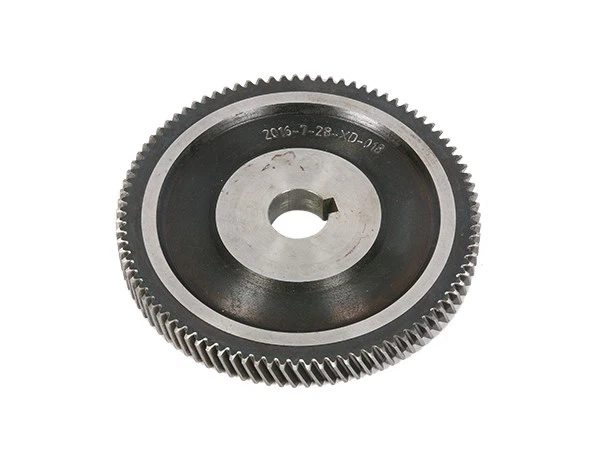
Precision Spur Gear
Precision spur gear are one of the most popular types of precision cylindrical gears. These gears feature a simple design of straight, parallel teeth positioned around the circumference of a cylinder body with a central bore that fits over a shaft. In many variants, the gear is machined with a hub which thickens the gear body around the bore without changing the gear face. The central bore can also be broached as to allow the spur gear to fit onto a spline or keyed shaft.spur gears are used in mechanical applications to increase or decrease the speed of a device or multiply torque by transmitting motion and power from one shaft to another through a series of mated gears.
Ningbo Zhenhai Yuanyi M&E Manufacture Co., Ltd. is one of the leading manufacturers and suppliers of precision spur gear in China. If you're going to buy high quality precision spur gear at low price, welcome to get more information from our factory. Customized orders are welcome.
Why Choose Us
Quality Control
We have a complete set of advanced motor testing equipment and produce in strict accordance with the standards of ISO9001 international quality management system. We are committed to providing customers with high-performance, high-quality products and continuously improving the quality of our products in every detail.
Advanced Production Equipment
We have a full set of advanced production and quality control equipment like motor performance testing system, motor testing software, armature comprehensive test system, winding machine, stator comprehensive test system, automatic stator coil shaping machine, welding equipment ,hydraulic press machine ,lathe ,cutting machine.
Rich Experience
Ningbo Zhenhai Yuanyi M&E Manufacture Co., LTD(YME) was established in 2007 and has over 16 years of experience in the designing, R&D, manufacturing and marketing of motors.
Superb Team
We have a skilled team,advanced production equipment and modern test facilities , which can provide customers with professional technical support and customized services according to customer requirements.
What is Precision Spur Gear
Precision spur gear are one of the most popular types of precision cylindrical gears. These gears feature a simple design of straight, parallel teeth positioned around the circumference of a cylinder body with a central bore that fits over a shaft. In many variants, the gear is machined with a hub which thickens the gear body around the bore without changing the gear face. The central bore can also be broached as to allow the spur gear to fit onto a spline or keyed shaft.spur gears are used in mechanical applications to increase or decrease the speed of a device or multiply torque by transmitting motion and power from one shaft to another through a series of mated gears.


Advantages of Precision Spur Gear
• Simplicity: Precision precision spur gear feature a simple, compact design that makes them easy to design and install, even in limited or restricted spaces.
• Constant speed Drive: These gears increase or decrease shaft speed with a high degree of precision at a constant velocity.
• Reliability: Unlike other power and motion transmission components, precision spur gear are unlikely to slip during operation. Additionally, their durability decreases their risk of premature failure.
• Cost-effectiveness: The simplicity of their design also allows for greater manufacturability, making them less expensive to fabricate and purchase even with highly specific or customized dimensions.
• Efficiency: Precision spur gear systems have power transmission efficiencies between 95% and 99% and can transfer large amounts of power across multiple gears with minimal power loss.
Increasing or decreasing power
Spur gears are essential for adjusting torque or power in various devices and are commonly found in applications such as washing machines, blenders, clothes dryers, construction equipment, pumps, and conveyors. In power stations, interconnected spur gears, known as gear trains, are utilized to convert energy from sources like wind or hydroelectric power into electrical energy. In a gear train, all gears have teeth of the same size, and adjacent gears rotate in opposite directions.
Changing speed
Spur gears are ideal for applications that require speed adjustments, as they effectively transfer motion and power between shafts. This capability allows them to alter the operating speed of machinery, multiply torque, and provide precise control in positioning systems. Consequently, spur gears are commonly used in clocks to regulate the movement of the second, minute, and hour hands.
Washing machines
Spur gears play a crucial role in controlling the speed of various applications, including washing machines. In these machines, spur gears regulate the rotation and torque based on the selected cycle, ensuring the appropriate motion for each wash setting.
Road roller
In a road roller, a set of spur gears converts the high rotational speed of the engine into a slower speed suitable for the wheels. This gear reduction enables the road roller to effectively move its heavy roller and perform its tasks efficiently.
Sports car
In a sports car, spur gears adjust the high rotational speed of the engine into a slower speed suitable for the wheels. Since sports cars are lightweight, they require less rotational force to drive the wheels. By converting the engine's speed, spur gears allow the wheels to turn faster with reduced turning force.
Conveyor systems
Conveyor systems have to move at a controlled speed, producing high torque. Spur gears are used as a reliable means for altering the torque of the system. In some types, a self-locking worm gear is used to power and move the spur gear, where the worm gear is the drive gear.
Radio dials
When tuning a radio, precision is crucial to select the exact frequency. Spur gears provide the accuracy needed to fine-tune the radio dial, ensuring the device is set to the desired channel with precision.
Planetary spur gear drive
Planetary spur gear systems, also known as epicyclic gearing, feature a configuration including a sun gear, several planet gears, and a ring gear. In these systems, the sun gear acts as the central gear, while the planet gears orbit around it, and the ring gear encircles the planet gears. These gears operate within the same plane but move in opposite directions.
While standard precision spur gear are straightforward in design without the need for specialized angles or cuts, planetary spur gear drives are more intricate. Their complexity and durability stem from the arrangement of gears around the central sun gear, which enhances their strength and functionality. They also offer the advantage of easily changing gear ratios by adjusting the carrier and sun gears.
Planetary spur gear systems are commonly employed in various applications, including bicycles, automotive transmissions, saws, and electric motors.
External spur gear
An external spur gear features teeth that are cut into the surface of a cylindrical gear, which is a common design for many gear types. When this gear engages with another gear, they will rotate in opposite directions. Typically, the drive gear is smaller compared to the driven gear.
Internal spur gear
Internal precision spur gear have their teeth machined onto the inner surface of a cylindrical gear, while the outer surface remains smooth, often forming a perfect circle or oval shape. These gears engage with a pinion or smaller gear on the inside. Unlike external precision spur gear, internal precision spur gear cause both gears to rotate in the same direction.
Anti-backlash gear
An anti-backlash gear assembly consists of a free gear and a fixed gear, both mounted on a hub or shaft. The free gear's movement is constrained by a spring-either extension, compression, or torsion. When the free gear engages with its mating gear, the spring either pushes the gear forward against the mating teeth or pulls it back to maintain a precise fit. This mechanism is known as a spring-loaded anti-backlash gear.
Backlash refers to the play between the teeth of meshing gears, allowing for deflection and expansion due to heat during operation. This clearance is essential for proper gear engagement and lubrication. It is achieved by reducing the tooth thickness and increasing the center distance. While some gear systems can tolerate this play, applications requiring high precision demand minimal or zero backlash.
To address these precision needs, manufacturers have developed various solutions, including anti-backlash, no-backlash, and zero-backlash gears. Spring-loaded anti-backlash gears are designed to maintain constant zero backlash and are available in multiple configurations to suit different applications.
Type a spur gear
A type A spur gear is characterized by its flat design and absence of a hub. It features a small central hole, with the root diameter forming a solid circle around it.
Pin hub spur gear
A pin hub spur gear is equipped with a set screw designed to secure a pin to the shaft. These gears can be attached to a shaft using dowel pins, spring pins, roll pins, or taper pins. The hole in the gear is precisely drilled to match the pin size, ensuring a snug fit. To prevent the set screw from loosening or falling into the mechanism, it is removed. The variations among pin hub precision spur gear primarily relate to the diameter of the hole used for connecting the gear to the shaft.
Keyway spur gear
A keyway spur gear features a slot cut into its bore that aligns with a corresponding slot on the shaft. This keyway ensures a precise fit between the gear and the shaft, maintaining correct alignment and preventing slippage. The design is intended to provide a secure connection between the shaft and gear, eliminating any potential for movement between the two components.
Spline spur gear
A spline spur gear features ridges or teeth on the drive shaft that correspond with grooves inside the bore of the gear. There are various spline configurations, including straight and involute types. The spacing of the splines can vary depending on the design, with involute spline precision spur gear accommodating up to 32 teeth. This setup ensures a precise fit and effective torque transmission between the gear and shaft.
Split hub spur gear
The split hub features an axial split that enables it to be securely attached to a shaft using a clamp. This design simplifies both assembly and disassembly. Split hub precision spur gear are easily adjustable and can be repositioned on the shaft with minimal effort. However, their primary disadvantage is that they generally occupy more space compared to other gear types.
Set screw spur gear
Set screw precision spur gear feature either a keyed or round bore and are secured to the shaft using a set screw located in their hub. Unlike pin hub precision spur gear, the set screw remains in place, allowing for some flexibility in positioning while ensuring a firm and stable attachment.
Spur gear rack and pinion
A rack and pinion gear system is designed to convert rotational motion into linear motion. The pinion is a cylindrical gear with teeth that mesh with the rack, a bar equipped with gear teeth. This setup, where the pinion acts as the driving gear and the rack as the driven component, is known for its simplicity, high load capacity, and the ability to be extended indefinitely without length limitations.
Plastic precision spur gear with metal core
Plastic gears offer several advantages including being lightweight, highly resistant to rust, and operating quietly. They are cost-effective, require no lubrication, and are known for their durability and reliability. Plastic precision spur gear, the most prevalent type of plastic gear, are often used in applications with lower demands as a substitute for metal gears.
How Precision Spur Gear Are Made
Gear blanks
All cutting processes for precision spur gear start with a gear blank. The quality of the final spur gear is largely determined by the material used for the gear blank. High-quality precision spur gear are produced from premium materials, typically starting with a pie-shaped billet.
Milling process
Milling is a versatile process used to manufacture various types of gears, including precision spur gear. This technique involves a milling machine equipped with a form cutter that shapes the gear teeth by cutting through the gear blank. During form milling, the workpiece is positioned to allow the cutter to move perpendicular to the gear's axial length at the appropriate depth. After each pass, the cutter is retracted, and the gear blank is rotated to prepare for the subsequent cut. The form cutter is designed to match the tooth space profile.
Hobbing process
The hobbing process involves the simultaneous rotation of the gear blank and the hob, allowing them to mesh as the gear teeth are cut. The hob, which has multiple cutting edges, is fed inward to achieve the desired tooth depth. This process is known for its speed and precision.
During hobbing, the gear blank rotates around its vertical axis while the hob moves horizontally. The teeth are shaped by cutting facets that align with the hob's gashes, resulting in a highly accurate tooth profile and tight tolerances.
Gear shaping
Gear shaping is a method used to produce internal precision spur gear. It employs a cutting tool resembling a gear with sharp edges that moves axially against the inner surface of the workpiece. This cutting gear rotates at the same speed as the gear being manufactured. The process involves multiple passes of the cutting tool until the required tooth depth is achieved. Gear shaping is relatively slow, with the tool and workpiece rotating while the tool oscillates.
Gear shaping is versatile and can produce various types of precision spur gear with high-quality surface finishes both internally and externally. The shaping tool used is akin to either a cylindrical gear or a rack-type gear.
Gear stamping process
Stamping involves placing a metal sheet between an upper and a lower die. The upper die is pressed down onto the lower die, cutting the gear shape from the sheet. This method is cost-effective and efficient for producing lightweight precision spur gear suitable for medium-duty applications without heavy loads. However, stamping is limited by the thickness of the metal, which ranges from 0.25 mm (0.010 inches) to 3 mm (0.125 inches).
Cold drawing
Cold drawing can be used to form various tooth configurations. In this process, a metal bar is drawn, pulled, pushed, or extruded through a series of dies, with the final die shaping the teeth of the gear. As the bar moves through the dies, it is compressed to match the shape of each die. This process subjects the bar to significant surface stress.
After passing through the dies, the resulting bars, known as pinion rods, are placed in screw machines to complete the individual gears. Cold drawing enhances the gear's strength while reducing its ductility. Achieving the desired shape may require several dies aligned in sequence.
Spur gear roll forming
The roll forming of precision spur gear requires several rotations of the forming rolls where the rolls are fed slowly during several revolutions. Top lands of roll formed teeth may not be smooth or perfect in shape. Since the top land does not affect the action of the teeth, this deformity does not cause any difficulty.
precision spur gear that are roll formed need to have at least 18 teeth or more, as gears with fewer teeth tend to perform poorly.
Forging precision spur gear
Forging is primarily used in the manufacturing of precision spur gear to produce gear blanks for subsequent cutting processes. This technique includes methods such as open die forging, closed die forging, and hot upset forging. Additionally, forging is utilized to create precision forged precision spur gear that often require little to no additional finishing.
Precision forging of gears uses closed die hot and cold forging. In the majority of cases, precision spur gear are shaped with one blow with the velocity of the ram supplying the major forging force. Pancaking is used to produce precision spur gear, which causes lateral flow in the die. Of the various types of gears, precision spur gear are the easiest to forge. Low alloy steel, brass, aluminum alloys, stainless steel, and titanium are the metals used in the forging process.
The goal of precision forging is to produce gears at near net shape, which means that the gears will not need finishing after being forged. With hot forging, there is very little waste and involves casting or injection molding. Compared to cut gears, forged precision spur gear have greater load carrying capacity than cut gears. The grain flow in forged precision spur gear follows the contour of the teeth.
What Materials Are Used to Manufacture Precision Spur Gear
Polyacetal (POM)
Polyacetal (POM) is a highly durable plastic often used for manufacturing precision spur gear. It is easily molded and shaped, and once hardened, POM exhibits exceptional stiffness, strength, and abrasion resistance. Its combination of malleability and resilience makes POM an excellent choice for producing robust and reliable precision spur gear.
Cast iron
Cast iron, like POM, can be molded into any shape and is resistant to rust. The composition of cast iron involves the use of different ingredients each of which gives cast iron a different degree of strength and durability. Cast iron is commonly used to produce machine parts because of its low cost, rust resistance, and ability to be easily molded and shaped. It can be unbelievably strong or very weak, depending on the types of added mixtures.
Stainless steel
Stainless steel is available in various levels, grades, and characteristics, all containing at least 11% chromium. Other alloying elements can include nickel, manganese, silicon, phosphorus, sulfur, and nitrogen. Stainless steels are categorized into types such as ferritic (magnetic), austenitic (non-magnetic), martensitic, and precipitation-hardened. Ferritic stainless steels are part of the 400 series, while austenitic stainless steels are found in the 300 series.
The most widely used stainless steel is grade 304, which includes 18% chromium and 8% nickel. For spur gear manufacturing, grade 303 is preferred due to its machinability, owing to its 17% chromium content and 1% sulfur. The addition of sulfur improves the material's machinability.
For applications requiring corrosion resistance, grade 316 is often the best choice. It contains 16% chromium, 10% nickel, and 2% molybdenum. Grades 303 and 316 are the most common stainless steels used for producing precision spur gear.
Aluminum alloys
Aluminum alloys are often used to manufacture precision spur gear in applications where a high strength-to-weight ratio is essential. Aluminum is approximately one-third the weight of steel and offers good corrosion resistance. Although aluminum alloys are more expensive than steel, they are less costly than stainless steel and are relatively easy to machine, which helps offset their higher cost.
Common aluminum alloys for spur gear production include 2024, 6061, and 7075. Alloy 2024 is similar to bronze due to its high copper content, which enhances strength but reduces corrosion resistance. Alloy 7075, on the other hand, includes zinc and magnesium, which increase strength and improve resistance to load stress.
These aluminum alloys-2024, 6061, and 7075-can be heat-treated to improve their hardness and are widely used in the manufacture of precision spur gear.
Ningbo Zhenhai Yuanyi M&E Manufacture Co., LTD(YME) was established in 2007 and has over 16 years of experience in the designing, R&D, manufacturing and marketing of motors. We are committed to ongoing development and improvements. With the rapid development of the company's business, we successfully relocated to our brand new address with size over 14,000 SQM in 2022, marking an exciting milestone in our history.
Ningbo Zhenhai Yuanyi M&E Manufacture Co., LTD(YME) is a technology-based enterprise established in 2007. We focus on the R&D, manufacturing and marketing of motors, mainly producing a full range of small to medium size of AC & DC motors as well as customized motors and motor parts. We have a skilled team,advanced production equipment and modern test facilities , which can provide customers with professional technical support and customized services according to customer requirements. In order to ensure the performance and quality of our products, we have a complete set of advanced motor testing equipment and produce in strict accordance with the standards of ISO9001 international quality management system. We are committed to providing customers with high-performance, high-quality products and continuously improving the quality of our products in every detail. Excellent quality, quick response and personalized manufacture service could fully satisfy you.

Our Certificate


FAQ
Hot Tags: precision spur gear, China precision spur gear manufacturers, suppliers, factory, internal gear, gear, hardware, precision spur gear, helical gear


Send Inquiry
