

What is the hardness of a motor rotor shaft?
May 07, 2026
Yo, what's up, folks! Today, I wanna chat with you about the hardness of a motor rotor shaft. As a motor rotor shaft supplier, I've seen it all when it comes to these crucial components. So, let's dive right in and explore what the hardness of a motor rotor shaft is all about.
First off, you might be wondering, what exactly is hardness? Well, in simple terms, hardness is a material's ability to resist deformation, wear, and indentation. When it comes to motor rotor shafts, hardness is super important. A motor rotor shaft is a key part of an electric motor. It's responsible for transferring power from the motor to whatever it's driving, like a machine or a piece of equipment. If the shaft isn't hard enough, it can wear down quickly, leading to all sorts of problems, like decreased efficiency, increased maintenance costs, and even motor failure.
There are different ways to measure the hardness of a motor rotor shaft. One of the most common methods is the Rockwell hardness test. This test involves pressing a small indenter into the surface of the shaft with a specific amount of force and then measuring the depth of the indentation. The higher the hardness value on the Rockwell scale, the harder the material. Another popular method is the Brinell hardness test, which uses a larger indenter and a different measuring system.
Now, let's talk about why the right hardness matters so much. When a motor is running, the rotor shaft experiences a lot of stress. There's the rotational force from the motor itself, as well as any external loads that the driven equipment might put on the shaft. If the shaft is too soft, it can start to bend or deform under this stress. This can cause misalignment between the motor and the driven equipment, which can lead to vibration, noise, and premature wear on other components.
On the other hand, if the shaft is too hard, it can become brittle. A brittle shaft is more likely to crack or break, especially if it's subjected to sudden shocks or impacts. So, finding the perfect balance of hardness is crucial. It all depends on the specific application of the motor. For example, in a high - speed motor used in a precision machining operation, the shaft needs to be hard enough to maintain its shape and resist wear, but also flexible enough to handle the dynamic forces.
As a motor rotor shaft supplier, I know that different materials have different hardness characteristics. Some of the most commonly used materials for motor rotor shafts are steel, stainless steel, and alloy steel. Steel is a popular choice because it's relatively inexpensive and can be heat - treated to achieve a wide range of hardness values. Stainless steel is great for applications where corrosion resistance is important, but it might have different hardness properties compared to regular steel. Alloy steel, which contains additional elements like chromium, nickel, or molybdenum, can offer enhanced strength and hardness.
When we're manufacturing motor rotor shafts, we carefully control the hardness through a process called heat treatment. Heat treatment involves heating the shaft to a specific temperature and then cooling it at a controlled rate. This can change the microstructure of the material, which in turn affects its hardness. For example, quenching, which is a rapid cooling process, can make the shaft very hard, while tempering, which is a subsequent heating step, can reduce the brittleness and make the shaft more tough.
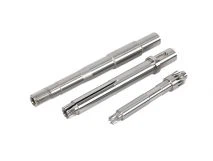

I also want to mention a few related products in our lineup. If you're interested in other types of shafts, we've got Precision Gearbox Shafts. These shafts are designed specifically for gearboxes, where precision and reliability are key. And of course, we have Electric Motor Shaft options for a wide range of electric motor applications.
If you're in the market for a Motor Rotor Shaft, you need a supplier that understands the importance of hardness and can provide high - quality products. We've got the experience and the expertise to make sure that our shafts meet your exact requirements. Whether you need a shaft for a small hobby motor or a large industrial motor, we can help.
We work closely with our customers to understand their needs. We'll ask you about the application, the operating conditions, and any specific performance requirements. Based on that information, we can recommend the right material and the right hardness for your motor rotor shaft. We also offer custom machining services, so if you have unique specifications, we can manufacture a shaft that's just right for you.
In conclusion, the hardness of a motor rotor shaft is a critical factor in its performance and longevity. As a motor rotor shaft supplier, we take pride in providing top - notch products that are designed to meet the toughest challenges. If you're looking for a reliable supplier for your motor rotor shaft needs, don't hesitate to reach out. We're here to answer your questions, provide technical support, and help you find the perfect solution for your application. Let's work together to ensure that your motors run smoothly and efficiently for years to come.
References
- Callister, W. D., & Rethwisch, D. G. (2010). Materials Science and Engineering: An Introduction. Wiley.
- ASM Handbook Volume 8: Mechanical Testing and Evaluation. ASM International.