

What is the impact of gear material on its cost?
Aug 27, 2026
As a gear supplier, I've witnessed firsthand the profound influence that gear material has on its cost. Gears are essential components in countless mechanical systems, from automotive transmissions to industrial machinery. The choice of material for a gear can significantly affect its performance, durability, and, of course, its price. In this blog post, I'll delve into the various ways in which gear material impacts cost and provide insights for those looking to make informed decisions when purchasing gears.
Material Properties and Cost
The properties of the material used to manufacture a gear play a crucial role in determining its cost. Different materials have distinct characteristics that make them suitable for specific applications. For example, steel is a commonly used material for gears due to its high strength, durability, and relatively low cost. However, not all steels are created equal. High-quality alloy steels, which contain additional elements such as chromium, nickel, and molybdenum, offer superior strength and wear resistance compared to plain carbon steels. As a result, gears made from alloy steels tend to be more expensive.
Another factor that affects the cost of gear material is its hardness. Harder materials are generally more resistant to wear and deformation, but they also require more energy and specialized equipment to machine. This can increase the manufacturing cost of the gears. For instance, gears made from hardened steels or exotic materials like titanium or tungsten carbide are typically more expensive than those made from softer materials.
Manufacturing Processes and Cost
The manufacturing process used to produce gears also has a significant impact on their cost. Different materials require different manufacturing techniques, and some processes are more complex and expensive than others. For example, gears can be produced through casting, forging, machining, or a combination of these methods.
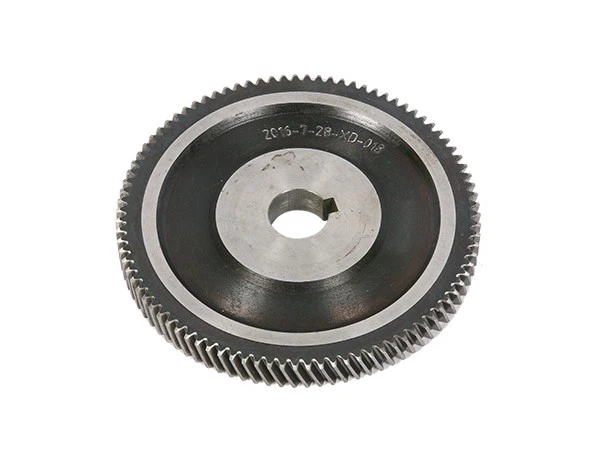

Casting is a relatively inexpensive method of producing gears, especially for large quantities. However, cast gears may have lower dimensional accuracy and surface finish compared to gears produced by other methods. Forging, on the other hand, involves shaping the material under high pressure, which results in a more dense and uniform structure. Forged gears are generally stronger and more durable than cast gears, but the forging process is more expensive.
Machining is another common method of producing gears. It involves cutting and shaping the material using various tools such as milling machines, lathes, and grinders. Machining allows for high precision and surface finish, but it is also a time-consuming and expensive process. The cost of machining depends on the complexity of the gear design, the type of material being used, and the precision required.
Application Requirements and Cost
The specific application requirements of a gear also play a role in determining its cost. Different applications have different performance requirements, and the choice of material must be carefully considered to ensure that the gear can meet these requirements. For example, gears used in high-speed applications require materials with low friction and high wear resistance to prevent premature failure. Gears used in heavy-duty applications, such as those in mining or construction equipment, need to be able to withstand high loads and stresses.
In addition to performance requirements, the operating environment of the gear can also affect its cost. Gears used in harsh environments, such as those exposed to extreme temperatures, corrosive chemicals, or abrasive particles, require materials that can withstand these conditions. This may involve using specialized coatings or materials with high corrosion resistance, which can increase the cost of the gears.
Cost-Effective Gear Solutions
As a gear supplier, I understand the importance of providing cost-effective solutions to my customers. While high-quality materials and advanced manufacturing processes can result in better-performing gears, they also come at a higher cost. Therefore, it's essential to find a balance between performance and cost when selecting gear materials.
One way to reduce the cost of gears is to consider alternative materials that offer similar performance characteristics at a lower price. For example, some non-metallic materials, such as plastics and composites, can be used in certain applications where the load and speed requirements are not too high. These materials are often lighter, more corrosion-resistant, and less expensive than traditional metal gears.
Another approach is to optimize the gear design to reduce the amount of material used. By using advanced design techniques, such as finite element analysis (FEA), it's possible to design gears that are lighter and more efficient without sacrificing performance. This can result in significant cost savings, especially for large-scale production.
Conclusion
In conclusion, the choice of gear material has a significant impact on its cost. The properties of the material, the manufacturing process, the application requirements, and the operating environment all play a role in determining the final price of the gears. As a gear supplier, I'm committed to providing my customers with high-quality gears at competitive prices. By understanding the factors that affect gear cost and working closely with my customers to find the most cost-effective solutions, I can help them achieve their goals while staying within their budget.
If you're in the market for gears and would like to discuss your specific requirements, I'd be happy to help. Please feel free to contact me to schedule a consultation. We can work together to find the best gear material and manufacturing process for your application.
References
- Budynas, R. G., & Nisbett, J. K. (2011). Shigley's Mechanical Engineering Design. McGraw-Hill.
- Mott, R. L. (2016). Machine Elements in Mechanical Design. Pearson.
- Spotts, M. F., Shoup, T. E., & Harrison, W. M. (2004). Design of Machine Elements. Prentice Hall.