

What is the module of a gear?
Aug 04, 2026
What is the module of a gear? Well, if you're in the market for gears, this is a crucial concept to understand. As a gear supplier, I've seen firsthand how the module impacts the performance and application of gears. Let's break it down and see why it matters so much.
The Basics of Gear Module
The module of a gear is a fundamental parameter that defines the size of the gear teeth. In simple terms, it's the ratio of the pitch diameter of the gear to the number of teeth. Mathematically, it's expressed as (m = \frac{d}{z}), where (m) is the module, (d) is the pitch diameter, and (z) is the number of teeth.
Why is this important? The module determines the size and strength of the gear teeth. A larger module means bigger teeth, which can handle more load. On the other hand, a smaller module results in smaller teeth, suitable for applications where space is limited or high - speed operation is required.
How Module Affects Gear Performance
Load - Carrying Capacity
Gears with a larger module have greater load - carrying capacity. This is because the larger teeth can distribute the load over a larger area. For example, in heavy - duty machinery like construction equipment or industrial gearboxes, gears with a large module are used to handle the high torque and power requirements.
Speed and Precision
In applications where high speed and precision are needed, such as in robotics or aerospace, gears with a smaller module are preferred. Smaller teeth can mesh more smoothly, reducing vibration and noise. They also allow for more accurate positioning and movement control.
Types of Gears and Their Module Considerations
Precision Spur Gear
Precision Spur Gear is one of the most common types of gears. These gears have straight teeth that are parallel to the gear axis. The module of a precision spur gear plays a significant role in its performance. For high - precision applications, a smaller module is often used to ensure smooth meshing and accurate motion transfer.
If you're looking for a reliable source of precision spur gears, you can check out Precision Spur Gear Factory. They offer a wide range of spur gears with different modules to meet various application requirements.
Helical Gear
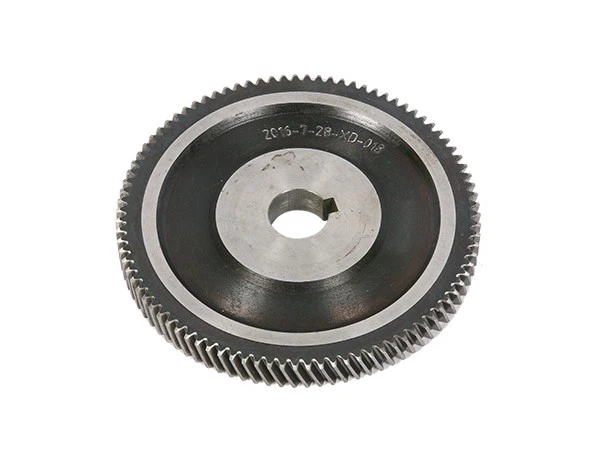
Helical Gear has teeth that are cut at an angle to the gear axis. This design provides several advantages over spur gears, such as smoother operation, higher load - carrying capacity, and reduced noise. The module of a helical gear also affects its performance. A larger module can increase the load - carrying capacity, while a smaller module can improve the speed and precision.
Selecting the Right Module for Your Application
When choosing the module of a gear for your application, several factors need to be considered.
Load Requirements
If your application involves high loads, you'll need a gear with a larger module. This ensures that the gear teeth can withstand the stress without breaking or wearing out quickly. For example, in a large - scale manufacturing plant, gears with a large module are used in heavy - duty conveyors and mixers.
Speed and Precision
For applications that require high speed and precision, such as in a CNC machine or a high - end watch, a smaller module is more appropriate. Smaller teeth can mesh more precisely, resulting in smooth and accurate motion.
Space Constraints
In some cases, space is a limiting factor. If you have limited space in your design, you may need to choose a gear with a smaller module. This allows you to fit the gear into a smaller area without sacrificing too much performance.
Our Gear Supply Services
As a gear supplier, we understand the importance of choosing the right gear module for your application. We offer a wide range of gears, including precision spur gears and helical gears, with different modules to meet your specific needs.
Our team of experts can help you select the most suitable gear based on your requirements. We also provide custom - made gears, so if you have a unique design or specification, we can manufacture gears that fit your exact needs.
If you're interested in purchasing gears from us, don't hesitate to contact us. We're here to assist you with your gear selection and procurement process. Whether you're a small - scale manufacturer or a large - scale industrial company, we have the gears and expertise to meet your needs.

Conclusion
The module of a gear is a critical factor that affects its performance, load - carrying capacity, and suitability for different applications. By understanding the concept of gear module and considering the various factors involved in selecting the right module, you can ensure that you choose the best gear for your specific needs.
As a gear supplier, we're committed to providing high - quality gears and excellent customer service. If you have any questions or need further information about gears and their modules, feel free to reach out to us. We look forward to working with you to meet your gear requirements.
References
- "Mechanical Engineering Design" by Joseph Edward Shigley, Charles R. Mischke, Richard G. Budynas
- "Gear Handbook: Design, Manufacturing, and Applications" by Darle W. Dudley