

What is the tip relief of precision spur gears?
Jul 10, 2025
In the realm of mechanical engineering, precision spur gears stand as fundamental components, playing a pivotal role in countless applications. As a dedicated precision spur gear supplier, I've witnessed firsthand the significance of various gear - related concepts. One such concept that often comes under the spotlight is tip relief. In this blog, we'll delve deep into what tip relief of precision spur gears is, its importance, and how it impacts the performance of these gears.
Understanding Precision Spur Gears
Before we explore tip relief, let's briefly understand what precision spur gears are. Precision spur gears are cylindrical gears with straight teeth that are parallel to the gear axis. They are known for their simplicity, high efficiency, and ability to transmit power between parallel shafts. These gears are commonly used in a wide range of industries, including automotive, aerospace, and manufacturing. You can find more information about Precision Spur Gear on our website.
What is Tip Relief?
Tip relief is a modification made to the tooth profile of a gear at the tip of the teeth. In an ideal situation, the contact between two meshing gears should be smooth and continuous. However, in real - world scenarios, when gears operate under load, several issues can arise. The tip of the gear tooth experiences high stress concentrations, which can lead to problems such as noise, vibration, and premature wear.
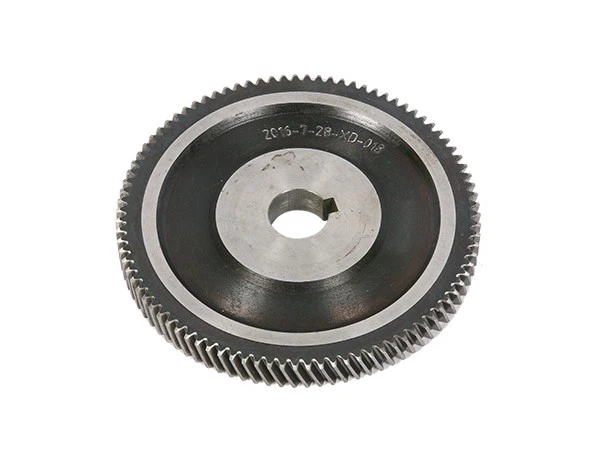

Tip relief addresses these issues by reducing the tooth thickness at the tip. This modification is typically a small, controlled reduction in the tooth profile near the tip, creating a more gradual transition as the teeth come into and out of mesh. By doing so, tip relief helps to distribute the load more evenly across the tooth surface, reducing stress concentrations and improving the overall performance of the gear system.
The Mechanism of Tip Relief
To understand how tip relief works, we need to look at the meshing process of gears. When two gears mesh, the teeth come into contact at the beginning of the engagement, and as the gears rotate, the contact point moves along the tooth surface. Without tip relief, the sudden contact at the tip of the tooth can cause a shock load, leading to increased noise and wear.
With tip relief, the modified tooth profile allows for a smoother entry and exit of the teeth during meshing. As the teeth approach each other, the reduced tip thickness ensures that the initial contact is more gradual. This gradual contact reduces the impact forces and distributes the load more evenly, minimizing stress concentrations. Similarly, as the teeth disengage, the tip relief helps to prevent a sudden release of the load, further reducing vibration and noise.
Benefits of Tip Relief
- Noise Reduction: One of the most significant benefits of tip relief is noise reduction. By reducing the shock loads during meshing, tip relief helps to minimize the vibrations that are responsible for gear noise. In applications where noise is a critical factor, such as in automotive transmissions or precision machinery, tip relief can make a substantial difference in the overall noise level.
- Increased Fatigue Life: The even distribution of load due to tip relief reduces the stress concentrations at the tooth tip. This, in turn, helps to prevent premature fatigue failure of the gear teeth. By extending the fatigue life of the gears, tip relief can reduce maintenance costs and increase the reliability of the gear system.
- Improved Efficiency: When gears operate with less noise and vibration, they can transfer power more efficiently. The reduced friction and wear associated with tip relief mean that less energy is wasted in the form of heat and noise, resulting in improved overall efficiency of the gear system.
- Enhanced Load - Carrying Capacity: Tip relief allows the gears to handle higher loads without experiencing excessive stress. By distributing the load more evenly across the tooth surface, the gears can operate under more demanding conditions, making them suitable for applications where high torque transmission is required.
Design Considerations for Tip Relief
Designing the appropriate tip relief for precision spur gears requires careful consideration of several factors.
- Load and Operating Conditions: The amount of tip relief required depends on the load that the gears will be subjected to and the operating conditions. Higher loads generally require more significant tip relief to effectively distribute the stress.
- Gear Material: Different gear materials have different mechanical properties, which can affect the design of tip relief. For example, harder materials may require less tip relief compared to softer materials, as they can withstand higher stress concentrations.
- Gear Geometry: The size, shape, and number of teeth of the gears also play a role in determining the tip relief. Smaller gears may require different tip relief designs compared to larger gears, and the tooth profile itself can influence the effectiveness of the tip relief.
Comparison with Other Gear Types
It's interesting to compare tip relief in precision spur gears with other types of gears, such as Helical Gear. Helical gears have angled teeth, which provide a more gradual meshing process compared to spur gears. This inherent design feature already helps to reduce noise and vibration to some extent. However, tip relief can still be beneficial for helical gears, especially in high - load applications. You can also explore more about Helical Gear on our website.
In spur gears, tip relief is a crucial modification because of their straight - tooth design. The sudden contact at the tooth tip during meshing can cause significant problems, making tip relief an essential design consideration for improving performance.
Manufacturing of Precision Spur Gears with Tip Relief
Manufacturing precision spur gears with tip relief requires advanced machining techniques. Computer - Numerical - Control (CNC) machining is commonly used to achieve the precise modifications needed for tip relief. CNC machines can accurately control the cutting tools to create the desired tooth profile, ensuring that the tip relief is consistent across all the teeth of the gear.
Grinding processes are also used to finish the gears and achieve the required surface quality. After the initial machining, the gears may undergo heat treatment to enhance their mechanical properties, followed by final grinding to ensure the accuracy of the tip relief and the overall tooth profile.
Quality Control for Tip Relief
Quality control is essential when manufacturing precision spur gears with tip relief. Various inspection techniques are used to ensure that the tip relief meets the design specifications. Coordinate Measuring Machines (CMMs) can be used to measure the tooth profile and verify the accuracy of the tip relief. These machines can provide detailed information about the dimensions and shape of the teeth, allowing for precise adjustments if necessary.
In addition to dimensional inspection, functional testing is also crucial. The gears are tested under simulated operating conditions to evaluate their performance in terms of noise, vibration, and load - carrying capacity. Any deviations from the expected performance can indicate issues with the tip relief or other aspects of the gear design.
Applications of Precision Spur Gears with Tip Relief
Precision spur gears with tip relief are used in a wide range of applications. In the automotive industry, they are used in transmissions, where noise reduction and durability are critical. In aerospace applications, these gears are used in aircraft engines and landing gear systems, where high - load capacity and reliability are essential.
In industrial machinery, precision spur gears with tip relief are used in conveyor systems, machine tools, and robotics. These applications require smooth and efficient power transmission, and tip relief helps to ensure that the gears can operate effectively under various conditions.
Conclusion
As a precision spur gear supplier, I understand the importance of tip relief in enhancing the performance of our gears. Tip relief is not just a simple modification; it is a crucial design feature that can significantly improve the noise, vibration, and wear characteristics of precision spur gears. By reducing stress concentrations and distributing the load more evenly, tip relief helps to increase the fatigue life, efficiency, and load - carrying capacity of the gear system.
If you are in need of high - quality precision spur gears with optimized tip relief, we are here to assist you. Our team of experienced engineers can work with you to design and manufacture gears that meet your specific requirements. Whether you are looking for gears for automotive, aerospace, or industrial applications, we have the expertise and capabilities to provide you with the best solutions. Contact us today to start a conversation about your gear needs and let's explore how we can work together to achieve your goals.
References
- Buckingham, Earle. "Analytical Mechanics of Gears." McGraw - Hill, 1949.
- Dudley, Darle W. "Dudley's Gear Handbook." McGraw - Hill, 1991.
- Townsend, Dennis P. "Gear Design and Application." CRC Press, 2004.