

How to measure the thickness of motor frame components?
Mar 23, 2026
Hey there! As a supplier of motor frame components, I often get asked about how to measure the thickness of these components. It's a crucial step in ensuring the quality and performance of the motors they're used in. In this blog, I'll share some practical methods and considerations for measuring the thickness of motor frame components.
Why Measuring Thickness Matters
First off, let's talk about why measuring the thickness of motor frame components is so important. The thickness directly impacts the structural integrity, heat dissipation, and electrical performance of the motor. If the components are too thin, they might not be able to withstand the mechanical stresses and vibrations during operation. On the other hand, if they're too thick, it could lead to increased weight and cost, as well as reduced efficiency.
Tools for Measuring Thickness
There are several tools you can use to measure the thickness of motor frame components. Here are some of the most common ones:
Vernier Caliper
A vernier caliper is a versatile tool that can measure both the internal and external dimensions of an object, including thickness. It has a main scale and a sliding vernier scale that allows for precise measurements. To measure the thickness of a motor frame component with a vernier caliper, simply open the jaws of the caliper and place them on either side of the component. Then, read the measurement on the scale. Make sure to take multiple measurements at different points to ensure accuracy.
Micrometer
A micrometer is another precision measuring tool that's commonly used for measuring small dimensions, such as the thickness of motor frame components. It provides even more accurate measurements than a vernier caliper. To use a micrometer, place the component between the anvil and the spindle of the micrometer. Then, turn the thimble until it gently touches the component. Read the measurement on the sleeve and thimble scales. Like with the vernier caliper, take multiple measurements at different locations to get an average thickness.
Ultrasonic Thickness Gauge
For measuring the thickness of components where direct access is limited or where non-destructive testing is required, an ultrasonic thickness gauge is a great option. This tool works by sending ultrasonic waves through the material and measuring the time it takes for the waves to bounce back. By knowing the speed of sound in the material, the gauge can calculate the thickness. Ultrasonic thickness gauges are especially useful for measuring the thickness of curved or irregularly shaped motor frame components.
Measuring Process
Now that we've covered the tools, let's go through the step-by-step process of measuring the thickness of motor frame components.

Preparation
Before you start measuring, make sure the component is clean and free of any debris or contaminants. This will ensure accurate measurements. Also, check the measuring tool to make sure it's calibrated correctly. If it's not, you might get inaccurate measurements.
Taking Measurements
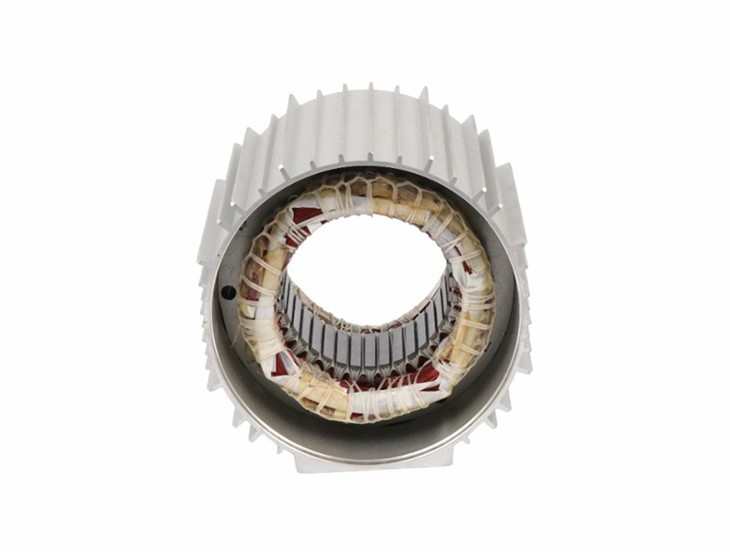
As mentioned earlier, take multiple measurements at different points on the component. This is important because the thickness of the component might vary slightly due to manufacturing processes. For example, if you're measuring the thickness of a Motor Frame Components, you might take measurements at the top, bottom, and sides of the frame.
Recording and Analyzing Data
Once you've taken the measurements, record them in a notebook or a spreadsheet. Calculate the average thickness and note any variations in the measurements. If the variations are significant, it could indicate a problem with the manufacturing process or the quality of the material.
Considerations for Different Types of Components
Different types of motor frame components might require different measurement methods and considerations. Here are some examples:
Motor End Cover
The Motor End Cover is an important part of the motor that protects the internal components and helps to seal the motor. When measuring the thickness of a motor end cover, pay special attention to the edges and the mounting holes. These areas might have different thicknesses due to the manufacturing process. Also, make sure to measure the thickness at the center of the cover to get an accurate average.
Three-Phase Motor Components
Three-Phase Motor Components are used in many industrial applications. These components often have complex shapes and sizes, which can make measuring the thickness more challenging. In some cases, you might need to use a combination of measuring tools to get accurate measurements. For example, you might use a vernier caliper to measure the external dimensions and an ultrasonic thickness gauge to measure the internal thickness.
Quality Control and Assurance
Measuring the thickness of motor frame components is not only important for ensuring the performance of the motor but also for quality control and assurance. By regularly measuring the thickness of the components, you can detect any defects or inconsistencies early on and take corrective actions. This will help to reduce the risk of product failures and improve customer satisfaction.
Conclusion
Measuring the thickness of motor frame components is a critical step in the manufacturing and quality control process. By using the right tools and following the proper procedures, you can ensure that the components meet the required specifications and perform as expected. If you're in the market for high-quality motor frame components, don't hesitate to reach out for a procurement discussion. We're here to provide you with the best products and services to meet your needs.
References
- "Mechanical Measurement Handbook"
- "Ultrasonic Testing Principles and Applications"