

What is a hypoid gear?
Jun 17, 2025
What is a hypoid gear? Well, if you're in the market for gears, you've probably come across this term. As a gear supplier, I'm here to break it down for you in plain English.
First off, let's talk about what makes a hypoid gear unique. A hypoid gear is a type of gear that has a special design. It's similar to a spiral bevel gear, but there's a key difference. In a hypoid gear, the axes of the two meshing gears don't intersect. Instead, they're offset from each other. This offset gives hypoid gears some pretty cool advantages.
One of the biggest advantages of hypoid gears is their ability to handle high torque loads. Because of the offset design, the contact between the gear teeth is more gradual. This spreads the load out over a larger area, which means the gears can handle more force without wearing out as quickly. This makes hypoid gears a great choice for applications where you need a lot of power, like in automotive transmissions or heavy machinery.
Another advantage of hypoid gears is their smooth operation. The gradual contact between the teeth also means that there's less noise and vibration when the gears are in use. This can make a big difference in applications where noise is a concern, like in electric vehicles or precision machinery.
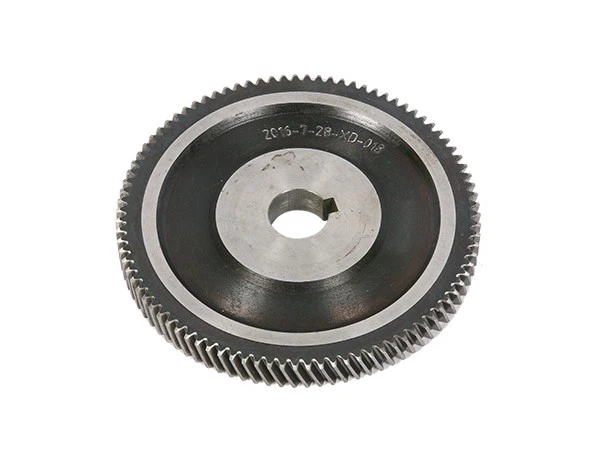

But hypoid gears aren't just good for high - torque and smooth operation. They also offer a lot of flexibility in terms of design. You can adjust the offset and the spiral angle of the gear teeth to optimize the performance for a specific application. This allows you to fine - tune the gear's efficiency, torque capacity, and noise level.
Now, let's compare hypoid gears with some other types of gears. For example, Internal Gear. Internal gears have a different structure where the teeth are on the inside of a ring. They're often used in applications where you need a compact design, like in planetary gear systems. But they may not be as good at handling high - torque loads as hypoid gears.
Precision Spur Gear is another common type of gear. Spur gears have straight teeth that are parallel to the axis of the gear. They're simple and easy to manufacture, but they can be noisy and have a lower load - carrying capacity compared to hypoid gears.
Helical Gear is similar to a spur gear, but the teeth are angled. This gives them a smoother operation and a higher load - carrying capacity than spur gears. However, hypoid gears can still offer better performance in high - torque and high - speed applications due to their unique offset design.
When it comes to manufacturing hypoid gears, it's a bit more complex than making other types of gears. You need specialized machinery and skilled technicians to ensure that the gears are made to the right specifications. The process involves cutting the gear teeth with precision to achieve the correct spiral angle and offset. But at our company, we've got the expertise and the equipment to produce high - quality hypoid gears.
The materials used to make hypoid gears also play a crucial role in their performance. Common materials include steel, which is strong and durable, and can withstand high - stress applications. Some applications may also use other materials like bronze or aluminum for their specific properties, such as corrosion resistance or light weight.
In the automotive industry, hypoid gears are widely used in the rear - axle differential. The offset design allows the driveshaft to be placed lower, which can lower the vehicle's center of gravity and improve handling. This is especially important in high - performance cars and trucks.
In industrial applications, hypoid gears can be found in conveyor systems, mining equipment, and power generation machinery. Their ability to handle high torque and operate smoothly makes them an ideal choice for these heavy - duty applications.
If you're thinking about using hypoid gears in your project, there are a few things to consider. First, you need to determine the torque requirements of your application. This will help you choose the right size and material for the gears. You also need to think about the operating environment. If the gears will be exposed to dust, moisture, or high temperatures, you'll need to select a material that can withstand these conditions.
Another important factor is the cost. Hypoid gears can be more expensive to manufacture than other types of gears due to their complexity. However, when you consider their long - term performance and durability, they can often be a cost - effective solution in the long run.
So, if you're in the market for high - quality hypoid gears or any other type of gears, don't hesitate to reach out. We're a gear supplier with years of experience in the industry. We can help you choose the right gears for your application, whether it's a small - scale project or a large - scale industrial operation. We'll work with you to understand your needs and provide you with the best solutions at competitive prices.
Contact us today to start a discussion about your gear requirements. We're here to make sure you get the gears that will perform flawlessly in your equipment.
References
- "Gear Handbook" by Darle W. Dudley
- "Mechanical Design and Systems Handbook" by Myer Kutz