

What is the impact resistance of a step shaft?
Jun 15, 2026
Hey there! As a step shaft supplier, I often get asked about the impact resistance of step shafts. So, I thought I'd take a deep dive into this topic and share some insights with you all.
First off, let's talk about what a step shaft is. A step shaft is a type of shaft that has different diameters along its length. These changes in diameter create "steps," which can serve various purposes, like accommodating different components, providing support, or changing the shaft's mechanical properties. Step shafts are used in a wide range of applications, from automotive engines to industrial machinery.
Now, onto the main question: what is the impact resistance of a step shaft? Impact resistance refers to a material's ability to withstand sudden forces or impacts without breaking or deforming permanently. For step shafts, good impact resistance is crucial because they often operate in environments where they might encounter sudden shocks or vibrations.
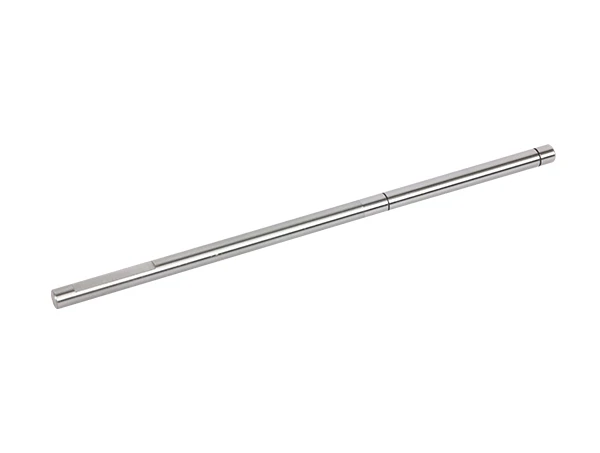
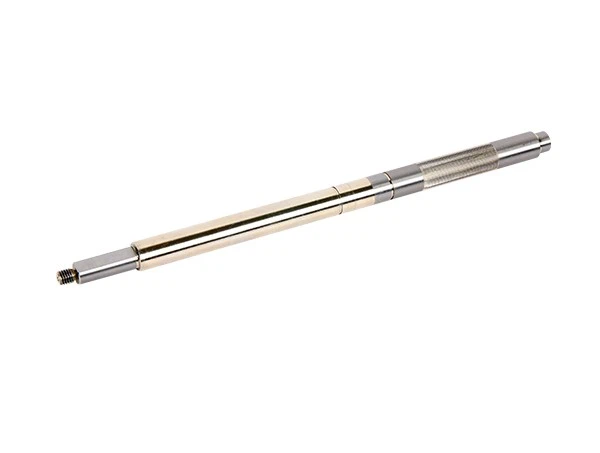
The impact resistance of a step shaft depends on several factors. One of the most significant factors is the material used to make the shaft. Different materials have different levels of toughness and ductility, which are key properties for impact resistance. For example, steel is a popular choice for step shafts because it generally has good impact resistance. High - strength alloy steels can be even better, as they are designed to handle heavy loads and sudden impacts.
Let's take a closer look at some of the materials commonly used for step shafts and their impact resistance characteristics. Carbon steel is a common choice. It's relatively inexpensive and has decent impact resistance. However, its performance can vary depending on the carbon content. Low - carbon steels are more ductile and can absorb more energy during an impact, but they may have lower strength compared to high - carbon steels. High - carbon steels, on the other hand, are stronger but can be more brittle, which means they may crack more easily under impact.
Alloy steels are another great option. They are made by adding other elements like chromium, nickel, and molybdenum to the steel. These alloying elements can improve the steel's hardness, strength, and impact resistance. For instance, a chrome - molybdenum alloy steel can have excellent impact resistance and is often used in high - performance applications such as Motor Rotor Shaft.
The heat treatment of the step shaft also plays a huge role in its impact resistance. Heat treatment processes like quenching and tempering can significantly change the microstructure of the material, making it tougher and more resistant to impacts. Quenching involves rapidly cooling the heated shaft, which can increase its hardness. But this can also make the shaft more brittle. That's where tempering comes in. Tempering is a process of reheating the quenched shaft to a lower temperature, which relieves internal stresses and improves the ductility, thus enhancing the impact resistance.
The design of the step shaft itself can affect its impact resistance. The shape and size of the steps, as well as the transitions between different diameters, are important. Sharp transitions can create stress concentrations, which can make the shaft more likely to fail under impact. Smooth, rounded transitions are better because they distribute the stress more evenly across the shaft.
Another aspect to consider is the surface finish of the step shaft. A rough surface can act as a stress raiser, reducing the impact resistance. On the other hand, a smooth surface finish can help to prevent cracks from starting and spreading, improving the overall impact toughness.
In applications where step shafts are used, such as in Servo Motor Shaft or Spline Shaft, the impact resistance is critical. For example, in a servo motor, the shaft needs to withstand the sudden starts and stops, which can generate significant impacts. If the shaft doesn't have good impact resistance, it may break, leading to a failure of the entire motor system.
In spline shafts, which are used to transmit torque between components, impact resistance is also essential. The splines themselves can be subject to impact forces during operation, and a shaft with poor impact resistance may experience wear or even breakage at the spline teeth.
So, how can you ensure that the step shafts you use or supply have good impact resistance? As a supplier, I always work closely with my customers to understand their specific requirements. We start by selecting the right material based on the application. If the shaft is going to be used in a high - impact environment, we'll choose a material with high toughness and ductility, like a suitable alloy steel.
Then, we pay close attention to the manufacturing process. This includes proper heat treatment to optimize the material's properties and ensuring a smooth surface finish. We also use advanced design techniques to minimize stress concentrations in the shaft.
If you're in the market for step shafts and need high - impact resistance, don't hesitate to reach out. We can work together to find the perfect solution for your application. Whether you need a custom - designed step shaft for a unique project or a standard shaft for a common application, we've got you covered.
In conclusion, the impact resistance of a step shaft is a complex but crucial property. It depends on factors like the material, heat treatment, design, and surface finish. By understanding these factors and working with a reliable supplier, you can ensure that your step shafts can withstand the impacts they'll encounter in their intended applications.
References:
- "Mechanical Engineering Design" by Joseph E. Shigley and Charles R. Mischke
- "Materials Science and Engineering: An Introduction" by William D. Callister Jr. and David G. Rethwisch