

What is the root fillet radius of precision spur gears?
Oct 28, 2025
What is the root fillet radius of precision spur gears?
As a seasoned supplier of precision spur gears, I often encounter inquiries regarding the technical details of these crucial mechanical components. One question that frequently arises is about the root fillet radius of precision spur gears. In this blog post, I will delve into the concept of the root fillet radius, its significance, and how it impacts the performance of precision spur gears.
Understanding the Root Fillet Radius
To begin with, let's clarify what the root fillet radius is. In a precision spur gear, the root fillet is the curved portion at the base of each tooth, connecting the tooth flank to the gear root. The root fillet radius is the radius of this curve. It is a critical geometric parameter that plays a vital role in determining the strength, durability, and overall performance of the gear.
The root fillet radius is carefully designed to optimize the stress distribution within the gear teeth. When a gear is in operation, it experiences various forces, including bending, contact, and shear stresses. The shape and size of the root fillet radius can significantly affect how these stresses are distributed across the tooth. A well - designed root fillet radius helps to reduce stress concentrations at the base of the tooth, which in turn enhances the gear's resistance to fatigue and failure.
Significance of the Root Fillet Radius
- Strength and Durability
- A larger root fillet radius generally leads to a more uniform stress distribution along the tooth root. This reduces the likelihood of stress concentrations that can cause crack initiation and propagation. As a result, gears with an appropriate root fillet radius are more resistant to fatigue failure, which is one of the most common failure modes in gear systems. For example, in high - load applications such as heavy machinery or automotive transmissions, a properly sized root fillet radius can extend the service life of the gears and reduce maintenance costs.
- Noise and Vibration
- The root fillet radius also has an impact on the noise and vibration characteristics of the gear system. A smooth and well - defined root fillet can improve the meshing quality of the gears. When gears mesh, any irregularities in the tooth profile, including the root fillet, can cause variations in the contact forces and lead to increased noise and vibration. By optimizing the root fillet radius, we can achieve a more stable and quiet gear operation, which is particularly important in applications where noise reduction is a priority, such as in precision instruments or electric vehicles.
- Manufacturability
- From a manufacturing perspective, the root fillet radius affects the ease of production. A very small root fillet radius may be difficult to machine accurately, especially when using traditional manufacturing methods. It can require specialized cutting tools and more precise machining operations, which can increase the production cost and time. On the other hand, a too - large root fillet radius may also pose challenges, as it can affect the overall gear geometry and the meshing with the mating gear. Therefore, finding the right balance in the root fillet radius is essential for both performance and manufacturability.
Factors Affecting the Root Fillet Radius
- Gear Design Requirements
- The application of the precision spur gear plays a crucial role in determining the appropriate root fillet radius. For example, in high - speed applications, gears need to have a root fillet radius that minimizes stress concentrations and ensures smooth meshing to reduce vibration and noise. In contrast, in low - speed, high - torque applications, the focus may be more on maximizing the strength of the gear teeth, which may require a larger root fillet radius.
- Material Properties
- The material used to manufacture the gear also influences the root fillet radius. Different materials have different mechanical properties, such as strength, toughness, and fatigue resistance. For instance, gears made of high - strength alloy steels may be able to tolerate smaller root fillet radii compared to gears made of more brittle materials. The material's hardness and ductility also affect the machining process and the final quality of the root fillet.
- Manufacturing Process
- The manufacturing process employed to produce the precision spur gears can limit or determine the achievable root fillet radius. Common manufacturing methods for gears include hobbing, shaping, and grinding. Each method has its own limitations in terms of the minimum and maximum root fillet radii that can be produced. For example, hobbing is a widely used method for mass - producing gears, but it may have some restrictions on the complexity of the root fillet shape. Grinding, on the other hand, can achieve more precise and complex root fillet geometries but is generally more expensive and time - consuming.
Comparison with Helical Gears
It's worth comparing the root fillet radius of precision spur gears with that of Helical Gear. Helical gears have a helical tooth form, which provides some advantages over spur gears, such as smoother operation and higher load - carrying capacity. However, the root fillet design in helical gears is also different. The helical tooth form causes the contact forces to be distributed more gradually along the tooth, which can affect the stress distribution at the root fillet. In some cases, the root fillet radius requirements for helical gears may be different from those of spur gears to optimize their performance. You can learn more about helical gears at Helical Gear.
Our Expertise as a Precision Spur Gear Supplier
As a leading supplier of Precision Spur Gear, we have extensive experience in designing and manufacturing gears with the optimal root fillet radius. Our team of engineers uses advanced design software and simulation tools to analyze the stress distribution in the gears and determine the most suitable root fillet radius for each application. We also have state - of - the - art manufacturing facilities that allow us to produce gears with high precision and quality.

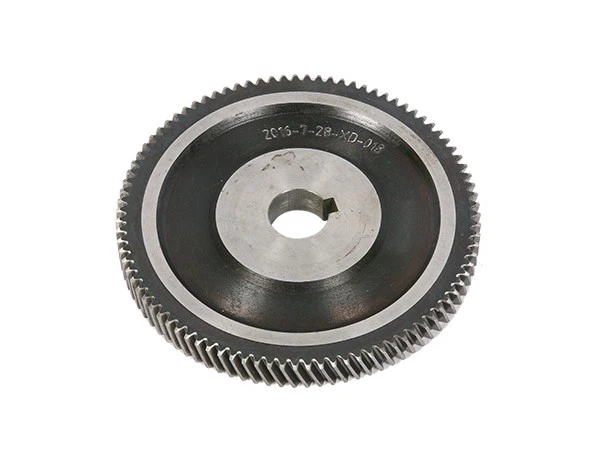
We understand that every customer's requirements are unique, and we work closely with our clients to develop customized gear solutions. Whether you need gears for a high - speed, low - torque application or a heavy - duty, high - torque system, we can provide gears with the appropriate root fillet radius to meet your specific needs.
Conclusion and Invitation
In conclusion, the root fillet radius of precision spur gears is a critical parameter that affects the gear's strength, durability, noise, and vibration characteristics. By carefully considering the design requirements, material properties, and manufacturing process, we can optimize the root fillet radius to achieve the best performance for your gear system.
If you are in the market for high - quality precision spur gears or have any questions about the root fillet radius or other gear - related topics, we invite you to contact us for a detailed consultation. Our team of experts is ready to assist you in finding the perfect gear solution for your application.
References
- Dudley, D. W. (1962). Gear Handbook. McGraw - Hill.
- Townsend, D. P. (1992). Dudley's Gear Handbook (2nd ed.). McGraw - Hill.
- Litvin, F. L., & Fuentes, A. (2004). Gear Geometry and Applied Theory (2nd ed.). Cambridge University Press.