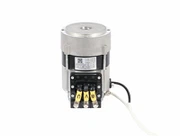
Common Faults and Troubleshooting of AC Motors
Mar 05, 2026
An AC motor is a machine used to convert mechanical energy into alternating current (AC) electrical energy. Due to the rapid development of AC power systems, AC motors have become the most commonly used type of motor. Compared to DC motors, AC motors are simpler in structure, easier to manufacture, more robust, and easier to produce high-speed, high-voltage, high-current, and high-capacity motors because they do not have a commutator. The power range of AC motors is very wide, from a few watts to hundreds of thousands or even millions of kilowatts. In the early 1980s, the largest steam turbine generator reached 1.5 million kilowatts.
AC motors are commonly used equipment in industrial production. Common faults include:
1. Difficulty starting the motor, with sudden changes or unstable speed after starting: This fault may be caused by unstable power supply voltage, incorrect three-phase wiring, poor stator winding contact, rotor wear, or bearing damage.
2. Abnormal noise from the motor: Abnormal noise from the motor can be caused by bearing failure, rotor wear, stator loosening, gear wear, or non-perpendicular output shaft.
3. Abnormal motor overheating: This could be due to a malfunctioning motor fan, overly tight or loose bearings, or excessively high stator or rotor winding temperatures.
4. Open or short circuit: Aging, broken, or poorly connected wiring, or a short circuit to ground, can easily cause the motor to burn out.
5. Bearing failure: Aging, poor lubrication, or excessive tightness or looseness in the motor bearings can lead to bearing failure, increased motor noise, increased rotational resistance, and in severe cases, motor shutdown.
These are some common AC motor faults that require regular maintenance and inspection to ensure proper motor operation and extend its lifespan.
AC Motor Troubleshooting:
1. Check the power supply: If the motor is not running, first check the power supply. Ensure the power required by the motor is on. If the power is not on, the motor cannot function properly.
2. Check the motor wiring: Check the motor wiring. Ensure the motor wires and sockets are not damaged or loose. Check if the power switch is on.
3. Check the motor capacitor: Motor capacitors are prone to failure after prolonged use. Check if the capacitor is operating normally.
4. Check the motor bearings: Insufficient lubrication or wear in the bearings can also affect motor operation. The bearings need to be lubricated or replaced.
5. Check the motor fan: If the motor cooling fan is damaged or blocked, it will also affect motor operation. The motor fan needs to be cleaned to ensure its proper functioning.
6. Check the motor rotor: Check the motor rotor for damage, deformation, etc. If any are found, the motor rotor needs to be replaced.
7. Check the motor stator windings: The motor stator windings may be damaged due to short circuits, poor contact, etc. Professional repair personnel are required to inspect and repair them.
If no problems are found in the above steps, it may be a comprehensive motor fault. The entire system needs to be inspected and maintained.