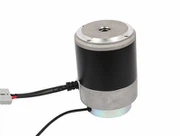
How do variable-frequency motors achieve speed regulation?
Jul 03, 2026
A variable-frequency motor is an electric motor that regulates its rotational speed by varying the frequency of the power supply. Compared to traditional motors, variable-frequency motors offer higher efficiency and superior control performance, making them ideal for applications in industrial automation, HVAC systems, pumps, and fans. This article explores the principles and methods behind speed regulation in variable-frequency motors.
The core component of a variable-frequency motor system is the variable-frequency drive (VFD), or inverter. A VFD is a device that adjusts the frequency and voltage of an AC power supply. Its fundamental operating principle involves converting input AC power into AC power with adjustable frequency and voltage through processes such as rectification, filtering, and inversion. The main components of a VFD include the rectifier, the DC bus, and the inverter.
The VFD's rectifier converts the input AC power (typically utility-grid power at 50 Hz or 60 Hz) into DC power. The rectifier operates by using components such as diodes or thyristors to convert the positive and negative half-cycles of the AC input into DC. After rectification, the current passes through a filter to smooth out fluctuations and establish a stable DC voltage.
Next, the DC bus stores the rectified DC power and supplies it to the inverter. The function of the inverter is to convert the DC power back into AC power with adjustable frequency. By controlling the inverter's switching frequency and duty cycle, the VFD can output AC power at varying frequencies and voltages, thereby regulating the motor's rotational speed. Specifically, the motor's speed is directly proportional to the supply frequency: a higher frequency results in a faster motor speed, while a lower frequency results in a slower speed.
Speed regulation in variable-frequency motors can be achieved through various methods. The most common approach is the use of a PID control algorithm. A PID controller automatically adjusts the output frequency based on the error between the setpoint and the actual value, enabling precise speed control. By continuously monitoring the motor's actual speed, the PID controller adjusts the VFD's output frequency in real-time, maintaining the motor within the desired speed range.
In addition to PID control, VFDs can also employ advanced control strategies such as vector control and direct torque control. Vector control technology achieves motor speed and torque regulation by decomposing the stator current into two orthogonal components: one for torque production and the other for flux generation. This method maintains high operational efficiency across a wide speed range and is well-suited for applications requiring rapid dynamic response.
Direct Torque Control (DTC) is a more advanced control method that achieves fast dynamic response by directly regulating the motor's torque and flux. Characterized by high control precision and rapid response speeds, DTC technology is ideal for high-performance applications such as electric vehicles and industrial equipment.
Speed regulation in variable-frequency motors not only enhances system efficiency but also reduces energy consumption. Traditional speed control methods-such as mechanical transmissions or regulating valves-often result in energy waste. In contrast, variable-frequency motors precisely control operational status, minimizing energy loss while effectively meeting load demands.
Furthermore, the use of variable-frequency motors offers numerous other advantages. For instance, they enable soft starting, thereby reducing the impact on the power grid during startup. When load conditions change, the variable-frequency drive can rapidly adjust the motor speed to maintain system stability. Additionally, these motors operate with relatively low noise and vibration, improving the comfort of the working environment.
In summary, variable-frequency motors utilize drives to regulate speed, offering benefits such as high efficiency, flexibility, and energy savings. As technology continues to advance, these motors will play a pivotal role in a wider range of fields, driving the development of industrial automation and intelligent systems.