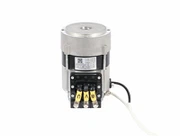
Classification of DC motors
Aug 09, 2024
DC motors can be classified based on their structure and working principle. The following are several common classifications of DC motors:
Permanent magnet DC motor
Permanent magnet DC motors use permanent magnets, which have the advantages of high efficiency, small size, light weight, and high torque. This type of motor is widely used in fields such as household appliances, office automation equipment, electric locomotives, and robots. The model of permanent magnet DC motor is generally determined by factors such as motor diameter, motor length, armature length, armature diameter, voltage, and power.
Carbon brush DC motor
A carbon brush DC motor consists of an armature and a stator, where the armature is usually in the shape of a squirrel cage with copper wire wound, and the stator is made of magnetic steel wire wound. The advantage of this type of motor is its high speed and wide range of adjustable speed, making it suitable for various occasions. The model of carbon brush DC motor is generally determined by factors such as motor diameter, motor length, voltage, and power. Common models include RS-360SH, RS-550PF, etc.
Brushless DC motor
Brushless DC motors are composed of permanent magnets and electronic commutators, and have the characteristics of no carbon brushes, no friction, no noise, and long service life. This type of motor is commonly used in fields such as models, aircraft models, robots, and power tools. The model of brushless DC motor is generally determined by factors such as motor diameter, motor length, voltage, and KV value. Common models include MT2204, MT2312, etc.
Other types of DC motors
In addition to the three common DC motor models mentioned above, there are many other types of DC motors, such as synchronous motors, DC servo motors, and DC motor frequency converters. These models have different parameters and features, and should be selected according to specific usage needs.